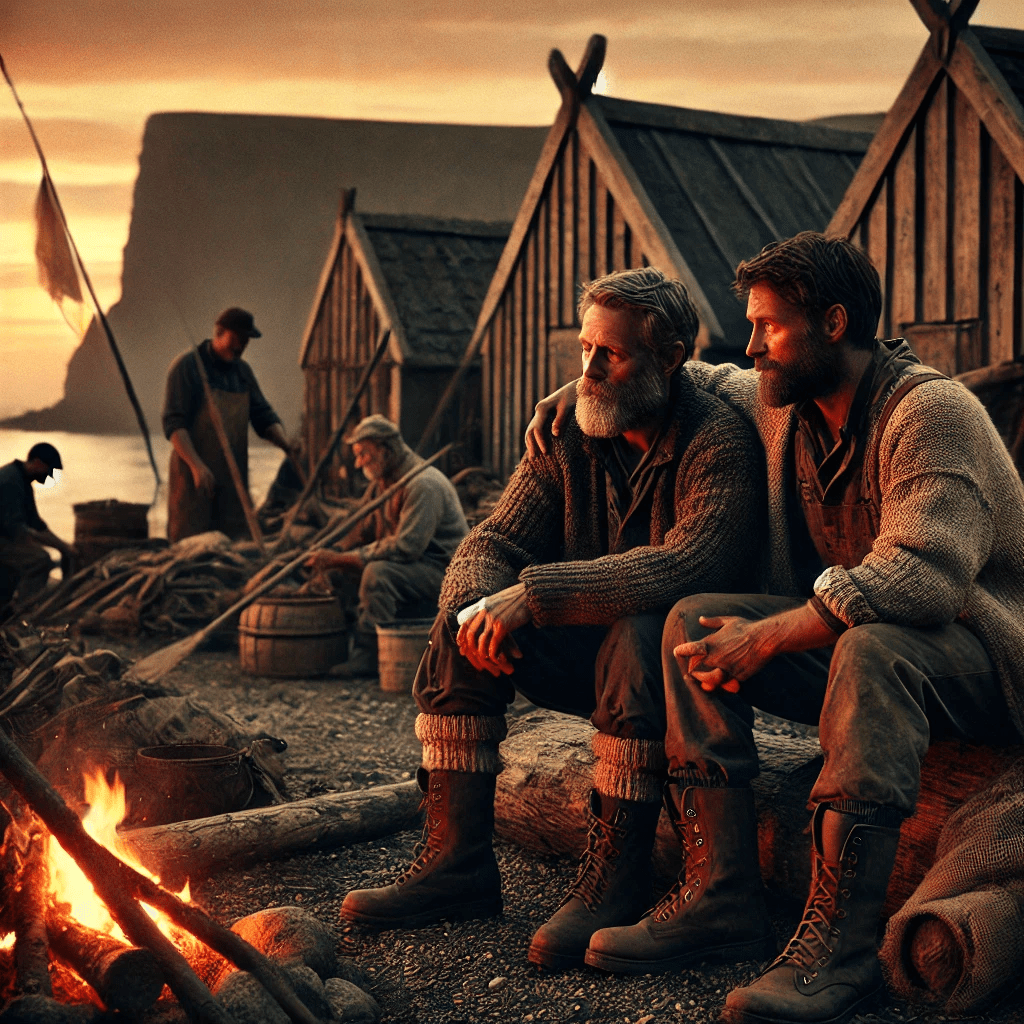
The wind howled across the cliffs of Dunmoor, dragging salt and spray inland, where a village called Hearthglen clung to the land like a memory. Long before the world grew sharp and distant, the men of Hearthglen lived close—close to the earth, close to each other. They worked the fields and fished the sea, and when the day was done, they sat shoulder to shoulder by the fire, letting touch speak what words didn’t need to.
Back then, no one questioned it. A hand on the back said, “I’m with you.” A grip on the arm meant, “We’re still standing.” Touch was strength shared, not stolen. The old elder Eamon called it God’s design: “He made us flesh and bone, lads—not just to toil, but to hold.”
Torin and Calum weren’t brothers by blood, but they might as well have been. One loud, one quiet. One broad and brawny, the other lean and sharp-eyed. They moved through life like two halves of a single soul—until the world changed.
Traders came with polished steel and slippery words. They sold more than goods; they sold a new idea of manhood: self-made, self-reliant, untouched. And slowly, the village followed. Arms that once held now hung at men’s sides. Brothers became rivals. Words replaced presence. The fire grew cold.
Then the storm came.
It tore through Hearthglen, ripping roofs, shattering boats, and leaving silence in its wake. Torin and Calum stood yards apart, working through the wreckage, silent, stiff, the space between them colder than the wind. And it was Eamon, bent and half-frozen, who limped into the heart of it all and shouted what everyone knew but had forgotten: “God gave us hands to hold—not just to hoard.”
And when a boy named Finn—thin, trembling, alone—stepped into the square asking for help, no one moved… until Eamon did. He wrapped that boy in his frail arms and broke something open.
Torin stepped toward Calum.
“Brother,” he said—rough, unsure—and placed a hand on his shoulder.
Calum flinched… then reached up and gripped Torin’s arm.
And that was the spark.
One by one, men followed. An embrace here, a clasp of arms there. Walls crumbled. Eyes softened. Voices rose. It wasn’t polished—it was raw, clumsy, honest. It was holy.
They rebuilt the village, yes. But more than that, they rebuilt the bond. Shoulder to shoulder. Hand to back. Forehead to forehead in prayer. Touch, reclaimed. Pure. God-honoring.
The traders came again, puzzled at what they found: not lonely men chasing coin, but a tribe forged in shared strength. They left, muttering. Hearthglen didn’t blink.
Years passed. Eamon died, buried beneath the cliffs. They carved his words into stone:
“Flesh and bone—meant to hold fast.”
And they did.
Men lingered after the work was done—not to compete, but to stay close. They taught the boys how to fish, how to plant, how to press a hand to a brother’s back when the weight got heavy. They didn’t call it covenant. They didn’t need to. It was carved in the way they leaned into each other. It was how God made them.
Not just to stand tall.
But to stand tall together.
 CovenantRoad
Leave a comment