Tag: men’s struggles

  • The Return (Chapter)

    The Return (Chapter)

    The morning came slow, like it didn’t want to wake the world all at once. Ezra sat on the curb outside Jake’s apartment, shoulders rounded forward, hands cupped around a chipped mug of coffee. The sun hadn’t broken fully over the rooftops, but the sky was soft with promise—blue pressed gently into the dark, like something sacred starting over.

    Jake stepped out a minute later, flannel thrown on over a t-shirt, the sleeves rolled just high enough to catch the light at his forearms. He carried his own mug, no lid, no rush, and dropped down beside Ezra without a word.

    For a while, they sat in the kind of silence that didn’t need anything added to it. Just the scrape of tires in the distance, the tick of the cooling engine behind them, and the early morning breeze cutting faintly through the heat that still lived in the pavement.

    Jake took a sip. “Feels different today.”

    Ezra didn’t answer right away. He let the warmth in his hands anchor him for a second longer, then nodded. “Yeah. I can feel it pulling. Like it’s time.”

    Jake looked ahead at nothing in particular. “Yeah. I figured.”

    “It’s not about leaving,” Ezra said. “It’s just… I don’t think I was meant to stay here.”

    Jake nodded slowly. “Nah. I know.”

    He didn’t try to argue, didn’t ask when. Just let it be.

    They finished their coffee without speaking. It wasn’t heavy. Just still.

    When they stood, Jake hooked a thumb into his pocket, gave Ezra a look that carried more than it said. “We walking?”

    Ezra gave a faint smile. “Yeah.”

    They moved side by side through streets that didn’t belong to either of them, not really. Past the corners where the crew had laughed too loud, past the bars where echoes still lingered in the floorboards. They weren’t rushing anywhere. Just walking—like you do when something real has ended.

    When they reached the lot, it looked the same. Same cracked dirt. Same broken fence. Same forgotten piece of land that somehow held more weight than it should’ve. It  felt different now—not just like a place, but a witness. Like it remembered both of them, even if neither could name all the ways they’d belonged to it.

    But Ezra could feel it stirring.

    There was a shift, deep and low, like the world had tilted a degree inward.

    He stepped closer.

    The ground didn’t move, but something in him did. The air thickened. Not hotter, just denser. Alive.

    And then it started to reappear—not all at once, but slowly, the way breath returns after we’ve forgotten to take it. Trees forming like memory. Orange blossoms catching the early light. The smell, faint and holy, rising in the warmth like incense.

    Jake stayed a few steps back, watching the shape of the grove come into view.

    “You sure?” he asked, voice lower than before.

    Ezra nodded. “I have to.”

    They stood there, nothing between them now but the knowing.

    Jake didn’t hesitate. He reached forward, one hand to the back of Ezra’s neck, the other drawing him in. Ezra stepped into the embrace, arms folding across Jake’s back. 

    “You’re closer than a brother,” Jake said—like it was the truest thing he knew.

    Their embrace was a seal. A weight pressed evenly between them—grief and grace, shared without speech.

    They stood like that for a long time.

    When they pulled apart, Ezra didn’t look away. The scar’s ache was still there, but gentler now. Like something had been acknowledged, not erased. He took a final breath and whispered, ‘Lord, thank You. 

    He stepped into the light.

    And the grove received him.

    It didn’t vanish this time. It folded slowly, like a page turning. The trees dimmed, the air eased, and then it was just a lot again.

    Jake stayed where he was, standing in dust, boots planted, hands at his sides.
    He looked out across the empty space.
    The lot was quiet again. Still familiar. But thinner, somehow.
    Like something had been breathing there beside him—and now it was gone.
    It wasn’t grief or emptiness—just the sense of a center no longer shared.

    His hand lifted, almost on its own, and rubbed the back of his neck.

    He didn’t move.
    And something in him stayed full.
    He didn’t know why, but a faint pressure sat behind his ribs—like something that had once been torn was learning how to rest.

    As he finally turned to leave, the dust on his boots caught the light—faint and gold, like citrus before the fall.

    (Chapter from The Grove. Contact me if you’d like to read the full story.)
  • The Ridge Run

    The Ridge Run

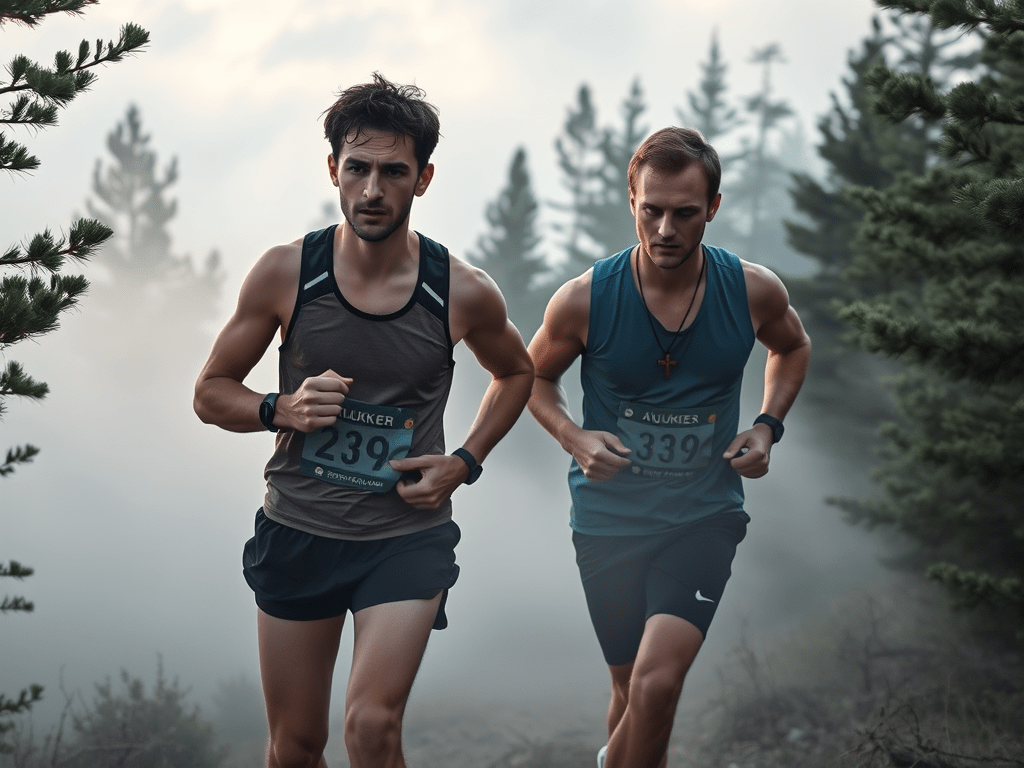
    The fog was a living thing, curling through the pines like it had a mind of its own, swallowing the dawn and the trail with it. Tucker, 28, ran hard, sneakers pounding the damp earth, his breath sharp in the East Tennessee chill. He’d signed up for the town’s fitness challenge to outrun the dead-end grind of his delivery job, not to play buddy with some ranger. Ben, 32, kept pace, his strides steady, eyes scanning the trees like they whispered secrets. The church had paired them, and Tucker wasn’t thrilled—Ben’s calm, Psalm-quoting vibe felt like a chain on his speed.

    “Keep up, ranger,” Tucker grunted, brushing past a cedar, its bark rough under his palm. The trail, a scar through the ridge, was meant to be a quick 5K, but the fog turned it into a maze. Ben just nodded, his cross necklace catching the faint light, unbothered.

    They were barely two miles in when the mist thickened, blotting out the markers. Tucker cursed, his ankle twisting on a root. Pain shot up his leg, and he stumbled, catching himself on a moss-slick rock. “Great,” he muttered, sinking down, the fog coiling around him. Ben crouched, checking the ankle, his hands gentle but sure, face calm as a still creek.

    “Ain’t broken,” Ben said, voice low, like soothing a spooked colt. “Can you walk?”

    Tucker glared, pride stinging worse than the pain. “I’m fine.” But standing brought a wince, and he slumped back, the fog’s chill creeping in. “This was dumb. Town’s dumb. I’m stuck, delivering to nowhere.”

    Ben sat cross-legged, pulling granola from his pack. “Eat. Then we move.” He handed Tucker a bar, eyes steady. “You’re not stuck. You’re running. That’s something.”

    Tucker snorted but took it, the wrapper crinkling. Silence fell, heavy with mist, and Ben spoke—about the ridge, how he’d found peace patrolling it after losing his brother to addiction. “Wished I’d done more,” Ben said, voice catching, “but I was running my own race.” He touched his cross, a Psalm 23 whisper slipping out.

    Something cracked in Tucker. “I’m running from nothing,” he admitted, staring into the fog. “Job’s a cage, town’s a dead end. Ain’t got no one to run with.” His voice softened, raw, and he looked away, embarrassed.

    Ben didn’t push, just nodded. “You got me now,” he said, simple. “We’ll get out together.”

    Tucker’s throat tightened, but he muttered, “Whatever, ranger.” Ben helped him up, Tucker leaning on his shoulder, the fog a gray wall. Ben mentioned a cave Old Man Holt, the trail hermit, had told him about—a shelter nearby. “Holt says it’s sure,” Ben said, half-smiling. “Crazy coot, but he knows these hills.”

    They hobbled on, Ben’s arm steady, his calm cutting Tucker’s panic. The cave loomed, a dark mouth in the ridge. Inside, the air was damp but warm, and Tucker sank against the wall, ankle throbbing. Ben’s flashlight danced on the rock, and they shared the last granola, the crunch loud. Tucker talked—about his dad bailing at ten, driving empty roads, chasing freedom he couldn’t name.

    Ben listened, his cross glinting. “Freedom’s not out there,” he said, tapping his chest. “It’s here. With Him. With folks who stay.”

    Tucker didn’t answer, but the words sank deep. A rustle at the cave mouth—Old Man Holt, lantern swinging, beard wild. “Y’all lost?” he cackled, eyes kind. “Trail’s this way. Stick together.” He led them out, fog thinning, the church steeple poking through like a promise.

    At the finish line, hours late, crowd gone, Tucker limped, grinning, Ben propping him up. The gas station’s neon buzzed, and Tucker clapped Ben’s shoulder, a silent thanks. “Next run, you’re chasing me,” he said, half-laughing.

    Ben smirked. “Deal.” Sunday, they shared a pew, a nod sealing their pact—not just to run, but to keep showing up, fog or no fog.

  • Not the First (chapter)

    Not the First (chapter)

    The garage was still.

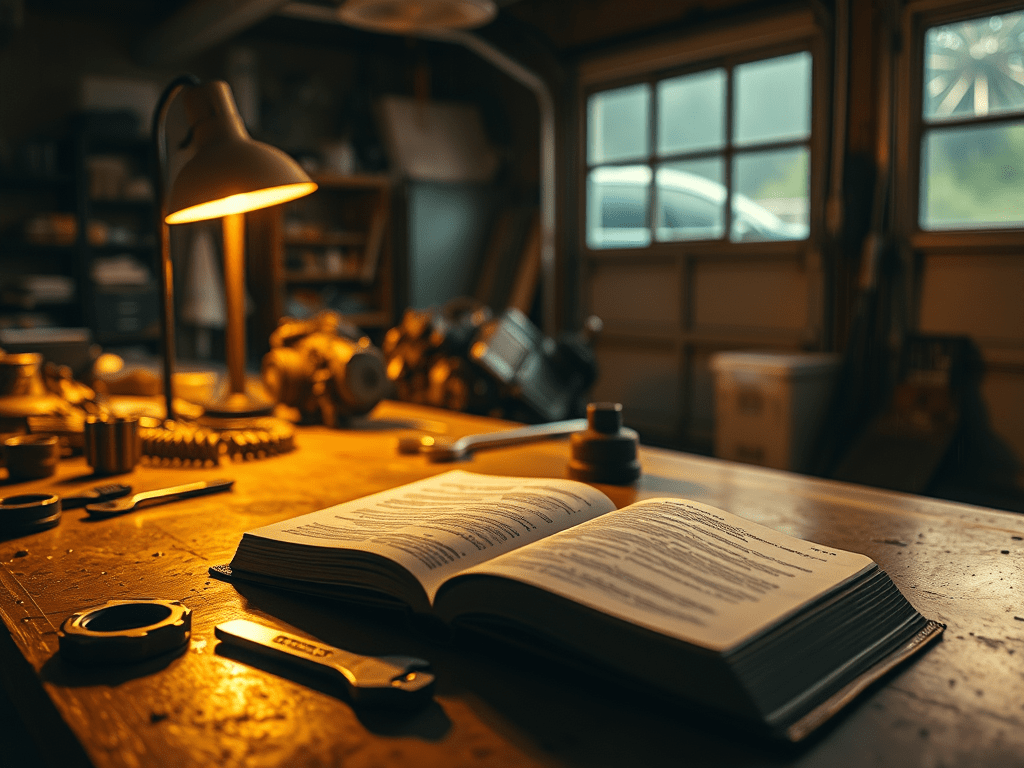
    Rain tapped the metal roof in soft syncopation, the kind that made you feel like the night itself had settled in to stay. Caleb didn’t bother with the overheads—just the single lamp over the workbench, its glow golden against the steel and concrete.

    He sat alone, engine parts half-sorted on the table, a socket wrench resting beneath his hand like it had dozed off mid-sentence. He wasn’t fixing anything tonight. Just sitting with the pieces.

    Jonah hadn’t said much that morning. Just passed him a small, folded scrap and nodded once. No explanation. No weight to it—at least not in his voice. But the way his eyes lingered—that said enough.

    Now, with the quiet all around him, Caleb took the note from where he’d tucked it inside the worn pages of his Bible. The spine was cracked, the pages softened from years of oil-stained hands and Sunday dust. It looked like it had been carried through more than one man’s storm.

    He unfolded the note slow.

    Psalm 27:1
    “The Lord is my light and my salvation—whom shall I fear?”

    He read the next line slower.
    You don’t have to name it.

    Something in him exhaled.

    Then:
    You’re still my brother.

    He wasn’t sure what that line broke—but it broke something gently.
    He stared at the note a long time. Long enough for the rain to change tempo. Long enough for the silence to grow familiar.

    He read the note again.
    That lady at the Spoon had said you didn’t have to name it. Just show up where it lives.
    He pressed the paper to his chest and held it there, steady as the rain.

    He wasn’t the first to carry something unnamed.
    That ache you don’t have a word for.
    That bond you can’t quite explain.
    But he carried it still.

    Then he tucked the note back into the Bible’s spine, stood, and switched off the bench light.

    He rolled the garage door shut. The rain kept on, soft and steady.

    Behind him, the lamplight glowed against the walls—warm, human, and quietly whole.

    And somewhere out there, Jonah was still showing up—

    where it lived.

    (chapter from Not the First in the Caleb and Jonah series. Contact me if you’d like to read the full chapter.)

  • Where It Settles (chapter)

    Where It Settles (chapter)

    The trail curved with the land, hugging the ridge like it had always known its shape. The trees stood in quiet assembly, their branches whispering overhead as the dusk pulled long across the lake below. A heron cut slow through the air. The sky was bruised lavender and rust.
    It looked like a sky that had been through something. And was still holding.

    Caleb and Jonah walked in silence. Not the strained kind, but something steadier—like an old hymn neither of them needed to finish singing. Leaves crunched beneath their boots. Gravel shifted under the weight of what hadn’t been said.

    They came to a bench near the overlook. The lake stretched out below, still and soft. Mist clung low to the surface, catching what little light remained.

    Caleb sat first, arms resting across his thighs, jaw set. Jonah followed a beat later, close but not too close, letting the quiet settle again.

    “You think it ever gets easier?” Caleb asked finally, voice low.

    Jonah glanced over. “What part?”

    “All of it.” He rubbed his palms together like trying to start something that wouldn’t catch. Like trying to coax warmth from something gone cold. “Loss. Guilt. That damn space between what you meant to do and what you didn’t.”

    Jonah nodded slowly. “Langston used to say guilt’s like smoke—gets in your clothes, your lungs. But grief… grief just sits with you. Doesn’t ask to be fixed. Doesn’t need to be.”

    Caleb didn’t answer right away. The breeze stirred his hair.

    “The boy I told you about…” he said finally. “I saw something good in him. Fragile, maybe. But it was there. He let me see it, just once. And then it was gone.”
    He exhaled slowly. “When he went under, part of me felt like I had, too.”

    The silence held.

    Then Jonah reached out and laid a hand on Caleb’s forearm—gentle, steady. No words. No fixing.

    Caleb’s hand twitched, just slightly, like it might rise to cover Jonah’s. But it didn’t.
    He didn’t lean in. But he didn’t shut down either. It was something.

    He leaned back against the bench, not pulling away, just needing the space to breathe.

    Jonah let his hand fall away, resting it in his lap again.
    It didn’t feel like rejection. Just timing.

    They watched the water for a while, quiet and unmoving.

    Caleb rubbed the back of his neck, gaze still forward.

    “Some things you carry,” he said finally. “Some things carry you.”

    Jonah was quiet a moment, then asked, “You think God stays in those things?”

    Caleb didn’t answer right away. His jaw worked once, then stilled. The breeze touched the side of his face like it was waiting too.

    “If He didn’t,” Caleb said, “I’d be gone already.”

    Jonah didn’t smile. Just nodded once—slow, like he understood more than he could say.

    They didn’t move for a long time.

    (Chapter from Not the First in the Caleb and Jonah series. Contact me if you’d like to read the full story!)

  • The Fire’s Bond (chapter)

    The Fire’s Bond (chapter)

    Jed stood alone behind the barn, hands deep in his coat pockets, the ridgeline fading into shadow. The cedar branch leaned against the shed wall, still damp in spots from where he’d rinsed off the silt.

    He didn’t know why he’d brought it in, not exactly. Just that it felt right to burn something that had been through floodwater and still held together.

    The wind cut low through the trees. He turned, picked up the branch, and headed toward the house.

    The frost came early that night, settling over the pasture like breath held too long. The stars hung sharp overhead, not twinkling but steady, cold and clear.

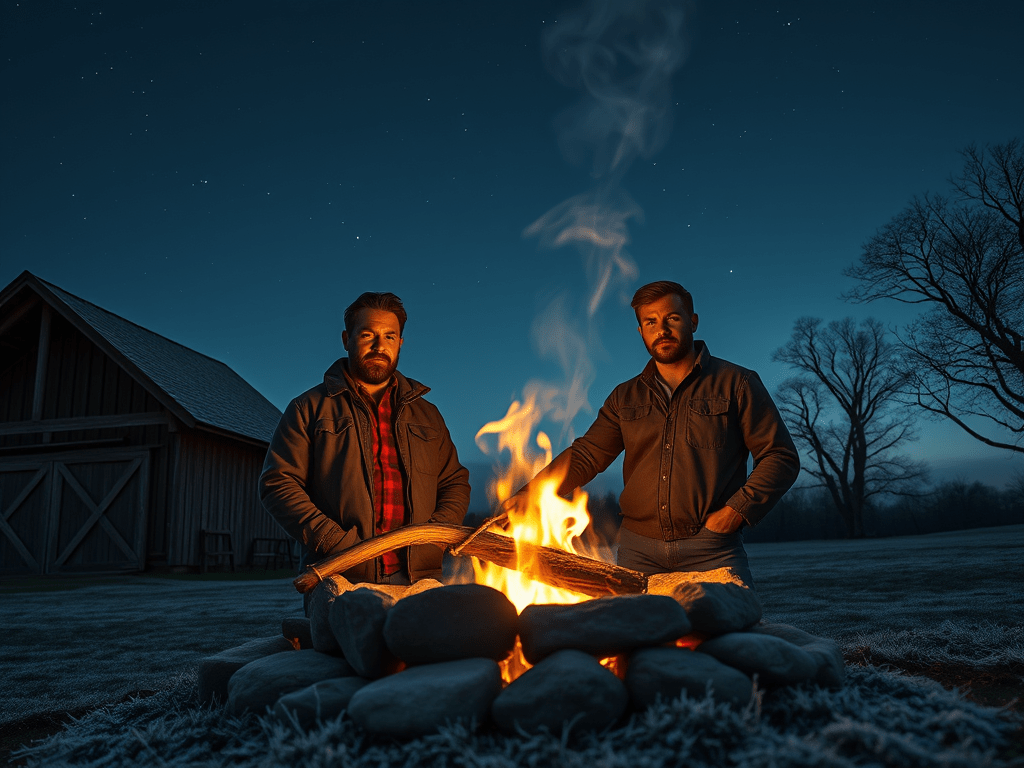
    Joel struck the match, shielding the flame from the breeze as it caught on the edge of kindling. The fire-pit had been his idea—simple stones ringed around a bare patch of earth near the edge of the ridge. Jed had helped stack them earlier that day, one-handed but stubborn, muttering the whole time about symmetry and heat flow.

    Now the flames licked upward, slow at first, then sure.

    Jed stepped out from the house with a thick cedar branch in one hand. Not fresh, but not old either—weathered just enough to crack loud when it burned. He’d found it near the creek, half-buried in silt from the last flood. Same bend where things had once gone wrong. It wasn’t clean wood—it was carried wood. But it burned.

    Joel moved aside to let him through.

    Jed laid the branch across the top of the fire, not saying a word.

    The flames took hold.

    The cedar popped and hissed, sap still trapped deep in the grain. Smoke curled white into the night air, rising toward stars that did not blink.

    They stood in silence, faces lit orange and gold.

    Joel finally spoke, voice low. “Feels like the kind of night you don’t get again.”

    Jed nodded. “It is.”

    He reached into his coat pocket, pulled out the same carving knife Joel had once found on the porch rail. He didn’t open it—just held it a moment, then set it beside the fire.

    “I don’t want to carry anything unclear anymore,” Jed said. “Not with you. Not with God.”

    Joel watched the fire.

    Jed went on. “I’ve prayed a lot of prayers these past weeks. Some loud. Most not. But I keep comin’ back to the same one.”

    He looked up.

    “Create in me a clean heart, O God…”

    His voice didn’t shake. But it was rough from the inside out.

    “Give me the strength to be your brother, not your temptation. To build with you, not burn.”

    Joel’s eyes stayed on the fire, glassy in the glow.

    Then he spoke—quieter, but thick at the edges.

    “I’m done runnin’.”

    Jed looked at him.

    Joel didn’t blink. “I ran from Athens. From the church. From the ache. Even from this—whatever this is.”

    He stepped forward, closer to the heat.

    “But I ain’t runnin’ anymore. I don’t want to pretend I don’t feel what I feel. But I want to walk it different. Carry it clean.”

    Jed swallowed hard, throat tight.

    Joel extended a hand.

    Not soft. Not trembling.

    Just strong and open.

    Jed reached out and clasped it.

    Not like a greeting.

    Not like goodbye.

    But like something being bound in place.

    Their hands gripped firm, and the fire cracked louder—one loud pop like a punctuated amen.

    (Chapter from Weathered Fields in the Jed and Joel series. Contact me if you’d like to read the full story!)

  • Weight Carried Quiet (chapter)

    Weight Carried Quiet (chapter)

    The air had turned warm again, the kind that coaxed sweat out slow and steady. By midmorning, the sky sat wide and open, cloudless, a little too bright. Jed was on the roof, hammering shingles where the storm had peeled a strip back near the ridge line. His shirt clung to his back, and the sun pressed on the back of his neck like a warning.

    Down in the pasture, Joel moved along the fence line with a spool of wire and a pair of pliers, checking tension, testing nails. He worked methodically, but the rhythm was off. Not enough to notice if you didn’t know him. Jed did.

    They’d said little over breakfast. Joel had refilled the coffee, Jed had washed the plates. A nod. A passing of the butter. But nothing more.

    Now the hammer struck sharp. Jed winced as he shifted on the sloped boards—his knee catching wrong, then holding. He muttered a prayer under his breath, the kind that didn’t ask for much—just another few hours before the aches got worse.

    He paused, squinting out toward the field. Joel had stopped walking. He stood still, one hand resting on a fence post, the other hanging loose. From this distance, Jed couldn’t see his face. But he could tell something had pressed pause in him.

    Then Joel moved on, shoulders squared like they were carrying more than tools.

    By late afternoon, the air had grown heavy again. The sun felt closer than it ought to be. Jed climbed down from the roof and stretched his back until it cracked. His shirt was soaked through. He wiped his face on the inside of his collar, then turned toward the shed.

    Joel was there, setting the fencing tools back on their hooks. He didn’t look over when Jed approached, but he didn’t leave either.

    “How’s the line?” Jed asked.

    Joel nodded. “Holds.”

    Jed waited, but nothing more came. Just the soft clang of metal settling on wood.

    Then Joel said, quiet, “That last corner near the creek… one of the posts is starting to rot.”

    Jed rubbed the back of his neck. “We’ll pull it tomorrow.”

    Joel nodded again. “Yeah.”

    He turned, walked back toward the house.

    Jed stood there a moment longer, the silence trailing behind him like smoke.

    At supper, the quiet stayed. Not cold. Just weighty.

    They ate side by side at the table—chicken, rice, greens. Joel passed the salt without being asked. Jed refilled his water when Joel wasn’t looking.

    Afterward, Joel cleared the plates and washed them while Jed wiped down the counters. 

    Jed caught himself watching the way Joel dried his hands—slow, like every movement meant something. Like his thoughts were someplace else.

    Later, with the porch light off and the night settled around them, Jed stepped outside for a final check on the animals. A faint breeze stirred through the grass. He rounded the barn and saw the gate open—just wide enough for a person.

    He moved closer.

    The gate was fine. Still latched. Nothing loose. But there, set square on the porch rail, was Joel’s knife.

    Clean. Closed. Resting easy on the weathered wood.

    Jed picked it up, turning it once in his hand. The same blade Joel had carried since he arrived. Kept in his back pocket. Used for hay bales, twine, and once for slicing a loaf of bread when they forgot the kitchen knife at lunch.

    It wasn’t left by accident. Joel didn’t misplace things.

    Jed held it a moment longer. Then turned, stepped into the house, and down the hall. The weight of it felt familiar—but what Joel had laid down wasn’t just a tool. It was trust. A kind of surrender. Jed thought of the cedar plank in the shed. Maybe it was time to start carving something that could hold what they were beginning to give each other.

    Joel’s room was quiet. Door open a few inches.

    Jed pushed it gently, crossed to the desk by the window, and set the knife down where the morning light would hit it.

    He didn’t say anything. Didn’t need to.

    Back in his own room, Jed pulled off his shirt and sank onto the edge of the bed. The window was cracked, letting in the hush of crickets and the low rustle of wind through high grass. He sat with his elbows on his knees, head down.

    Psalm 51 came again.

    Purge me with hyssop, and I shall be clean.

    The same verse, still asking to be meant deeper.

    He reached for the Bible. Didn’t open it. Just rested his hand on the cover and sat there, letting the quiet speak for both of them.

    (Chapter from Weathered Fields in the Jed and Joel series. Contact me if you’d like tor read the full story!)

  • Storm Front (chapter)

    Storm Front (chapter)

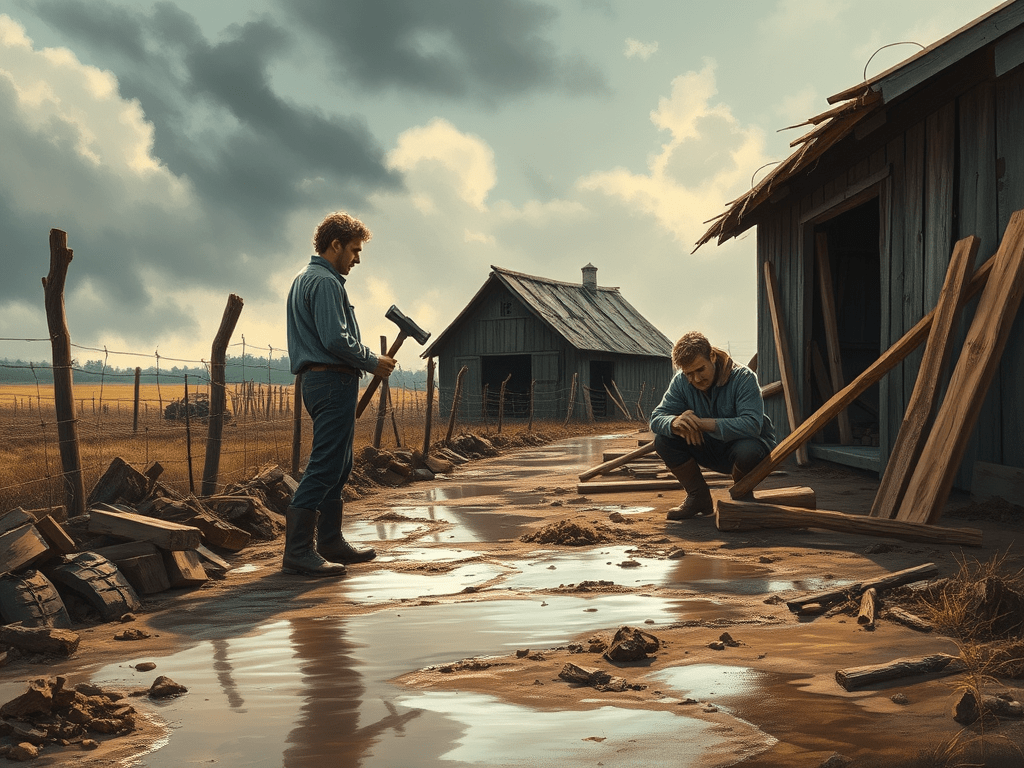
    Late spring clung wet to the ridge, the kind of heavy that settled in your boots and worked its way up your spine. The storm had passed sometime after midnight—wind roaring down the holler like a freight train, tearing shingles from the barn, snapping fence rails like kindling. Morning came slow, bruised and gray, the ground steaming where sunlight pressed through.

    Jed stood at the edge of the yard, one boot half-buried in mud. His eyes followed the damage: fence posts leaning like drunks, the barn roof torn open in places, loose tin curled back like bark after a burn. A shingle flapped from a nail above the loft door, tapping slow in the breeze. He rolled his shoulder once. It caught near the top—stiff from sleep or age, maybe both. His jaw flexed like he meant to speak—just a word, maybe two—but it passed. Nothing came. Not yet.

    He reached for the hammer left on the porch rail. Handle worn smooth. Grip familiar. He held it a moment before stepping into the yard.

    Behind him, the screen door creaked.

    Joel stepped out, sleeves rolled high, flannel loose over a damp T-shirt. The same one they’d shared through the colder months, passed between hooks and hands without ever naming it. He carried a length of cedar under one arm.

    “Gate’s worse than the roof,” he said.

    His voice was quiet—not cautious, just tired.

    Jed nodded and took the board. Their fingers brushed—barely—but Joel pulled back quick, like the touch startled something. Jed noticed. Didn’t speak on it. Just turned and set the cedar against the busted frame. The hammer landed hard. The wood gave, splintering slightly at the edge. He didn’t bother smoothing it.

    Joel crouched by the next post, working a bent nail loose. His movements were fast, sharper than usual. He didn’t say a word. Neither did Jed.

    They worked like men who knew the steps but had forgotten the rhythm. Jed climbed the roof to secure the loose tin while Joel kept to the fence line, hammering slats back into place. They passed tools without eye contact. Spoke only when they had to.

    Sweat beaded on Jed’s neck despite the chill. The air carried the tang of wet soil and iron. Their breath mixed with the clink of nails and the groan of wood. Somewhere nearby, a bird called once and went quiet.

    He found himself whispering, more reflex than thought.

    “Create in me a clean heart, O God…”

    Psalm 51. Always that one. He’d prayed it more times than he could count—at night when Joel was asleep, or when the weight of something unseen pressed in on his chest. It surfaced easy this morning, unasked.

    He glanced down.

    Joel stood at the far end of the fence, back slightly hunched, sleeves damp at the cuffs. He was solid. Steady. But something about the curve of his shoulders said he’d been holding more than wood lately.

    He kept his eyes down, but for a split second, Jed caught something flicker there. A memory, maybe—a flash of water and want, that creekside silence neither of them had spoken of. Or maybe just a prayer Joel hadn’t dared put to words.

    The storm hadn’t just torn shingles and rails.

    It had stirred something loose beneath the surface.

    By midday, the fence stood again. Crooked in places, but upright. The roof was patched. Enough to hold.

    They walked back to the house without speaking. Mud caked their boots. Their hands were scraped, fingernails dark with grit.

    Jed poured coffee from the pot left warming on the back eye of the stove. Joel sat on the porch steps, elbows on his knees, tapping the rim of a tin mug with his thumb.

    Then he hummed—soft, unsure.

    “I’ll… fly away…”

    The line broke off. He didn’t finish it.

    Jed handed him a cup and sat beside him. The wood creaked beneath them. Their shoulders didn’t touch, but the air between them felt different now—thinner.

    Steam curled from their mugs. Neither reached for words.

    Near the porch rail, something pale stuck out beneath the mat. Jed leaned forward and pulled it free.

    Caleb Ward.

    Sharp handwriting. Church letterhead. “A Gathering for Men of Conviction.” Jed didn’t open it. He didn’t need to.

    Inside, he crossed to the mantle and slid the envelope between the pages of the Bible. Somewhere around Psalm 51. He didn’t look to see where it landed.

    The next morning, the sun showed up late and soft, streaking long light across the pasture. The wind had settled. The barn stood quiet. Jed stopped at the mailbox out of habit. Nothing inside. Just the still hum of a day returning to normal.

    Back in the kitchen, Joel stood at the stove, stirring coffee in a chipped mug. The spoon clicked gently against ceramic.

    “Mail?” he asked, not looking up.

    Jed paused. “Nothin’ worth readin’.”

    He poured himself a cup and sat across from him. The warmth spread slow through his hands.

    The Bible stayed shut on the table between them.

    The storm hadn’t broken them. Not yet.

    But the ground was still soft. And the air still held weight.

    (Chapter from Weathered Fields in the Jed and Joel series. Contact me if you’d like to read the full chapter!)

  • Forgiveness in the Dust

    Forgiveness in the Dust

    Some things don’t mend loud. They just start holdin’ again, slow and steady.

    The morning was cooler than it had been in weeks. Sky still pale, light slipping over the ridge slow, like it wasn’t in a hurry to see what the day would hold.

    They’d been fixing fence since dawn—nothing urgent, just one of those sections that’d gone soft with rain and time. A corner post leaning wrong, wire sagging like tired shoulders. Jed had said it needed shoring up. Joel hadn’t argued.

    They worked steady, boots wet with dew, breath visible in the shade.

    Not much was said. But it didn’t feel like before. The silence had changed shape.

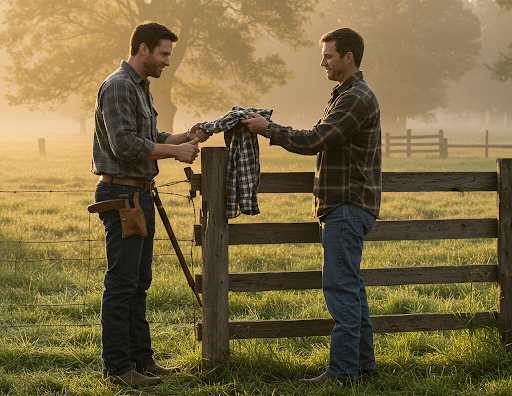
    When the last nail was in, Joel stepped back, brushed off his hands, and walked to the truck. He rummaged a second, then came back holding something folded.

    Jed squinted. “That my old flannel?”

    Joel held it out—clean, sun-dried. “Figured you might want it back.”

    Jed took it without a word. Held it a beat longer than he needed to, thumb brushing the worn edge like he was feeling something older than fabric. Then he looked up.

    “Thanks,” he said. 

    Joel nodded once, started to turn—then paused.

    “You still want me here?”

    Jed didn’t hesitate. “You wouldn’t still be here if I didn’t.”

    Joel looked at the ground, then back at Jed. “Alright.”

    Jed moved past him toward the barn, but halfway there, he reached back and tapped Joel’s arm lightly with the folded shirt.

    “Put that in the house, will you?”

    Joel took it. Tucked it under his arm like something that still had weight.

    Later, when they were both back inside, Jed poured the coffee. Poured Joel’s too—no need to ask how he took it. He slid the mug across the table like he had a hundred times before.

    Joel caught it. Held it a second. “Thanks.”

    Jed nodded, still standing. “Good to have you back at the table.”

    That was all.

    But it was enough to start again.

    (Chapter from First Light in the Jed and Joel series. Contact me if you’d like to read the full story!)

  • More Than Regret

    More Than Regret

    Some mornings don’t begin. They just unfold, slow and unspoken.

    The sun was barely up when Jed swung the barn door open. Dew clung thick on the grass, softening the crunch of his boots. He didn’t slam the gate shut, didn’t whistle like he sometimes did when the air was light. Just moved—methodical, muted.

    The feed bags were heavier than usual. Or maybe he was just tired.

    Back at the house, the kitchen stayed dark. Joel’s boots sat by the door, his mug still in the dish rack, clean and dry. Jed didn’t look at the hallway. Didn’t listen for footsteps.

    He cracked the screen door just enough to let in breeze and sat at the table with his coffee, staring out at the yard like it might offer something he could hold onto.

    Upstairs, Joel was awake.

    Had been for a while.

    He lay still in the narrow bed, one arm draped across his forehead, eyes open but not seeing. The air in the room was warm, heavy with the scent of soap and sweat and something else they didn’t have a name for yet.

    He hadn’t dreamed. Just floated all night, half-anchored to the memory of the creek, of skin and breath and the way Jed’s hand had pressed to his back like it was asking a question and giving an answer all at once.

    He finally rose slow, pulling on jeans and a t-shirt, fingers lingering on the hem like maybe it could settle something.

    When he stepped into the kitchen, Jed didn’t turn.

    Joel poured his coffee in silence.

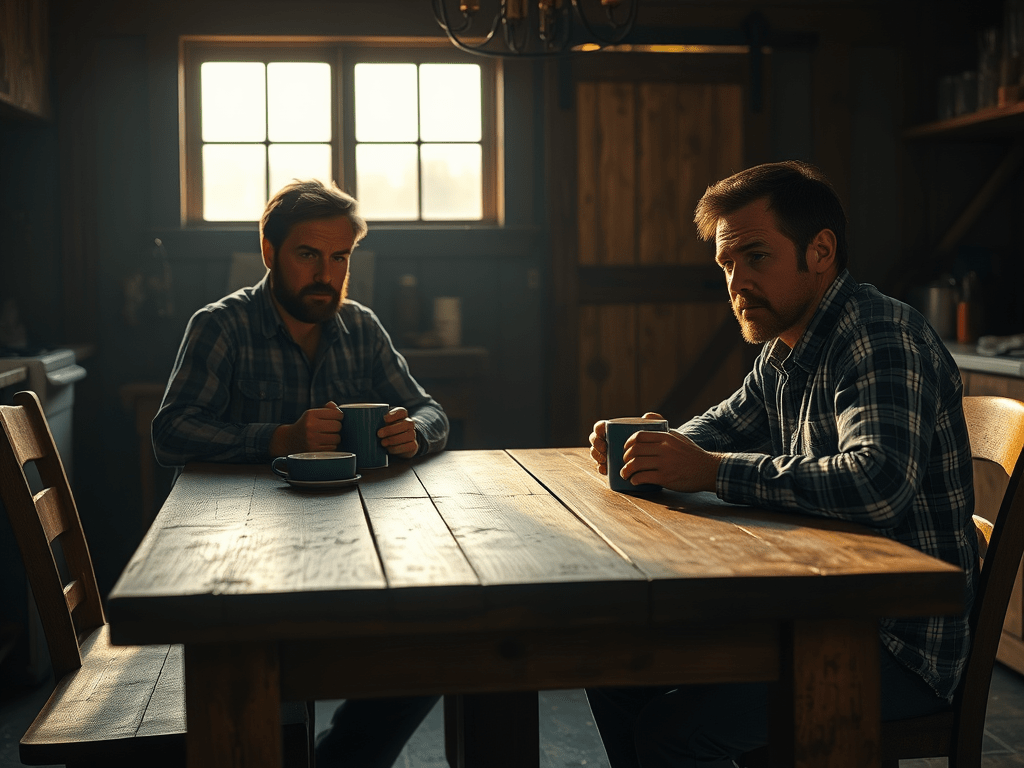
    They sat across from each other, the table wide enough to feel like a fence. The clock ticked. A tractor droned somewhere off in the distance.

    “I fed the chickens already,” Jed said, voice even.

    Joel nodded. “Appreciate it.”

    Joel almost said more—You alright? or Do we need to talk?—but the words stayed lodged behind his teeth, too heavy to push loose. He sipped his coffee instead, like maybe that could quiet the questions.

    More silence. But it wasn’t angry.
    Just… unsure.

    Jed stared at his mug like it had something written inside it. Then: “I didn’t sleep.”

    Joel’s throat tightened. “Me neither.”

    Another long pause.

    “I don’t regret you,” Jed said, finally. “Just—don’t know what to do with what happened.”

    Joel looked up. His voice was soft but steady. “I don’t want to pretend it didn’t matter. But I also don’t want it to define us.”

    Jed’s jaw worked. “It already does.”

    “Then maybe we choose how.”

    A bird hit the feeder outside, scattering seed. The sound startled them both a little—two grown men, shaken by a sparrow.

    Jed stood and rinsed his cup. Joel did the same. They didn’t talk about what came next.

    They just went back to work.

    The day wore on like a coat that didn’t quite fit—too heavy, too tight in the wrong places.

    But it was still theirs to wear.

    (Chapter from First Light in the Jed and Joel series)

  • The Ache Beneath the Quiet (chapter)

    The Ache Beneath the Quiet (chapter)

    Some silences settle soft. Others land sharp, like a nail in the heel of your boot.

    The rain let up by Friday, but the gray stuck around, low and sullen over the hills. Joel was already out in the shed when Jed stepped off the porch, coffee in hand and the dogs trailing behind. He could hear the dull scrape of a shovel against concrete before he rounded the corner.

    Joel had cleared space near the workbench, a pile of old boards stacked neatly to the side. He’d stripped down to a white undershirt, flannel slung over the railing, muscles taut as he worked. There was a furrow in his brow, and his mouth twitched like he was chewing on something besides silence.

    Jed leaned in the doorway, steam curling from the mug. “You buildin’ a boat or just diggin’ a tunnel?”

    Joel didn’t look up. “Couldn’t sleep. Figured I’d do somethin’ useful.”

    Jed nodded. He didn’t ask what had kept him up. He already had a guess.

    They worked together without much talk—hauling old planks, sorting nails, checking for rot. The quiet wasn’t cold, but it wasn’t easy either. Like a field left fallow too long, waiting for someone to turn the soil.

    Mid-morning, they took a break. Jed passed Joel a bottle of water, and they sat on the porch steps, boots muddy, elbows brushing.

    “You ever feel like somethin’ in you’s changin’, and you don’t know what it’s changin’ into?” Joel asked, eyes on the distance.

    Jed took a sip, then wiped his mouth with the back of his hand. “Yeah. ‘Bout every ten years or so. Usually when the Lord’s tryin’ to get me to see somethin’ I’ve been avoidin’.”

    Joel nodded, jaw tight. “This ain’t about runnin’. It’s about what comes after you stop.”

    “I ran so far I forgot what I was runnin’ from,” Joel added, eyes low. “Left good folks behind. Some not so good. Left a church that couldn’t see me clear. Took a long time to figure out not all of that was on me.”

    Jed glanced over. Joel looked different lately. Not just leaner from work, but more settled in his own skin—and yet, like something was pressing from the inside out, trying to reshape him. Jed noticed the way Joel’s eyes lingered longer when they talked, the quiet way he started leaving his flannel draped on the back of a chair instead of folded neat. Little things. But they added up.

    He didn’t push. Just let the words hang there like laundry on a line, catching whatever breeze might come.

    That afternoon, they finished reinforcing the fence near the back pasture. It was slow work—mud sucked at their boots, and the cedar posts had to be set deeper than usual—but they moved like a team that had learned each other’s rhythms. By the time they reached the last post, their shirts were clinging with sweat, and their hands were scraped raw.

    Jed sank onto an overturned bucket and cracked his knuckles. “Well,” he said. “We earned supper today.”

    Joel stood beside him, wiping his neck with the hem of his shirt. “Mind if I cook?”

    Jed shrugged. “Long as it ain’t garlic again.”

    Joel laughed—a real one this time, low and easy. “No promises.”

    He sat down next to Jed, elbows on his knees, both of them facing the field they’d just cleared. The sky had that bleached look it gets in late summer—washed-out blue, tired but holding.

    “You ever think about doin’ something else?” Joel asked. “If it wasn’t farmwork?”

    Jed took a slow sip from the water jug, then leaned back. “Not much call for wonderin’, not when you grow up with a pasture for a playground.”

    Joel waited. Jed looked down at his hands.

    “I like makin’ things,” he said finally. “Used to help my uncle build furniture in the winters. Just small stuff—stools, boxes, once a bench we never did finish. Somethin’ about cuttin’ wood to fit—measurin’ twice, watchin’ it take shape. It don’t talk back, but it don’t lie neither.”

    Joel nodded. “That sounds like you.”

    Jed gave a one-shoulder shrug. “Ain’t nothin’ noble. Just… clean work. Straight lines.”

    Joel looked out over the grass. “I used to think I’d be a teacher.”

    Jed blinked. “Really?”

    “Yeah. English, maybe. I liked stories. Thought maybe if I helped folks find theirs, I’d find mine.” He gave a soft chuckle. “Didn’t get far. Started runnin’ before I could settle into anything.”

    Jed didn’t speak right away. Then: “Don’t sound like nothin’’s keepin’ you from tryin’ again.”

    Joel glanced at him. “You think I’m still that guy?”

    Jed looked straight ahead. “I think you’re closer than you’ve ever been.”

    That line hung there between them for a beat too long.

    Then Joel stood, dusted off his hands. “Still gonna cook. But I’m addin’ garlic.”

    Jed shook his head but didn’t argue.

    Later, after dishes and dusk, they found themselves back on the porch. The sky was clearing at last, stars blinking through the haze. The dogs lay curled on the steps. A jar of tea passed between them, fingers brushing, neither pulling back.

    Joel didn’t speak. Just let out a slow breath, like he was still deciding what needed to be said.

    Jed finally broke the quiet. “Some things don’t have to be figured out in one day.”

    Joel nodded, his voice quiet. “Just don’t want to waste the ones I’ve got.”

    Jed looked at him then. Not just a glance—really looked. “You got a place here, far as I’m concerned.”

    Joel gave a small nod, like maybe that meant more than he had words for. He’d spent too long drifting—borrowed couches, short leases, jobs that never needed him longer than a season. He’d learned how to act like it didn’t matter. But this—this was different.

    Here, under this roof, with these hills behind him and Jed beside him, the offer landed deep. Not just welcome. Belonging.

    Joel’s eyes flicked down, a hint of something caught between gratitude and ache.

    And that was enough for now.

    (Chapter from First Light in the Jed and Joel series. Contact me if you’d like to read the full story)

  • A New Kind of Fire (chapter)

    A New Kind of Fire (chapter)

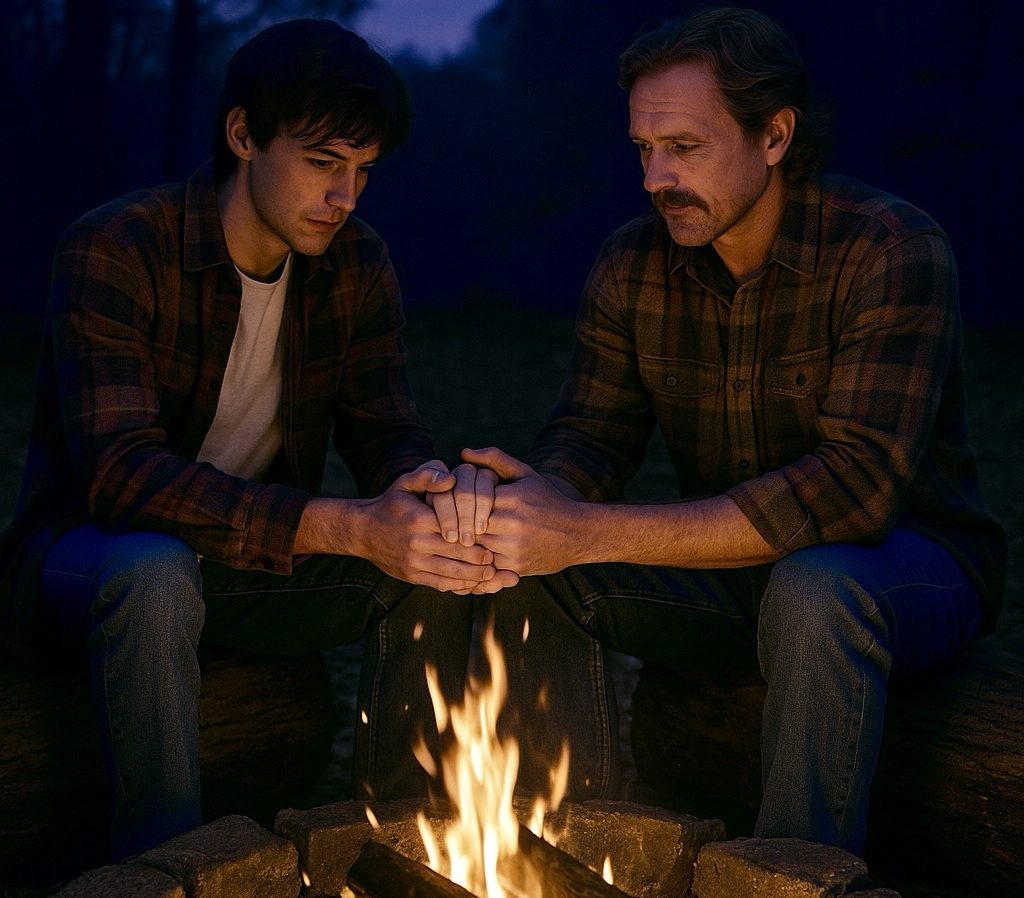
    The fire was already going when Tyler showed up—low and steady, crackling in the pit behind Ted’s place. It was dusk, the sky dimming slow, bruised purple at the edges. The air smelled like pine smoke and damp leaves, like the woods were remembering something.

    Clyde was sitting on one of the big split logs circling the fire, shoulders hunched, arms resting on his knees. He looked up when Tyler approached but didn’t say anything at first.

    Tyler gave a soft, familiar nod. “Figured you might be out here.”

    “Didn’t feel like bein’ inside,” Clyde said. His voice was low, steady. “Didn’t want to be around folks who expect me to smile and nod like I ain’t still workin’ this out.”

    Tyler sat on the log beside him—not too close, not distant. Just near enough to be known.

    For a while, they didn’t talk. Just watched the flames rise and settle. Sparks danced up into the darkening sky like prayers they didn’t have words for yet.

    After a while, Clyde cleared his throat. “You ever wish it had turned out different?” he asked. “That night in the cabin. Or the one after the storm.”

    Tyler didn’t answer right away. He looked into the fire like it was telling the story for them.

    “I used to,” he said finally. “Used to think maybe if we hadn’t pulled back, it’d feel more certain now. More defined.”

    Clyde nodded slowly, eyes on the flames. “But it wouldn’t’ve been clean.”

    “No,” Tyler said. “It wouldn’t’ve been holy either.”

    They sat with that.

    “I still feel it,” Clyde admitted, barely audible. “That ache. That pull. It don’t own me like it did, but it ain’t gone.”

    Tyler’s voice was soft. “I know.”

    A long breath passed between them. The fire cracked. The trees swayed.

    “I spent too long thinkin’ desire was the same as failure,” Clyde said. “But I don’t want to keep shovin’ it down like it’s poison. I want to name it. Lay it down. Not ‘cause I’m ashamed—but ‘cause I want somethin’ better.”

    Tyler reached down and tossed another log on the fire. “We don’t need to burn it down.”

    Clyde turned to him, eyes wet and bare in the firelight.

    “No,” he said. “We just need to bring it to the altar.”

    And there it was.

    Tyler leaned forward, elbows on his knees, voice thick. “You know I’ve loved you, right? In all kinds of ways.”

    Clyde nodded. “Yeah. I’ve felt it. I’ve carried it.”

    He paused, eyes locked on the fire. Then, softer:

    “And I’ve loved you back. In ways I didn’t have words for ‘til now. But it’s been there. Still is.”

    The fire crackled, filling the quiet that settled between them. Tyler looked over—not startled, not unsure—just moved. Like something in him had finally been met.

    “But the only part I want to last,” Tyler said, “is the part that holds.”

    Clyde looked away, jaw trembling. He scrubbed a hand across his face, then reached out—awkward at first, but sure—and gripped Tyler’s hand in both of his.

    They stayed that way, hands clasped between them, firelight flickering across worn knuckles and calloused palms.

    “I want to walk this out,” Clyde said. “Fully known. Fully brother.”

    Tyler’s eyes shone. “Then let’s name it for what it is. Not what it could’ve been.”

    A breeze stirred. A log popped.

    Neither of them moved to let go.

    After a while, Clyde whispered, “Would it be alright if I prayed?”

    Tyler nodded. “Yeah. More than alright.”

    Clyde didn’t bow his head. Didn’t close his eyes. He just looked up into the dark sky and spoke like he was talking to Someone who had seen the whole thing unfold and still chose to stay.

    “Lord… You know what this is. What it’s been. What we’ve wrestled and hoped and feared. We’re layin’ it down. Not ‘cause we don’t care—but ‘cause we do. Help us guard what You’ve built. Keep it strong. Keep it pure. Help us hold each other the right way.”

    His voice caught on that last line, and he didn’t try to push through it. Just let it hang there, trembling like an offering.

    Tyler whispered, “Amen.”

    They didn’t hug. Didn’t cry loud or fall into each other’s arms.

    But when Clyde finally let go of Tyler’s hand, he leaned sideways—just enough that their shoulders touched.

    And this time, the closeness didn’t need explaining.

    The fire kept burning.

    But it was a new kind of fire now.

    (From Held Fast, from the Tyler and Clyde series. Contact me if you’d like to read the full story!)

  • Late-Night Drive (chapter)

    Late-Night Drive (chapter)

    The road out past the county line was empty at this hour—just gravel hum and headlights stretching out into darkness. Clyde gripped the wheel loosely, arms tired but restless. The windows were down enough to let in the cool night air, and Tyler’s elbow rested on the sill, fingers drumming absently to a tune that wasn’t playing.

    They hadn’t said much since leaving the diner. Just a shared glance over the check. A quiet “Wanna drive a while?” from Clyde. And now here they were—suspended somewhere between farmland and forest, the kind of in-between that made it easier to say things you couldn’t in daylight.

    Clyde broke the silence first. “Used to think if I kept busy enough, I’d never have to sit with what was underneath.”

    Tyler didn’t respond. He didn’t need to. Just turned slightly in his seat, watching Clyde’s profile in the dim glow of the dash lights.

    “I didn’t grow up with language for any of this,” Clyde went on. “Didn’t have categories. Just a gut full of fear and a church that said ‘don’t’ louder than it ever said ‘belong.’” His voice cracked faintly. “So I shoved it all down. Called it victory.”

    The truck bumped over a stretch of washboard road, but neither of them flinched.

    Clyde’s hands tightened on the wheel. “There was this preacher once—revival tent kind. Said somethin’ like, ‘Holiness is when you stop wantin’ the wrong things.’ I held onto that like it was gospel truth. Figured if I could just hate the ache hard enough, I’d be holy.”

    Tyler shifted, his voice low. “Did it work?”

    Clyde’s laugh was dry. “I got good at denyin’. Real good. Thought wantin’ made me weak. Turns out denyin’ it made me bitter.”

    They drove a few more beats in silence, the sound of tires and cicadas filling the gaps.

    “I think I ruined some good things,” Clyde said. “Pushed folks away who might’ve stayed. Punished myself for wantin’ to be known.”

    “You weren’t wrong to want it,” Tyler said gently. “Just… wrong to think you had to kill it to be worthy.”

    Clyde blinked, eyes fixed on the road. “Then what do I do with it now? That ache, that pull. It’s still in me.”

    “You bring it to the fire,” Tyler said. “Let it burn what needs burnin’. But don’t throw yourself on the flames to prove you’re faithful.”

    Clyde swallowed hard.

    “You don’t have to keep punishing yourself to prove you’re holy,” Tyler added, voice even softer. “That’s not the kind of holiness God’s after.”

    They reached a bend in the road and Clyde pulled off, gravel crunching beneath the tires as he eased the truck to a stop. They sat there, engine idling, facing a stretch of trees silhouetted against the moonlit sky.

    Clyde stared out at nothing. “I’m tired of bein’ scared of my own soul.”

    Tyler nodded slowly. “Then maybe it’s time to stop runnin’ and start lettin’ it be healed.”

    The engine ticked as it cooled. Somewhere in the distance, a barred owl called once.

    Clyde exhaled, long and slow. “I ain’t got the answers.”

    “I don’t need you to,” Tyler said. “I just need you not to walk off again.”

    A pause. Then Clyde reached for the keys and turned the engine off. The silence that followed wasn’t empty.

    They sat there for a long while in the stillness. Two men, shoulder to shoulder in the dark, finally letting the ache breathe.

    And for once, neither tried to fix it.

    (From Held Fast, from the Tyler and Clyde series. Contact me if you’d like to read the whole story!)

  • The Storm and the Shelter (chapter)

    The Storm and the Shelter (chapter)

    The thunder came low and steady at first—more a warning growl than a threat. By the time Clyde swung the church’s side door shut behind them, the sky had split full open. Sheets of rain hammered the tin roof like it had something to prove.

    The power had flickered twice during the evening men’s gathering, and Ted had called it early, shooing everyone out before the worst of it hit. Everyone except Clyde and Tyler, who’d stayed behind to gather chairs and clean up—same as always. Familiar rhythm. Shared silence. And now, the storm.

    “Guess we’re waitin’ it out,” Clyde muttered, glancing toward the windows streaked with water.

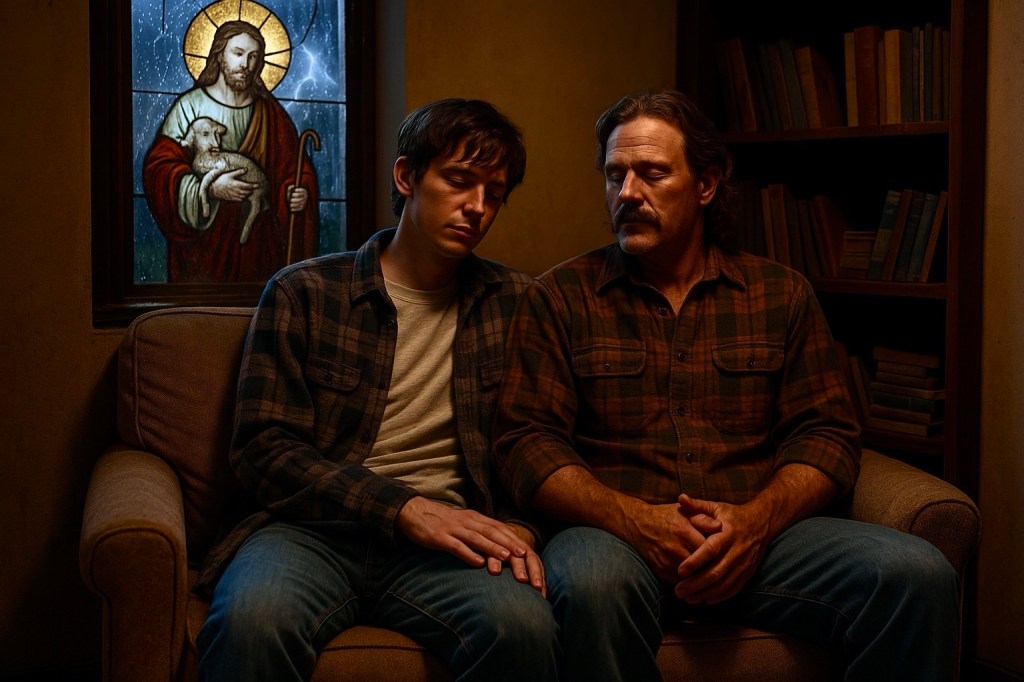
    Tyler didn’t answer at first. He was watching the lightning flash behind the stained glass—Christ the Shepherd lit up in flickers of blue and gold. “Not a bad place to get stuck,” he said softly.

    They settled into the little room off the back hallway—part storage, part prayer nook. A loveseat sat against one wall, old and sunken in places, and a shelf of dusty devotionals lined the opposite wall like forgotten psalms.

    Tyler sat first, curling one leg under him. Clyde followed, stiff at first. The air smelled of wood polish and rain.

    Neither spoke for a while.

    The thunder moved closer.

    Tyler’s voice came quiet. “Storms used to scare me. When I was a kid.”

    Clyde looked over. “Me too.”

    Tyler gave a faint smile. “Not the thunder. Just… the feeling like something was comin’ for me. Like the house couldn’t quite hold.”

    Clyde nodded slowly. “Yeah.”

    The silence returned, but it wasn’t empty.

    Then Clyde said, voice low and unsure, “There’s nights I still feel it. That ache. Not just for someone beside me… but for someone who sees it all and doesn’t flinch.”

    Tyler didn’t move. Just listened.

    Clyde went on. “I spent half my life tryin’ to shut that down. To be a man nobody had questions about. And I was good at it, mostly.” He gave a rough breath of a laugh. “Guess the trouble came when I stopped wantin’ to be unseen.”

    Lightning lit the windows again, and the thunder came close behind.

    Tyler reached over—just a hand on Clyde’s knee, quiet and steady. Not pulling. Not asking. Just… there.

    Clyde looked at it. Then at Tyler. His voice shook a little. “I still want it sometimes.”

    Tyler held his gaze, warm and unswerving.

    “But not as much,” Clyde whispered, “as I want it to be holy.”

    Something passed between them then—heavier than want, lighter than fear. Like grace threading through the air.

    They both leaned back into the worn cushions, shoulders touching now–warm and steady. Tyler let his hand fall away, but the closeness remained, no longer needing to ask for space.

    “We’re not wrong for needing,” he said gently. “But we’re free to choose what we do with it.”

    They sat there, the storm drumming above like it was testing the roof. Clyde let his eyes close for a moment.

    When he opened them, he said, “Would you pray?”

    Tyler nodded once, then bowed his head—not in performance, but in offering.

    The words were soft. Just enough to be heard above the rain.

    “Lord, be near. In the ache, in the waiting. Make this bond more Yours than ours. Keep it steady. Keep it clean. Amen.”

    They didn’t speak after that.

    Just sat together as the storm ran its course.

    Two men under one roof, shoulder to shoulder.

    Choosing peace.

    Choosing light.

    (Chapter from Held Fast, from the Tyler and Clyde series. Contact me if you want to read the whole story!)

  • Spring Thaw (chapter)

    Spring Thaw (chapter)

    The thaw came slow that year.

    Winter hadn’t bowed out so much as lingered, leaving behind half-frozen puddles and sullen banks of gray snow. But the sun was out today, and the breeze, while cool, no longer bit. It was the kind of day that hinted—just hinted—that spring wasn’t far off.

    It had been a few months since the cabin trip. Enough time for the heat of that night to fade into something quieter. Not forgotten. Just settled—like ash after flame.

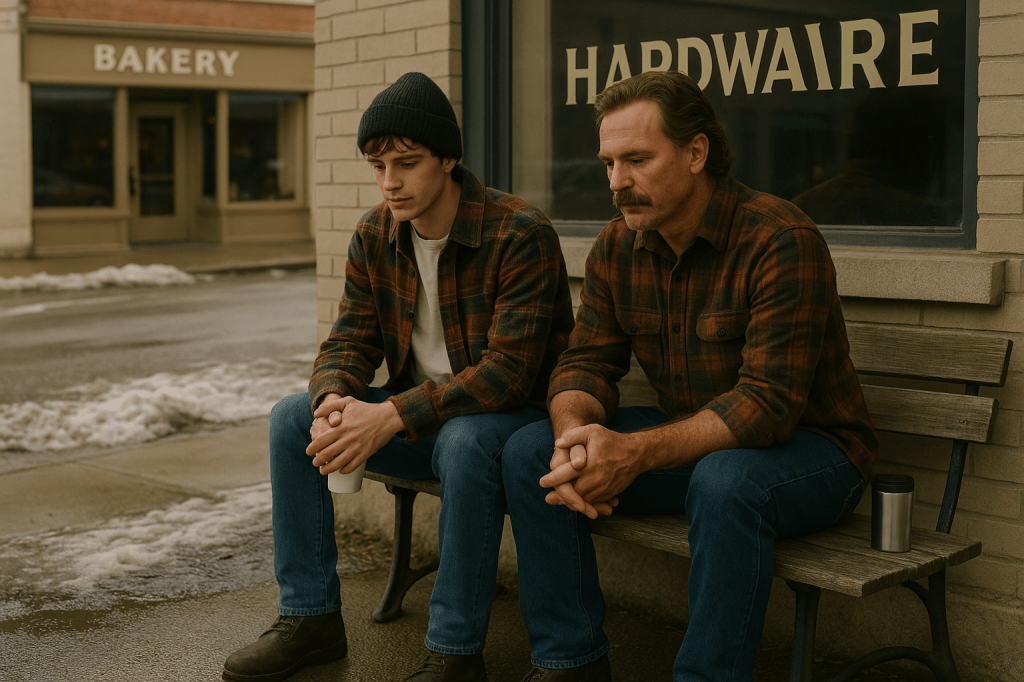
    Clyde sat on the bench outside the hardware store, thermos resting on the space between them. His boots were planted wide, hands folded, eyes half-focused on the traffic crawling through town. The kind of watching that wasn’t about what passed by, but what stirred underneath.

    Tyler showed up without ceremony—coffee in one hand, other tucked into the pocket of his flannel. He dropped into the seat beside Clyde like it wasn’t a decision at all. Just where he belonged.

    For a while, they didn’t say much. Cars passed. A breeze stirred wrappers along the sidewalk. Across the street, someone stepped out of the bakery with a bag of rolls and a cigarette already lit.

    “You ever notice,” Clyde muttered, “how things look softer once the snow starts pulling back? Like the ground’s rememberin’ how to breathe.”

    Tyler nodded, eyes on the slush-glazed curb. “Yeah. It’s messy, but… honest. Like nothin’s pretendin’ anymore.”

    Clyde made a low sound of agreement and reached for the thermos, taking a long sip before passing it over. Tyler drank and didn’t offer it back right away. His shoulder bumped Clyde’s, barely.

    He let it stay.

    “It’s been quiet,” Tyler said finally. “Not in a bad way. Just… quieter since we got back.”

    Clyde nodded once. “Different kind of quiet.”

    “You good with it?” Tyler asked.

    A beat passed.

    “I am,” Clyde said. “Not sure I know what to call it yet. But I’m at peace.”

    Tyler gave a soft hum of agreement. “I don’t regret it. That night. Not even the part that maybe shouldn’t’ve happened.”

    Clyde didn’t look over. Just let out a long, slow breath. “Me neither.”

    They lapsed into silence again, but this one felt full—like the space between them had grown wide enough to hold what they weren’t saying out loud.

    “You ever think,” Tyler said, “that peace don’t always come clean? Sometimes it just shows up in the not-runnin’.”

    Clyde smiled faintly, almost to himself. “Feels like that now.”

    Tyler leaned back slightly, his shoulder easing against Clyde’s again. Not heavy. Not meant to test anything. Just… there.

    And Clyde stayed where he was.

    Overhead, water dripped from the awning, landing with a soft tap between their boots. Down the street, a bell jingled as someone stepped out of the diner. Life kept moving, slow and ordinary.

    But for the first time in weeks, it felt like they weren’t chasing clarity. Just resting in the middle of it.

    The thaw had started.

    And neither of them moved to hurry it.

    (Chapter from Held Fast, from the Tyler and Clyde series. Contact me if you want to read the whole story!)

  • Testing Boundaries (Excerpt)

    Testing Boundaries (Excerpt)

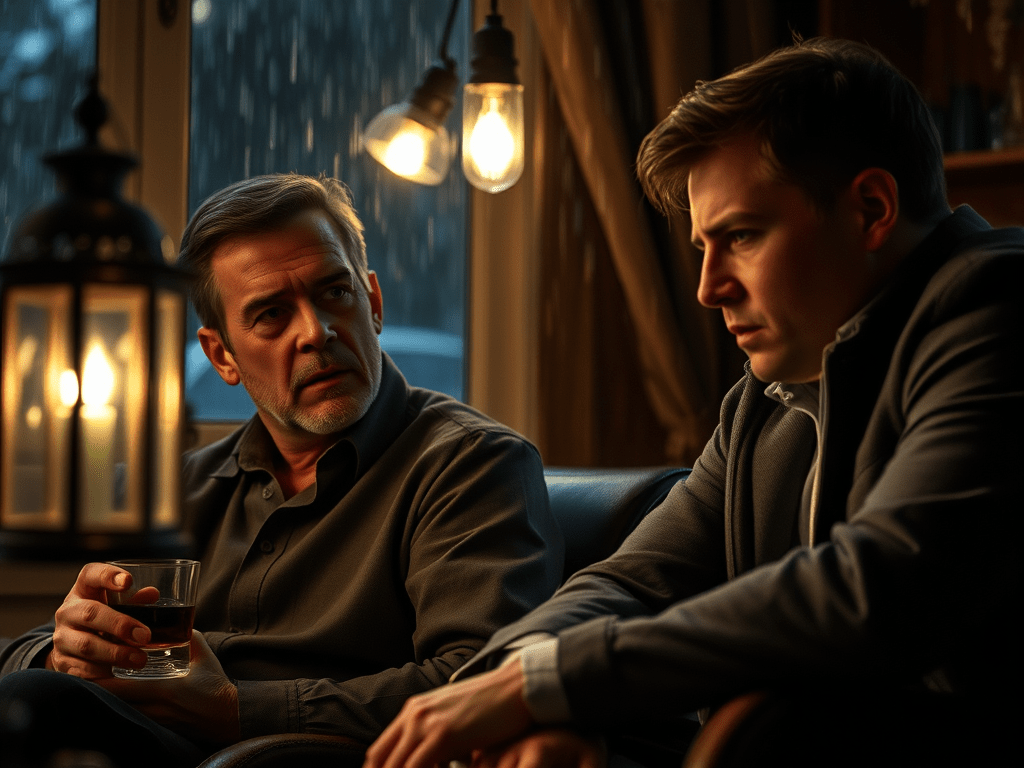
    Silence settled, broken only by the rain’s patter. Ted didn’t rush to fill it, which irked Ethan for no good reason. He shifted, fingers drumming the armrest, then blurted, “So you just… denied that part of yourself?”

    Ted’s expression didn’t change. Ethan had been holding that question since the porch—maybe longer. With no distractions—no phone, no noise—it slipped out.

    Ted set his glass down with a quiet thunk, letting the words hang. “I surrendered it,” he said finally. “And I never looked back.”

    Ethan scoffed lightly. “That easy, huh?”

    Ted’s lips curved, not quite a smile. “Didn’t say it was easy.”

    Ethan leaned forward, arms on his knees. “So what—you just decided one day those feelings weren’t real?”

    Ted shook his head. “Never said that either.”

    Ethan frowned.

    Ted exhaled, settling back. “What I’m sayin’ is, I had to choose. The world told me one thing. God told me somethin’ else. I trusted Him more’n I trusted myself.”

    Ethan crossed his arms. “And that worked for you?”

    Ted nodded, but something heavier flickered in his eyes. He stared into the lantern’s glow. “I almost didn’t,” he admitted.

    Ethan raised an eyebrow.

    Ted rubbed his jaw, exhaling through his nose. “For a while, I figured I’d got it wrong. Maybe I was holdin’ onto somethin’ outta fear. So I walked away—gave the world’s way a shot, thought I’d find what I was lookin’ for.”

    Ethan’s stomach tightened. He hadn’t expected this.

    Ted shook his head, gaze settling on him. “Didn’t. Lost more’n I care to admit.” He leaned forward. “You wanna know why I trust God more’n myself? I’ve seen what happens when I don’t.”

    Ted sipped his water, calm again. “Spent years thinkin’ I had to choose between bein’ loved and bein’ faithful. But I was askin’ the wrong question. It wasn’t about that—it was about choosin’ Him.”

    Ethan swallowed, throat tight. He forced a smirk. “Not many people sound as sure as you.”

    “Took a long time to get here,” Ted said, a quiet laugh in his voice.

    Ethan watched him, the lantern light carving deeper lines in his face. He should’ve argued, laughed it off. But he didn’t want to. That scared him more than anything.

    Ted stood, grabbing a blanket from a closet and draping it over the couch. “In case it gets cold tonight.”

    (Excerpt from Narrow Road Together in the Ethan & Ted series. Contact me if you’d like to read the full story)

  • The Forge

    The Forge

    The fire spat embers into the night, a ragged glow against the Indiana pines. Caleb crouched by it, 52 years carved into his hands—calluses from swinging hammers, scars from swinging at life. Across the flames sat Eli, 48, eyes hollowed by years of hiding. Two men, strangers ‘til that retreat, now tethered by something neither could name ‘til it hit.

    Caleb tossed a stick into the blaze, sparks snapping like old guilt. “Grew up thinking God’d smite me for looking too long at a guy in church,” he said, voice gravel. “Dad preached hell—I believed it. Ran from it ‘til I couldn’t.”

    Eli nodded, boots scuffing dirt. “Same, different flavor. Mom said love was women or nothing. Tried it—married at 30, crashed by 35. Never told her the guys on the rig stirred me more’n she did.”

    The wind carried smoke between them, sharp and honest. Caleb’s gut knew that ache—loving men, not like the world said, but bone-deep, beyond flesh. He’d chased it in shadows—porn flickering on a screen, two guys bonding, not touching, but close. Never fit the gay label, never fit straight. Eli’s story echoed—different road, same ditch.

    “Found Christ at 47,” Caleb said, poking the fire. “Broke me open—grace, not wrath. Been five years, still wrestle the pull. Not sex—just that hum when a guy gets me.”

    Eli’s laugh was dry. “Yeah. Forty-five for me—Jesus hauled me out of a bottle. Two years in, same fight. Thought I was alone ‘til this.” He waved at the fire, the space between.

    Caleb leaned forward, elbows on knees. “Ain’t alone. World don’t get it—men loving men, pure, no mud. But Scripture does. Jonathan and David—souls knit, no bed. That’s us, brother.”

    Eli’s eyes caught the glow, steadying. “Thought I’d die single, shamed. This… covenant? Feels like air.”

    They’d met that week—retreat mud, shared coffee, stories spilling over late nights. Caleb saw Eli’s flinch at a guy’s grin; Eli caught Caleb’s quiet when loneliness bit. No preaching—just truth, raw as split wood. They’d prayed it out, hands clasped, fire a witness—two men, battered but standing (Ecclesiastes 4:12—cord of three strands).

    “Role’s this,” Caleb said, voice firm. “Live it—men who love men, Christ’s way. World’s blind; we ain’t. Build it, brother—hammer and soul.”

    Eli tossed dirt on the flames, embers hissing. “Yeah. Forge it—us, others. No more hiding.”

    Dawn crept up, gray and sure. They stood, shoulders brushing—not erotic, but alive. Caleb’s hammer waited; Eli’s rig called. Two men, loving unique, God-lit, stepping into a world that’d never name it. But they did—covenant, forged in fire, strong as hell.


  • Understanding the Deep Ache for Brotherhood

    Understanding the Deep Ache for Brotherhood

    Let’s talk about the ache.

    It’s not loud. It doesn’t usually show up in small groups or sermons. But it’s there—sitting behind the ribcage like something unfinished. The longing for a brother—not just a buddy, but someone who sees you. Someone who knows your wiring, your story, and doesn’t flinch. A man you could walk with in honesty and depth, and never feel like too much.

    I know that ache well. Seems like the more “connected” we become via the Internet, social media, Zoom calls, etc., the less truly connected, in the day to day sense, we can be.

    I’ve got brothers I can talk to—guys I can reach out to when it gets hard. Some of them know the deepest parts of my story. But none of them live close by. None I can really do life with day in and day out. That kind of shoulder-to-shoulder bond—the one you can lean on without explaining it every time—it’s not here right now. And I feel that absence.

    So this post? It’s not just for you. It’s for me too.

    Because this ache, this deep desire for covenant brotherhood, isn’t some fringe longing. It’s not about being needy or codependent. It’s part of God’s design. We were made for this kind of connection. Jesus had it. David and Jonathan had it. It’s the kind of friendship that’s forged, not found. It’s rooted in Christ, sharpened by time, and held together by grace.

    But what if you don’t have it?

    That’s where a lot of us live. In the in-between. Wanting it so deeply it hurts, but not knowing how to find it—or what to do with ourselves while we wait.

    And in that waiting, a lot can stir.

    Old habits. Old fantasies. I’ve found myself drawn toward imagined scenarios—emotional, sometimes even erotic. Longings that twist just enough to offer the illusion of being seen, known, held.

    But it never lasts.

    It flares up, then fades. And afterward, the ache is sharper. The loneliness deeper. The illusion of closeness can never hold the weight of what I really need.

    Still, I understand why the pull is there. Because at its core, this longing isn’t wrong. It’s holy ground that’s been stepped on by the world, by the enemy, by the wounds of our past. The desire to be known, loved, and not alone—it mirrors the very heart of God.

    So what do we do with the ache when the brother hasn’t come?

    We bring it to Jesus.

    Not the polished version. The real one. The messy ache. The unmet need. The quiet grief of another day without that kind of companionship. We lay it down—again and again—at the only altar that can hold the weight of our longings.

    Jesus isn’t afraid of it. He’s not rolling His eyes. He knows this ache. He felt it too—misunderstood, unseen, carrying love that had nowhere to land.

    And He’s not telling us to pretend it’s fine. He’s inviting us to trust that He’s not wasting the waiting.

    See, this isn’t about giving up on brotherhood. It’s about surrendering the form we think it has to take. It’s letting Jesus be enough in the meantime. Because He’s doing something in us while we wait. Something sacred. Something strong.

    And I have to believe that the ache, when surrendered, becomes the very soil where brotherhood can take root.

    So I’m still praying. Still hoping. Still staying open. Saying yes to the small invitations—firepit gatherings, book studies, texts that open doors. Some of those don’t lead anywhere obvious. But some might. Even if they don’t, they keep my heart soft. And that matters.

    And in the waiting, I hold onto this: I’m not forgotten. You’re not forgotten. We’re not broken for wanting something Jesus Himself modeled.

    I don’t have all the answers. But I know this much: chasing fantasy won’t fill it. Neither will stuffing it down. The way forward is surrender. Not because the ache will vanish—but because in Christ, it doesn’t own you anymore.

    And if you’re feeling that ache today too—man, I’m with you.

    Let’s keep showing up. Keep trusting. Keep bringing our need to the only One who truly sees.

    He’s not going anywhere.

    And I don’t think He’ll leave us in this ache forever.

  • The Altar of Surrender

    Ethan had been fighting the same war since he was nine. It started with a memory—his older cousin, shirtless and laughing, tossing a baseball with a grace Ethan could never mimic. He’d wanted to be him, to wear that strength like a second skin. But the want turned dark, curling into a heat he didn’t understand, a pull that followed him into adolescence. By sixteen, it had a name—lust, envy, a tangled mess he hid behind a church-boy smile. He’d pray it away, fists clenched, begging God to rip it out. Make me normal. Make me good. But it clung like damp rot.

    Now, at twenty-eight, Ethan stood in his apartment, the late March light slanting through the blinds. He’d just hung up from a call with his pastor, who’d invited him to a men’s retreat. “Come as you are,” Pastor Dan had said. Ethan snorted. As he was? A man whose longing for brotherhood had fused with something erotic, something he couldn’t untangle? He’d tried everything—fasting, cold showers, dating women he didn’t want. Nothing worked. The desires still ambushed him, sparked by a coworker’s handshake or a stranger’s stride.

    He sank to his knees by the couch, the carpet rough against his shins. Jesus, I don’t know how to do this. He’d heard the phrase a thousand times—lay it at the cross—but it felt like jargon, a platitude with no map. He pictured a literal cross, splintered and bloody, and himself standing before it, hands empty. What did that even mean? Dump his shame there and walk away? He’d tried. It always came back.

    The retreat was a week away. Ethan spent the days wrestling. He opened his Bible to Galatians 2:20—“I have been crucified with Christ. It is no longer I who live, but Christ who lives in me.” The words stung. Crucified. Dead. Was that it? Not just handing over the mess, but letting it die with Him? He closed his eyes, picturing it—his envy, his hunger, nailed up there, bleeding out. Take it, Jesus. Kill it. His voice shook. I don’t want it anymore.

    It wasn’t a feeling, not at first. No rush of peace, no choir of angels. Just a choice, raw and deliberate. He kept at it, night after night, kneeling until his knees ached. This longing—the way it twists me—it’s yours. I’m done owning it. He imagined driving the nails himself, each prayer a hammer strike. The fantasies still came—unbidden, vivid—but he’d stop, breathe, and say it again. Yours, not mine. It was clumsy, unglamorous, a surrender he had to remake daily.

    The retreat was a cabin in the woods, ten guys around a firepit. Ethan arrived late, nerves buzzing. Pastor Dan greeted him with a nod, and the others—gruff, bearded types mixed with quieter ones—offered handshakes. He braced for the old pull, the way his eyes might linger, but he whispered under his breath, Yours, Jesus. It didn’t erase the flicker, but it shifted the weight.

    The first night, they shared stories. Dan went first—his own pride, a marriage he’d nearly wrecked. Another guy, Paul, talked about porn, voice cracking. Ethan’s pulse raced. He could stay silent, safe. But the cross loomed in his mind, a place of death and release. He cleared his throat. “I’ve… wanted to be one of the guys my whole life. But it got messed up. Envy turned into… stuff I’m ashamed of. I’ve been giving it to Jesus, but it’s hard.”

    The fire snapped. He waited for the shift—disgust, distance. Instead, Dan leaned forward. “That’s real, man. Takes guts to say it.” Paul nodded. “Yeah. We’re all carrying something.”

    Ethan exhaled, shaky. They didn’t pry, didn’t flinch. They just sat with it, with him. The next day, they hiked, fished, laughed over burnt hot dogs. Paul clapped him on the back after he snagged a trout—awkwardly, but still a win. “Nice one, brother.” The word landed soft, true.

    That night, Ethan knelt by his bunk, the cabin quiet. Jesus, thank you. For taking it. For them. He pictured the cross again, his desires pinned there, not gone but powerless. The surrender wasn’t a one-time fix—it was a rhythm, a daily dying. But it worked. Not because he felt clean, but because he trusted the one who’d already carried it.

    Months later, the group stuck. They met for coffee, prayed over texts. Ethan still stumbled—the old pull flared at a gym locker room or a friend’s grin—but he’d name it, nail it down. Yours. And the brothers stayed, not as saviors, but as echoes of the cross—living proof he wasn’t alone. Christ was the root; they were the branches. Ethan wasn’t healed, not fully. But he was held.

  • The Weight and the Wonder (chapter)

    The Weight and the Wonder (chapter)

    The morning light slanted through the cabin windows soft and slow, catching motes of dust in its beams. A faint breeze stirred the curtains. The fire had long since gone out, leaving only a few glowing coals beneath the ash.

    Clyde sat at the table, mug in hand, elbows resting heavy on the wood. His flannel shirt hung unbuttoned over a clean tee, sleeves rolled up. He wasn’t moving much—just watching steam curl from his coffee like it had something to say he didn’t know how to hear.

    Behind him, the floor creaked. Tyler emerged from the back room, barefoot, hair still mussed from sleep, hoodie half-zipped over his bare chest. He didn’t say anything at first. Just padded into the kitchen and poured himself a cup.

    He didn’t ask how Clyde slept.

    Clyde didn’t ask him to sit.

    But Tyler did, folding into the chair across from him like it was the most natural thing in the world.

    The silence wasn’t awkward. It was warm. Full.

    Like they’d both remembered something in the night they’d never known before.

    Clyde finally cleared his throat. “I, uh… put a fresh pot on. Thought you’d want some.”

    Tyler nodded, taking a sip. “Thanks.”

    They sat like that for a long stretch, mugs in hand, the weight of what had passed between them settling like morning dew.

    “I figured I’d go clear the brush behind the toolshed today,” Clyde said eventually, not looking up. “Been meanin’ to get to it.”

    Tyler smiled softly. “Want a hand?”

    Clyde nodded once. “If you’re offerin’.”

    “I am.”

    It wasn’t avoidance. It was agreement—unspoken but understood. They’d talk. But not yet. Not with words.

    By midday, they were back in the rhythm of work. The sun was warm, filtering down through the pines as they cleared branches and hauled broken limbs to the burn pile. Sweat ran down their backs, shirts stuck to skin. They didn’t say much, but every so often their eyes met—and held, just for a second.

    Not afraid.

    Not ashamed.

    Just… searching. Remembering.

    When they took a break, Clyde handed Tyler a bottle of water and sat down hard on a split log, wiping his brow. Tyler sat beside him, close but not touching.

    Clyde let out a breath, rough around the edges. “I don’t know what to say about last night.”

    Tyler took a drink, then leaned forward, arms resting on his knees. “Me neither. But I don’t think we have to explain it all today.”

    Clyde nodded, jaw tightening. “It felt… real. I ain’t gonna pretend it didn’t.”

    Tyler turned to look at him. “Same.”

    They were quiet again, the breeze rustling through the trees like it was listening in.

    “I spent most my life thinkin’ if I ever crossed that line, it’d ruin me,” Clyde said slowly. “But I don’t feel ruined.”

    Tyler’s voice was low. “You’re not. Neither of us are.”

    Clyde looked down at his hands.“It wasn’t right—not in the way the world measures it. But there was a kind of… reverence in it. I can’t tell you if it was holy or not. But it didn’t feel dirty. It felt… honest.”

    Tyler nodded, watching him. “It wasn’t just a thing that happened. It was a moment. And yeah, we’ll have to walk through it. But I think God’s not afraid of what’s real. I think He meets us there.”

    Clyde looked up then, eyes steady. “You believe that?”

    “I do.”

    Another long pause. Then Clyde let out a breath that seemed to shake something loose in his chest. “I ain’t sure what comes next.”

    Tyler reached over, laid a hand gently on Clyde’s arm. “Then we walk it out. One step at a time. No shame. No hiding.”

    Clyde looked at the hand, then up at Tyler. “I’m still scared.”

    “Me too,” Tyler said. “But I’d rather be scared and honest than safe and alone.”

    The words settled between them like an anchor.

    And for the rest of the afternoon, they worked side by side again—brush and sweat, sun and stillness—less like men who’d messed up and more like men learning what grace really meant.

    Something had shifted.

    Not broken.

    Not lost.

    Just changed.

    And neither of them ran from it.

    (Chapter from Still With You in the Tyler and Clyde series. Contact me if you’d like to read the full story!)

  • When the Fire Settled (edited chapter)

    When the Fire Settled (edited chapter)

    The fire had burned low inside the cabin, just a slow curl of flame flickering over the last logs in the stone hearth. The room smelled faintly of smoke and cedar, the warmth of the blaze soft against the walls. They hadn’t talked much since supper. A few comments about the food, a short laugh over Clyde nearly dropping the pan off the grill, and then… just stillness.

    Tyler sat on the braided rug, one knee pulled up to his chest, hoodie sleeves half-pushed to his forearms. Clyde was beside him on the old leather couch, one boot off, socked foot planted on the floor. They were facing the fire, but neither of them was really looking at it anymore.

    The wind outside whispered against the cabin walls. The pines creaked in reply, like they were saying something neither man had the words for.

    Clyde shifted, elbows resting on his knees, hands folded. “You ever think,” he said quietly, “that silence feels more honest than half the stuff we say?”

    Tyler glanced at him. “Sometimes. Yeah.”

    Clyde nodded once, like that was all he’d meant to say, and maybe it was. But something hung in the air—weightier than the firelight, heavier than the day’s work. Tyler felt it between them, humming under the quiet like a thread pulled too tight.

    He looked at Clyde again. The firelight danced on his profile—weathered, tired, solid. There was something open in his face now, not guarded like usual. Not strong, exactly. Just… real.

    Tyler reached over and placed a hand on Clyde’s shoulder.

    Just that.

    Clyde’s shoulder was solid under Tyler’s hand—warm through the flannel, steady in a way that made Tyler’s chest tighten. He didn’t say anything. Just stayed there a moment, palm resting firm, thumb brushing once against the seam of Clyde’s shirt.

    Then Clyde turned slightly, and their foreheads met—an accident at first, then not. They stayed there, eyes closed, breathing the same breath. Something fragile and holy hovered in that space between them.

    Clyde spoke first, voice barely above a whisper. “I ain’t never let someone close like this.”

    Tyler swallowed. “Me neither. Not like this.”

    ….

    When it was done, they stayed close, breathing in sync, sweat cooling in the quiet. The fire had burned low, throwing long shadows up the log walls. Clyde lay on his back, eyes open, fixed on the ceiling like he was trying to anchor himself.

    Tyler lay on his side beside him, hand still resting near Clyde’s chest, not quite touching now.

    Neither spoke. There was too much to say.

    And not enough language to say it.

    …to be continued in “The Weight and the Wonder” later today

    (Edited chapter from Still With You from the Tyler and Clyde series, contact me if you’d like to read the full story!)

  • Something Solid (chapter)

    Something Solid (chapter)

    The creek behind Ted’s property ran quiet that afternoon, low from a dry spell but steady all the same. Tyler crouched at the bank, skipping rocks like he used to as a kid, boots half-dusty, half-muddied. The air smelled of pine and old leaves, warm with a hint of coming fall.

    Clyde sat nearby on a flat boulder, arms resting on his knees, watching the ripples Tyler’s throws left behind.

    Neither had said much for a while.

    Ted had invited them both out—“just a fire and some quiet,” he’d said—but he’d ducked inside to check on supper and left the two of them alone not long after. Maybe on purpose.

    Tyler stood, brushing his hands off on his jeans. “Don’t know why, but this place always slows my brain down.”

    Clyde gave a small grunt of agreement. “Somethin’ about water and woods. Strips the noise off.”

    Tyler looked over at him. “You ever think maybe God designed it that way? Like… made these places to help us remember what matters?”

    Clyde shifted, his gaze on the water. “Reckon He did. World’s loud. We make it louder.” A pause. “Truth don’t shout much.”

    Tyler chuckled, quiet. “Nah. It doesn’t.”

    He walked over and sat down next to Clyde on the rock. Their shoulders didn’t touch, but they didn’t need to. The closeness wasn’t forced—it just was.

    “I’ve been thinkin’,” Tyler said after a minute, “about what you said last week. About prayin’ honest.”

    Clyde didn’t look over, but his brow lifted slightly.

    Tyler kept going. “I started tryin’. Not just talkin’ to God, but tellin’ Him stuff I’d never even admitted to myself.” He let out a breath. “Thought He might be mad. But it’s weird… it’s like He already knew. Like He was waitin’ on me to say it just so I could hear it too.”

    Clyde nodded slow. “He’s good like that.”

    Tyler glanced down at the water. “That book you gave me… it didn’t fix me.” He paused. “But it started somethin’.”

    Clyde nodded, voice quiet. “That’s all I hoped for.”

    They sat quiet again, a hawk crying faint somewhere overhead.

    “I don’t really know what this is,” Tyler said, glancing at Clyde. “Us. This… whatever we’re buildin’. But I know it ain’t shallow.”

    Clyde’s jaw worked a bit, like he was chewing on the words. Then he said, “Don’t gotta name it to know it’s real.”

    Tyler nodded. “I don’t feel like I gotta prove anything around you. That’s new.”

    Clyde’s voice was low, steady. “I don’t feel like I gotta hide.”

    The words landed like a stone sinking slow into deep water.

    Tyler looked away, blinked a few times. “I used to think I needed somebody to complete me. Like there was this hole that only another guy could fill. And I chased that. Thought it was love. But now…” He trailed off, shook his head. “Reckon I just needed a brother who’d stay.”

    Clyde glanced at him then—just a flicker—and the corner of his mouth tugged up slightly.

    “Sounds about right.”

    They sat there, side by side, while the sun shifted through the trees and the creek rolled on.

    Ted’s screen door creaked open behind them. “Food’s up,” he called.

    Clyde stood, offered Tyler a hand. Tyler took it without hesitation, letting Clyde pull him up. Their grip lingered a beat—firm, steady.

    “Come on,” Clyde said. “Let’s eat.”They walked toward the cabin—not side by side, but close enough.
    More than nothing.
    Solid enough to hold.

    (Chapter from Solid Enough To Hold in the Tyler and Clyde series. Contact me if you’d like to read the full story.)
  • Amos and Jonah (Part 5)

    Amos and Jonah (Part 5)

    The seasons spun on, each one layering their story deeper into the land. The oak by the porch grew gnarled, its branches heavy with years, much like the men who sat beneath it. They’d carved out a life that defied the whispers of the world—a brotherhood so fierce it stood as a testament, a living sermon etched in calloused hands and shared silences.

    The physical pull never left, not entirely. It’d flare in quiet moments—when Jonah’s arm slung around Amos’s shoulders as they watched a storm roll in, or when Amos’s fingers grazed Jonah’s wrist passing him a mug of coffee. But they’d mastered it, turned it into a current that ran beneath their covenant, powering it rather than pulling it apart.

    One summer, a traveling preacher came through, a wiry man with a voice like thunder. He stayed a night at the farm, breaking bread with them in the flickering light of the kitchen. He watched them close, his keen eyes catching the way Amos filled Jonah’s plate without asking, the way Jonah’s hand rested easy on Amos’s arm as they laughed over some old story. After supper, the preacher sat back, pipe in hand, and said, “Y’all got somethin’ special here. Like David and Jonathan, souls knit together. Ain’t seen many live it out so true.”

    Amos and Jonah exchanged a look, a flicker of pride and something softer passing between them. “Just tryin’ to honor Him,” Amos said, and Jonah nodded.

    “Ain’t always easy, but it’s good,” Jonah added.

    The preacher left the next day, but his words stuck, a quiet blessing on what they’d built. And build they did—year after year, until the farm wasn’t just a patch of dirt but a legacy of faith and fidelity. The chapel became a gathering place for the scattered folk of the hills, drawn by the warmth of two men who lived what they preached. They’d sit on those oak benches, listening as Jonah read Scripture or Amos prayed in that low, steady voice, and they’d leave feeling the weight of something holy.

    Fall came again, decades piling up like the leaves drifting against the barn. Amos was slower now, his back stooped from years of bending to the plow, and Jonah’s hands shook when he whittled, but they still worked the land, still knelt in the chapel, still laughed like the young men they’d once been. One evening, as the sun dipped low and the sky burned crimson, they walked the fence line, checking posts like they’d done a thousand times. Amos stopped, leaning heavy on a post, breath fogging in the chill.

    Jonah paused beside him, concern creasing his brow. “You alright?” he asked, stepping close, his hand finding Amos’s shoulder.

    Amos nodded, catching his breath. “Just takin’ it in. This place. You. All of it.”

    Amos turned, his hazel eyes locking with Jonah’s, weathered and deep with years of shared struggle and triumph. The wind kicked up, rustling the crimson leaves around their boots, and for a moment, they just stood there, the weight of their bond heavier than the post Amos leaned on. Jonah’s hand stayed firm on Amos’s shoulder, a tether as real as the Kentucky clay beneath them.

    “Reckon we’ve walked this road right,” Amos said, his voice a low rumble, softened by the years. “Ain’t been easy, fightin’ what we felt, but we made it somethin’ better. Somethin’ He can look down on and call good.”

    Jonah nodded, his gray eyes steady, a faint smile tugging at his lips. “Aye. Brothers, true and deep. That’s what He gave us strength for. Ain’t no shame in lovin’ you like this—pure, like David and Jonathan. We kept it holy.”

    Amos straightened, clapping Jonah on the back, the gesture rough but warm, a seal on their unspoken vow. “Let’s head in. Coffee’s callin’, and I ain’t freezin’ out here for pride.”

    They turned toward the farmhouse, shoulders brushing as they walked, the chapel’s silhouette a quiet sentinel against the fading light. Inside, they shed their coats, the fire already crackling from earlier. Jonah grabbed the pot, pouring two mugs, while Amos sank into his chair, the creak of the wood as familiar as a hymn. They sat across from each other, steam curling up between them, and raised their mugs in a silent toast—not to romance, not to what could’ve been, but to the brotherhood they’d forged, a covenant stronger than steel, rooted in their faith.


    Years later, when the townsfolk found them—Amos gone in his sleep, Jonah a day after, unwilling to linger alone—the chapel still stood, their initials carved in the bench. The land bore their mark, a testament to two men who’d wrestled the hum into something glorious, a friendship that glorified God’s design. They buried them side by side under the sycamore, the tree’s roots curling deep, just like the bond they’d lived out to the end.

  • Amos and Jonah (Part 4)

    Amos and Jonah (Part 4)

    Years rolled on, and the farm flourished under their care, a testament to their labor and their faith. The townsfolk would talk—two bachelors living out there, thick as thieves, closer than brothers, working the land and praising the Lord with a fire few could match. They’d see Amos and Jonah at the market, bartering for seed or a new plow blade, their easy banter and shared glances a quiet marvel. Some whispered, wondering at the depth of it, but most just saw two men who’d found a rare thing—a bond forged in sweat and Scripture, unbreakable as the Kentucky hills.

    The years etched lines into their faces, turned Amos’s hair to silver and Jonah’s to a dusty gray, but the rhythm of their days held steady. They’d rise before dawn, coffee brewing on the old stove, and head out to tend the herd or mend a fence. The physical affection stayed—a constant thread woven into their lives, natural as breathing. A hand on the back after a hard day, a rough hug when the weight of the world pressed too heavy, a playful shove that’d spark a wrestle in the yard, their laughter ringing out across the fields.

    The hum lingered too, a quiet ember they’d long learned to tend without letting it flare. It was there in the way Jonah’s eyes would trace Amos’s broad frame as he split wood, or how Amos’s breath would catch when Jonah sang hymns in that low, steady tenor. But they’d made their choice, and it was a choice they renewed every day—with every prayer, every shared meal, every step they took side by side.

    One crisp autumn evening, as the maples blazed red and gold, they sat on the porch, rocking chairs creaking under their weight. The harvest was in, the barn stuffed with hay, and the air smelled of apples ripening on the tree out back. Jonah whittled now, a habit he’d picked up from Amos, shaping a small cross from a chunk of walnut. Amos leaned back, hands folded over his belly, watching the sun sink behind the ridge.

    “Reckon we’ve done alright, Jonah,” Amos said, his voice a deep rumble softened by time. “This life, this place. Him up there’s gotta be smilin’ down on it.”

    Jonah paused, the knife still in his hand, and looked over at Amos. The fire in his eyes hadn’t dimmed, not even after all these years. “More’n alright,” he said. “We took what He gave us—this pull, this whatever-it-is—and made it somethin’ good. Somethin’ holy, even.”

    Amos grunted, a sound that might’ve been agreement or just the comfort of hearing Jonah’s voice. “Ain’t been easy,” he said after a beat. “Times I wanted to give in, let it turn to somethin’ else. But you kept me straight. Iron sharpens iron, like you’re always quotin’.”

    Jonah grinned, setting the cross on the arm of his chair. “You did the same for me. Nights I’d lie awake, wonderin’ if we was fools to fight it. But then I’d hear you snorin’ through the wall, and I’d think, ‘Naw, that’s my brother. That’s my rock.’ And I’d pray for us both.”

    Amos turned his head, meeting Jonah’s gaze. There was a weight there, a tenderness that didn’t need words, but he spoke anyway. “I’d do it all again, you know. Every wrestle, every hard day, every time I had to pull back from you. ’Cause what we got—it’s rarer than gold. Ain’t many men get a friend like this, a brother like this.”

    Jonah nodded, his throat working as he swallowed down the swell of emotion. “Same, Amos. Same.”

    They fell quiet then, the crickets picking up their song as dusk settled over the farm. The chapel still stood at the edge of the field, weathered now but sturdy, a silent witness to their covenant. Inside, they’d carved their initials into the back of one bench—A.K. and J.T., side by side, a small mark of the life they’d built. The townsfolk called it the Brotherhood Chapel, a name that stuck after old man Carver saw them praying there one Sunday and said it felt like walking into a piece of heaven.


    One winter, when the snow piled high and the wind howled through the eaves, Jonah took sick. A cough that wouldn’t quit turned into a fever that kept him abed, his lean frame shivering under a pile of quilts. Amos tended him like a mother hen, broth simmering on the stove, prayers muttered under his breath as he pressed a cool cloth to Jonah’s brow. The farm could wait—the cattle would survive a day untended—but Jonah couldn’t. Not to Amos.

    “Stop fussin’,” Jonah rasped one night, his voice weak but his eyes sharp. “I ain’t dyin’ yet. Got too much left to do with you.”

    Amos huffed, dipping the cloth back into a basin of cold water and wringing it out with hands that trembled just a touch. “Better not be dyin’. I ain’t haulin’ this farm alone, you hear? And I sure ain’t prayin’ in that chapel by myself.”

    Jonah managed a faint chuckle that turned into a cough, and Amos was quick to prop him up, a broad hand splayed across Jonah’s back, steadying him until the fit passed. Their eyes met in the dim lantern light, and for a moment, that old ember flared sharp and bright, a pang of longing they’d spent years taming. Amos’s hand lingered, warm against Jonah’s fevered skin, and Jonah’s breath hitched, not just from the sickness.

    “Lord, keep us,” Jonah whispered, a prayer as much as a plea, and Amos echoed it with a gruff “Amen.” He eased Jonah back onto the pillows, pulling the quilts up tight.

    “Rest now. We got this,” Amos said, his voice a rock in the storm.

    And they did. The fever broke by morning, leaving Jonah weak but alive, and Amos sank to his knees by the bed, head bowed in gratitude, tears cutting tracks through the grime on his weathered face.

    Spring came late that year, the frost clinging stubborn to the ground, but when it finally thawed, the land burst forth like a promise kept. Jonah was back on his feet, thinner now, his cheeks hollowed, but his spirit unbowed. They stood together in the chapel one Sunday, the air thick with the scent of damp earth and new growth seeping through the cracks. Jonah’s voice rose in a hymn—“Blessed be the tie that binds”—and Amos joined in, his rumble blending with Jonah’s tenor, rough harmony lifting to the rafters. Their shoulders brushed as they sang, and when the last note faded, they stayed there, side by side, breathing in the stillness.

    (Concluded in Part 5)

  • Amos and Jonah (Part 3)

    Amos and Jonah (Part 3)

    Days turned into weeks, and the rhythm of the farm carried them forward. They plowed the back forty together, the mules’ harnesses jangling as they trudged through the clay. Amos would clap Jonah on the back when they finished a row, his hand lingering a beat longer than necessary, and Jonah would grin, shoving him playfully in return. At night, they’d sit on the porch, the crickets serenading the stars, and talk about everything—Scripture, the herd, the way the river swelled after a rain.

    Sometimes they’d wrestle out in the yard, a rough tumble over a stray comment or just to burn off the restless energy that sparked between them. Amos would pin Jonah to the grass, both of them laughing, breathless, their faces inches apart until one of them would pull away, red-faced and muttering about needing water. The attraction simmered, undeniable, but they channeled it into something fierce and good—a bond that didn’t bend under the weight of temptation.

    One spring evening, after a long day mending fences, they sat by the creek that cut through the property. The water ran clear over smooth stones, and the willows dipped low, brushing the surface. Jonah stripped off his shirt, splashing water on his face, the droplets catching the golden light. Amos watched, his chest tightening, then looked away, picking up a flat stone to skip across the creek.

    “You’re a sight, Jonah,” he said, half-teasing, half-serious. “Oughta be careful, or I’ll forget myself.”

    Jonah laughed, shaking the water from his hair like a dog. “Ain’t my fault you’re weak, old man.” But his eyes softened, and he sat beside Amos on the bank, their shoulders brushing. “We’re doin’ right, ain’t we?” he asked quieter. “Keepin’ this in line?”

    Amos skipped another stone, watching it hop four times before sinking. “Reckon so. Ain’t easy, but it’s worth it. The Lord’s got us.”

    Jonah nodded, resting his forearms on his knees. “I’d rather have you as my brother, true and steady, than lose you to somethin’ fleeting. That’s what He wants, I figure. Men who stand together, lift each other up.”

    That summer, they built a small chapel on the edge of their land—nothing fancy, just a lean-to with a cross nailed above the door and a couple of benches hewn from oak they’d felled themselves. It became their sanctuary, a place where they could kneel together and lay their struggles bare before God. The chapel smelled of sawdust and resin, and the sunlight filtered through the gaps in the walls, painting stripes of gold across the dirt floor. They’d sit there after a day’s work, sweat-soaked and weary, and pray for the strength to keep their covenant, to honor the bond they’d forged not just with each other, but with the One who’d brought them together.


    The physical pull didn’t vanish—how could it? It was stitched into the fabric of who they were, two men carved from the same rugged earth, their lives entwined like the roots of the old sycamore that shaded the farmhouse. But they learned to dance with it, to let it fuel their brotherhood rather than fracture it. When Amos felled a tree, Jonah was there to haul the logs, their hands brushing as they hefted the weight together, a spark flickering but quickly smothered by a shared grunt of effort. When Jonah stumbled under the strain of a sick calf, Amos was there, his arm slung around Jonah’s waist to steady him, the warmth of his grip a quiet comfort they didn’t linger on too long. They’d laugh it off, clap each other on the back, and move on, their resolve a shield against the undertow of desire.

    Harvest season rolled in, the fields heavy with corn and the air thick with the drone of cicadas. They worked from dawn to dusk, scythes swinging in tandem, their rhythm so synced it was like one man mirrored in two bodies. One afternoon, the heat was unbearable, a wet blanket pressing down on the land. They stripped to their waists and waded into the creek to cool off, splashing water at each other like boys. Jonah tackled Amos into the shallows, and they wrestled, slick with mud and laughter, until Amos pinned Jonah beneath him, the current tugging at their legs.

    Their eyes locked, breaths heaving, and for a heartbeat, the world shrank to just them—the pulse of Jonah’s wrist under Amos’s hand, the bead of water sliding down Jonah’s temple. Amos’s grip tightened, then released. He rolled off, splashing back into the water with a groan.

    “Lord, give me strength,” Amos muttered, half to himself, half to the sky.

    Jonah sat up, grinning despite the flush in his cheeks. “He’s givin’ it, brother. We’re still standin’, ain’t we?”

    And they were. That was the miracle of it. The attraction was a fire, but they stoked it into something else—something that warmed rather than burned, something that lit the path they walked together. They’d sit by the fire at night, Amos whittling while Jonah read from the Psalms, his voice weaving through the crackle of the logs.

    “As iron sharpens iron, so one man sharpens another,” Jonah read one evening, glancing up with a knowing look.

    Amos nodded, the corner of his mouth twitching into a rare smile. “Reckon that’s us,” he said, shaving a curl of wood from the block in his hands. “Sharp enough to cut through anything the devil throws our way.”

    Winter came, blanketing the farm in snow, the fields glittering under a pale sun. They’d tromp through the drifts to check the cattle, their breaths puffing white in the air. One morning, Jonah slipped on a patch of ice, and Amos caught him, pulling him close to steady him. For a moment, they stood there, chest to chest, the cold biting their skin but the heat of each other cutting through it. Jonah’s hand rested on Amos’s arm, and Amos didn’t pull away—not right off. They looked at each other, the silence thick with all they wouldn’t say, and then Jonah stepped back, clapping Amos on the shoulder.

    “Thanks, big man,” he said, voice rough but light. “Ain’t goin’ down that easy.”

    Amos chuckled, shaking his head. “Better not. Who’d keep me in line?”

    Spring returned, and with it, a calf born under the first full moon. They named her Hope, a scrappy little thing with a coat like midnight. They knelt in the straw of the barn, marveling at her, their shoulders pressed together as they watched her wobble to her feet. Jonah’s hand found Amos’s, a brief squeeze, and Amos returned it—two men bound by something bigger than themselves, something eternal.

    (Continued in Part 4)

  • Amos and Jonah (Part 2)

    Amos and Jonah (Part 2)

    Amos’s words hung heavy in the air, raw and unguarded. “Reckon I’d die for you, Jonah.” The confession slipped out like a stone dropping into a deep well, rippling through the silence of the farmhouse. Outside, the wind rustled the bare branches of the oak tree by the porch, a soft moan that mirrored the ache in both their chests.

    Jonah rose from his chair, the Bible still resting on the table, its leather cover worn smooth from years of touch. He crossed the room slow, his boots scuffing the pine floor, and stopped a pace behind Amos. “Don’t say that less you mean it,” Jonah said, his voice low but steady, like the hum of a hymn. “’Cause I feel the same, and it scares me somethin’ fierce.”

    Amos turned, his hazel eyes catching the firelight, glinting with a mix of resolve and torment. “I mean it. Ain’t no lie in me when it comes to you. But feelin’ it don’t make it right, does it? We’re men of the Word. We know what’s laid out for us.”

    Jonah nodded, his throat tight. He stepped closer, close enough that Amos could smell the sweat and earth clinging to him from the day’s labor, a scent as familiar as the fields they worked. “It’s a fight, ain’t it?” Jonah said, his voice trembling just a hair. “Lovin’ you like this and knowin’ we gotta turn it into somethin’ else. Somethin’ God can smile on.”

    Amos clenched his fists at his sides, the muscles in his forearms flexing under the rolled-up sleeves of his flannel shirt. “Ain’t never felt a pull this strong,” he admitted. “Not even when I was young and full of fool notions about the world. You’re in my bones, Jonah. But I ain’t here to defy Him. I’m here to serve Him.”

    Jonah reached out, hesitant, then rested a hand on Amos’s shoulder, firm and warm through the worn fabric. “Same,” he said. “We’re brothers in Christ first. That’s the covenant that matters. Whatever this is, we shape it to fit His will.”

    They stood there, locked in that touch, the fire popping behind them like a chorus urging them onward. The weight of their faith pressed down, but so did the strength of it, lifting them above the churn of their hearts. Amos finally stepped back, breaking the contact, and ran a hand over his stubbled jaw.

    “Let’s pray on it,” he said gruffly. “Ain’t no better way to sort this out.”

    They knelt together on the braided rug by the hearth, knees sinking into the faded colors woven by Amos’s mother years back. Jonah led, his voice steadying as he spoke. “Lord, You see us. You know every corner of our hearts, every stumble and every hope. We’re Yours, first and always. Take this bond we got, this love, and make it holy. Shape it to Your design, not ours. Give us strength to walk upright, to glorify You in all we do.”

    Amos murmured an “amen,” his head bowed, the firelight dancing across the planes of his face. When they rose, there was a quiet resolve between them, a pact forged in the heat of that moment. They wouldn’t run from what they felt, but they wouldn’t let it rule them either. It’d be a brotherhood, deep and true, tempered by faith.

  • Amos and Jonah (Part 1)

    Amos and Jonah (Part 1)

    The sun was dipping low over the rolling fields of eastern Kentucky, painting the sky with streaks of orange and violet. The air carried the earthy scent of freshly turned soil and the faint sweetness of clover. Two men stood at the edge of a weathered wooden fence, their boots caked with the red clay of the land they’d worked since dawn. Amos, broad-shouldered and sun-burned, leaned against a post, his calloused hands resting on the splintered wood. Beside him stood Jonah, leaner, with sharp cheekbones and eyes like the still waters of a pond at dusk. They were quiet for a moment, watching the last of the cattle amble toward the barn, their breaths visible in the cooling air.

    Amos broke the silence, his voice low and gravelly. “Good day’s work. Reckon the Lord’s pleased with hands that don’t idle.”

    Jonah nodded, pulling off his battered hat and running a hand through his sweat-damp hair. “Aye. Keeps the mind steady too. Idle hands, idle thoughts—ain’t no good comes from that.”

    They’d been working this land together for nigh on five years now, ever since Jonah had shown up at Amos’s doorstep, a drifter with a Bible tucked under his arm and a hunger for purpose. Amos had been alone then, his folks long gone, the farm too big for one man. Something about Jonah—his quiet strength, his unshakable faith—had made Amos offer him a place to stay. And stay he did. They’d built a life here, side by side, tilling the earth, raising livestock, and praying under the same roof each night.

    But there was something else too, something unspoken that lingered in the spaces between their words and glances. It had started small—a brush of hands when passing a tool, a lingering look across the supper table, the way Jonah’s laugh sent a warmth through Amos’s chest he couldn’t quite name. And for Jonah, it was Amos’s steady presence, the way he’d rest a hand on Jonah’s shoulder after a long day, firm and grounding, that stirred something deep within him. They both felt it, this pull, this ache. And they both knew it wasn’t simple.

    That night, after supper, they sat by the hearth in the small farmhouse. The fire crackled, casting shadows on the rough-hewn walls. Jonah had his Bible open on his lap, reading aloud from Proverbs, his voice steady and sure. Amos listened, whittling a piece of cedar with his pocketknife, the scent of the wood mixing with the smoke. When Jonah finished, he closed the book and set it aside, his eyes drifting to Amos.

    “You ever think about it?” Jonah asked, his tone careful, like he was stepping onto thin ice.

    Amos’s knife paused mid-stroke. He didn’t look up. “Think about what?”

    Jonah shifted in his chair, the floorboards creaking beneath him. “You know what I mean. Us. This… thing we don’t talk about.”

    The room went still, save for the pop of a log in the fire. Amos set the cedar and knife down on the table beside him, his hands resting on his knees. He met Jonah’s gaze, and there it was—the weight of it, the truth they’d both been circling like hawks over a field.

    “Yeah,” Amos said finally, his voice rough. “I think about it. More’n I should, maybe.”

    Jonah leaned forward, elbows on his knees, his fingers lacing together. “Me too. Ain’t easy, is it? Feelin’ somethin’ strong as this and knowin’ it don’t fit the way we’re meant to walk.”

    Amos nodded slow, his jaw tight. “Scripture’s clear. God’s design—it’s man and wife, family, fruitful land. Ain’t no room in that for… whatever this is.”

    “But it’s real,” Jonah said, his voice barely above a whisper. “I feel it when you’re near me, Amos. Like my soul’s tethered to yours. Ain’t lust, not all of it. It’s deeper. Like you’re kin, but more.”

    Amos stood abruptly, pacing to the window. He stared out at the dark fields, his broad frame silhouetted against the glass. “I know it,” he said, his back to Jonah. “I feel it too. Reckon I’d die for you, Jonah.”

    (Continued in Part 2)

  • Flesh and Bone: The Bond that Holds

    Flesh and Bone: The Bond that Holds

    The wind howled across the cliffs of Dunmoor, dragging salt and spray inland, where a village called Hearthglen clung to the land like a memory. Long before the world grew sharp and distant, the men of Hearthglen lived close—close to the earth, close to each other. They worked the fields and fished the sea, and when the day was done, they sat shoulder to shoulder by the fire, letting touch speak what words didn’t need to.

    Back then, no one questioned it. A hand on the back said, “I’m with you.” A grip on the arm meant, “We’re still standing.” Touch was strength shared, not stolen. The old elder Eamon called it God’s design: “He made us flesh and bone, lads—not just to toil, but to hold.”

    Torin and Calum weren’t brothers by blood, but they might as well have been. One loud, one quiet. One broad and brawny, the other lean and sharp-eyed. They moved through life like two halves of a single soul—until the world changed.

    Traders came with polished steel and slippery words. They sold more than goods; they sold a new idea of manhood: self-made, self-reliant, untouched. And slowly, the village followed. Arms that once held now hung at men’s sides. Brothers became rivals. Words replaced presence. The fire grew cold.

    Then the storm came.

    It tore through Hearthglen, ripping roofs, shattering boats, and leaving silence in its wake. Torin and Calum stood yards apart, working through the wreckage, silent, stiff, the space between them colder than the wind. And it was Eamon, bent and half-frozen, who limped into the heart of it all and shouted what everyone knew but had forgotten: “God gave us hands to hold—not just to hoard.”

    And when a boy named Finn—thin, trembling, alone—stepped into the square asking for help, no one moved… until Eamon did. He wrapped that boy in his frail arms and broke something open.

    Torin stepped toward Calum.

    “Brother,” he said—rough, unsure—and placed a hand on his shoulder.

    Calum flinched… then reached up and gripped Torin’s arm.

    And that was the spark.

    One by one, men followed. An embrace here, a clasp of arms there. Walls crumbled. Eyes softened. Voices rose. It wasn’t polished—it was raw, clumsy, honest. It was holy.

    They rebuilt the village, yes. But more than that, they rebuilt the bond. Shoulder to shoulder. Hand to back. Forehead to forehead in prayer. Touch, reclaimed. Pure. God-honoring.

    The traders came again, puzzled at what they found: not lonely men chasing coin, but a tribe forged in shared strength. They left, muttering. Hearthglen didn’t blink.

    Years passed. Eamon died, buried beneath the cliffs. They carved his words into stone:

    “Flesh and bone—meant to hold fast.”

    And they did.

    Men lingered after the work was done—not to compete, but to stay close. They taught the boys how to fish, how to plant, how to press a hand to a brother’s back when the weight got heavy. They didn’t call it covenant. They didn’t need to. It was carved in the way they leaned into each other. It was how God made them.

    Not just to stand tall.

    But to stand tall together.

  • The Risk of Brotherhood—Why It’s Worth It

    The Risk of Brotherhood—Why It’s Worth It

    Caleb could still feel it—the sharp jab of the pin as it pierced his fingertip. The bead of blood had welled up, bright red against the summer dust on his skin. Elias, all freckles and wild hair, pressed his own pricked finger against Caleb’s, their twelve-year-old hands trembling with the weight of it. The tall grass swayed around them, a green curtain behind Caleb’s peeling clapboard house, swallowing their giggles as they swore their oath. “Blood brothers,” Elias had declared, voice cracking with boyish gravity. “Forever, no matter what.” Caleb had nodded, believing every word, the sting in his finger a small price for something eternal.

    That was twenty years ago. Time had a cruel way of fraying promises, stretching them until they were gossamer-thin. Life piled up—college finals, cubicles, wedding vows—and the thread between them stretched too far. Elias slipped away first, his voice fading from late-night calls to clipped texts, then nothing. Caleb tried—phone calls unanswered, a birthday card returned unopened. Each silence cut deeper than that pin ever had, leaving a dull ache where trust used to be. He’d lost his brother, and the loss settled into his bones like damp cold.

    Now, whispers slithered through First Baptist’s pews, sharp as pine needles. Elias was back, hiding out in his uncle’s old cabin on the edge of town. “He’s different,” they said, voices low over coffee cups. “Angry. Broken.” Some swore he’d turned his back on God; others muttered about liquor bottles and shadows under his eyes. Caleb didn’t know what to believe—just that hearing it twisted the knife of losing Elias all over again, a fresh wound over an old scar.

    Then the letter landed in his mailbox. No envelope, just a scrap of notebook paper folded once, Elias’s jagged handwriting spilling across it: “Caleb—I need you. Come now. Cabin.” No sorry, no explanation—just a plea, raw and reckless. Caleb sat at his kitchen table, the note trembling in his hands, the clock ticking past midnight. He wanted to crumple it, let it rot with the junk mail. Why should he go? After years of silence, why risk the sting of Elias’s temper—or worse, indifference? The rumors gnawed at him: what if his friend was too far gone? But that echo—“No matter what”—rattled in his skull, a stubborn ghost of a boy’s voice. It wouldn’t let him sleep.

    So he drove. The road to the cabin snaked through a forest of pines, their branches clawing at the sky in the gray March dusk. Gravel crunched under his tires, each mile tightening the knot in his gut. What if Elias didn’t mean it? What if this was a fool’s errand? The cabin loomed ahead—sagging roof, windows dark like hollow eyes. Caleb killed the engine, his breath fogging in the chill. He knocked, the sound swallowed by the woods. The door groaned open, and there stood Elias—gaunt, a hint of gray threading his hair, his face a map of hard years. But those eyes—still green, still his—locked onto Caleb’s.

    “Caleb,” Elias croaked, voice like dry leaves. He stepped aside, a silent invitation. “Didn’t think you’d show.”

    “Didn’t think you’d care,” Caleb snapped, the words sharper than the air between them. Old hurt hung there, thick and heavy.

    Elias pointed to a couch—springs poking through faded plaid—and Caleb sank into it, arms crossed. Elias paced, boots scuffing the warped floorboards, then stopped, hands jammed in his pockets. “Writing that note scared the hell out of me,” he said. “Thought you’d hate me. I… I didn’t know how to face you after I disappeared.”

    Caleb’s jaw tightened. “You didn’t disappear, Elias. You left. I called. I wrote. You shut me out.”

    “I know.” Elias’s voice splintered, raw-edged. “Everything fell apart—lost my job, my wife walked out. I was a wreck, drowning in it. I pushed everyone away because I couldn’t stand them seeing me like that. Especially you. Thought you’d be better off without me dragging you down.”

    The confession landed like a stone in Caleb’s chest. All those years, he’d pictured Elias moving on, carefree, while he nursed the rejection. But this—shame, not apathy—had built the wall between them. “You should’ve told me,” Caleb said, quieter now, the anger softening into something tender. “We were brothers.”

    Are,” Elias said, eyes fierce despite the weariness. “If you’ll still have me.”

    The room went still, the weight of the choice pressing down. Caleb could leave—protect himself, let the rumors bury what was left. Or he could stay, wade into the wreckage, like Jonathan standing by David against a king’s wrath, like Christ carrying a cross for the unworthy. A friend loves at all times, and a brother is born for adversity. The verse burned in his mind, unbidden.

    “Three hours on that damn road,” Caleb said, a crooked smile breaking through. “I’m not turning back now.”

    Elias let out a shaky breath, the mask of his guarded face cracking into something real—relief, maybe hope. They talked until the windows turned silver with dawn. Elias spilled it all: the layoffs, the divorce, the nights he’d raged at God and the bottle alike. Caleb admitted his own failures—pride that kept him from banging down Elias’s door, resentment that had festered too long. It wasn’t pretty. Trust was a bridge half-collapsed, rebuilt with shaky hands and honest words. But they built it, step by messy step, because brotherhood—covenant carved in blood and grace—was worth the risk.

    Weeks later, at church, Caleb caught the whispers again. “Elias seems lighter now.” He didn’t reply, just traced the faint scar on his fingertip—barely there, but indelible. The pinprick had faded, but the bond it marked had endured, tempered by fire, held by a promise neither could outrun. They were different men now, scarred and steady, and that was enough.

  • Brotherhood as Mirror: The Unseen Strength

    Brotherhood as Mirror: The Unseen Strength

    The parking lot was mostly empty now, just a handful of cars under the streetlights. The meeting had wrapped up a while ago, but Ethan, Nate, Ben, and Will lingered by Ben’s truck, hands in pockets, shoulders hunched against the cool night air.

    Ethan kicked a loose pebble, watching it skitter across the pavement. “I just don’t think I have it in me,” he muttered. “Not like you guys.”

    Ben leaned back against the truck, arms crossed. “Like us how?”

    Ethan shrugged. “I don’t know. The way you all just… carry yourselves. Confident. Solid. I still feel like I’m waiting for someone to tell me I’m actually a man, you know?”

    Nate exhaled, shaking his head. “Man, you really don’t see it, do you?”

    Ethan frowned. “See what?”

    Will clapped a hand on his shoulder. “You remember two weeks ago in small group, when Alex opened up about his dad walking out?”

    Ethan nodded. “Yeah. What about it?”

    Ben tilted his head. “Who do you think he was looking at when he told that story?”

    Ethan blinked. “I don’t know… all of us?”

    Nate shook his head. “No, man. He was looking at you. You didn’t say much, but you sat there, locked in, not looking away, not filling the silence just to make it easier. You made space for him to be real, and that’s why he kept talking.”

    Ethan opened his mouth, but no words came out.

    Ben smirked. “And what about last month when James came in pissed off, ready to tear someone’s head off over work drama? You didn’t try to fix it, didn’t tell him to calm down—you just let him be mad for a minute. Then you asked one question—‘What do you think God’s saying in this?’ And boom, the whole room shifted.”

    Ethan rubbed the back of his neck. “I was just—”

    Will cut in, voice steady. “You were just being you. And that’s the point.”

    Ben tapped his knuckles against the truck bed. “You think strength has to be loud. That leadership means standing up front, making speeches, calling the shots. But brother, look at Jesus. Look at the way He saw people. The way He spoke to them in a way that made them feel known.” Ben met Ethan’s gaze. “You got that in you, man. And you don’t even see it.”

    Ethan swallowed, shifting where he stood.

    It wasn’t the first time someone had said something like this. But tonight, outside this meeting, standing with these men—men he respected, men who saw him in a way he couldn’t yet see himself—it landed different.

    Will squeezed the back of Ethan’s neck, giving it a firm shake. “You’re already walking in it, brother. Just gotta step fully into what God’s put in you.”

    Ethan let out a slow breath, nodding once.

    Ben opened the truck door, but none of them moved to leave just yet. They stood there a little longer, under the quiet hum of the streetlights, the night stretching wide around them.

  • Reframing the Wild Heart of a Man

    Reframing the Wild Heart of a Man

    John Eldredge, in Wild at Heart, famously wrote that the core desires of a man’s heart are a battle to fight, an adventure to live, and a beauty to rescue. For a lot of men, that rings true. But for others—especially those who grew up feeling like outsiders to the rough-and-tumble world of masculine ideals—it can feel like a language that doesn’t quite fit.

    If you didn’t grow up throwing punches or chasing danger, does that mean you’re not fully a man? If your deepest longing isn’t to rescue a damsel in distress, are you missing something? Of course not. The heart of what Eldredge is saying is real—but it’s bigger than the way it’s often framed.

    Because at the core, every man is wired for something deeper.

    A Purpose to Stand For

    Not every man is built for battle in the traditional sense. But every man is called to stand—to protect, to uphold, to fight for what is right. Some men do this with their hands, others with their words, others by simply refusing to back down when life gets hard.

    Your battle might not be against flesh and blood, but against fear, addiction, or the lies that have tried to steal your identity. Maybe it’s the battle to stay faithful when the world tells you to compromise. Maybe it’s the fight to love well when past wounds tell you to close off.

    The fight is real, and it’s already at your doorstep.

    A Journey to Walk

    Some men crave risk and adrenaline. Others crave depth and meaning. But every man is on a journey, whether he realizes it or not.

    God calls us forward. He doesn’t let us stay stagnant. The life of faith is an unfolding road, and sometimes the biggest adventure isn’t in climbing mountains—it’s in stepping into who He made us to be, even when it’s terrifying.

    For some, the adventure is in action. For others, it’s in obedience. For all of us, it takes courage to keep walking when we don’t know what’s ahead.

    A Soul to Love

    This one can feel complicated, especially for men who don’t relate to the image of a knight rescuing a princess. But what if it’s not just about that?

    Every man is called to love. To sacrifice. To give of himself in a way that brings life. That might be for a wife and children, but it might also be for his brothers, his church, his people.

    Love is woven into us—not just romantic love, but the deep, fierce love that says I will stand by you. I will fight for you. I will protect what God has entrusted to me.

    This is the kind of love Christ modeled—the love that lays itself down, not to possess, but to serve. And that is a call no man is exempt from.

    The Question Isn’t “Do I Fit?”—The Question Is “What Has God Placed in Me?”

    The framework Eldredge laid out isn’t wrong—it’s just incomplete.

    The deepest calling of a man’s heart isn’t just about battle, adventure, or romance. It’s about purpose, journey, and love—the unique ways God has written strength into every man’s soul.

    Some men live that out by charging ahead. Others live it out by standing steady. Some fight with their fists, others with their prayers, others by never giving up on the ones they love.

    Whatever it looks like, it’s in you. It’s always been in you.

    The world doesn’t get to define your masculinity. God already has.

    And when you step into that—fully, freely, without comparison or fear—you’ll find you’re already living the life you were made for.