Tag: biblical brotherhood

  • The Lantern’s Keeper

    The Lantern’s Keeper

    The lighthouse leaned into the wind, its white paint flaking like old skin. Sam climbed the spiral stairs, a jug of oil sloshing in his grip, the echo of his boots sharp against the damp walls. Lucas trailed behind, a kerosene lamp swinging from his hand, its light dancing across the rust-streaked iron. The air smelled of salt and decay, a stubborn scent baked into this outpost on the edge of nowhere.

    “Running low,” Sam said, tipping the jug into the lantern’s reservoir at the top. Oil glugged out, dark and slow.

    Lucas set his lamp on the ledge, peering at the gauge. “Enough for tonight.”

    They’d been tending the place for months, ever since Sam’s dad died and left him the keys. Lucas had shown up the next morning, duffel slung over his shoulder, no explanation—just a nod and a decision to stay. Now, at twenty-six and twenty-seven, they were keepers of a light nobody else cared to claim.

    Sam struck a match, the hiss loud in the tight space. He lit the wick, and the lantern flared, throwing a beam into the fog beyond the glass. Lucas leaned against the railing, watching it carve through the dark. Words were spare up here. They didn’t need many.

    “Storm’s coming,” Lucas said, squinting at the horizon. “Feel it in the air.”

    “Always does,” Sam replied, wiping his hands on his jeans. He dropped onto the stool by the controls—his dad’s old perch—while Lucas stayed upright, arms crossed, a quiet shadow.

    They’d been friends since they were kids, fishing off the pier with Sam’s dad, splitting sandwiches from Lucas’s mom. Life had yanked them apart for a stretch—Sam to a warehouse, Lucas to odd jobs up the coast—but the lighthouse stitched them back together. Sam couldn’t face it alone, and Lucas wouldn’t let him try.

    “Ever think of bailing?” Sam asked, voice barely above the lantern’s hum.

    Lucas snorted. “To where?”

    “Somewhere that doesn’t smell like wet metal.” Sam rubbed his neck, staring at the flame. “This gig’s a grind.”

    “You’re here,” Lucas said, shrugging. “So I am.”

    Sam’s lips twitched—not a full smile, but close. He let it drop. Lucas didn’t waste breath on grand speeches, but he’d stuck around—hauled oil, patched leaks, weathered storms. That was enough.

    The fog thickened, swallowing the beam until it was a faint thread. Sam dug a thermos from his bag, pouring coffee into two chipped mugs. He slid one to Lucas, who took it with a grunt. They drank in silence, the warmth cutting through the chill, until Lucas reached into his jacket and pulled out a small, weathered book—dog-eared, spine cracked.

    “Got something,” he said, flipping it open.

    Sam raised an eyebrow. “Go on.”

    Lucas cleared his throat, voice rough but steady. “‘Two are better than one, because they have a good return for their labor. If either falls down, one can help the other up.’” He paused, glancing at Sam. “Ecclesiastes. Figured it fits.”

    Sam leaned back, mug cradled in his hands. “You’re getting soft.”

    “Says you.” Lucas smirked, but he kept reading, voice low against the wind. “‘Pity anyone who falls and has no one to help them up.’” He closed the book, tucking it away. “Dad used to read that one. Stuck with me.”

    Sam nodded, slow. “Mine said the light was a promise—keep it going, someone makes it home.”

    “Same deal, maybe,” Lucas said, sipping his coffee.

    “Maybe.” Sam stared at the lantern, its glow steady despite the gusts rattling the glass. “Feels like shouting into nothing some nights.”

    Lucas set his mug down, stepping to the lantern to tweak the wick. The flame surged, pushing back the dark a fraction more. “Someone’s out there. They’ll see it.”

    Sam watched him work—sure, unhurried. Lucas had been there since day one, no hesitation, like the lighthouse was his burden too. Sam hadn’t asked him to stay past that first night. He just did.

    The storm hit an hour later, wind howling through the cracks. The lantern flickered, and they moved in tandem—Sam wiping the lens with a rag, Lucas checking the fuel line. When it steadied, they sank back, Sam unrolling a sleeping bag by the wall, Lucas grabbing his from the corner.

    “Read me something else,” Sam said, settling in. “Keeps the noise out.”

    Lucas arched a brow but fished the book out again, flipping pages by the lantern’s light. “‘Carry each other’s burdens,’” he started, voice softening, “‘and in this way you will fulfill the law of Christ.’ Galatians. Short one.”

    Sam closed his eyes, the words settling over him like the warmth of the coffee. “Fits too.”

    “Thought so.” Lucas shut the book, stretching out on his own bag. “Wake me if it quits.”

    “Always do,” Sam murmured.

    The lantern hummed, a faint pulse in the dark. Sam drifted, the storm’s roar dulled by Lucas’s voice still echoing in his head. He thought of his dad, the light, the way Lucas had woven himself into both without a fuss. Not brothers by blood, but by something tougher—something that held.

    “Worth it?” Lucas asked, half-asleep across the room.

    “Yeah,” Sam said, not opening his eyes. “You?”

    “Yep.” Lucas shifted, the rustle of his bag fading. “Night.”

    “Night.”

    The wind screamed, but the light burned on. They slept, two keepers bound by a tower and a quiet pact, reading each other through the dark.
  • Crimson Vow (Part 2)

    Crimson Vow (Part 2)

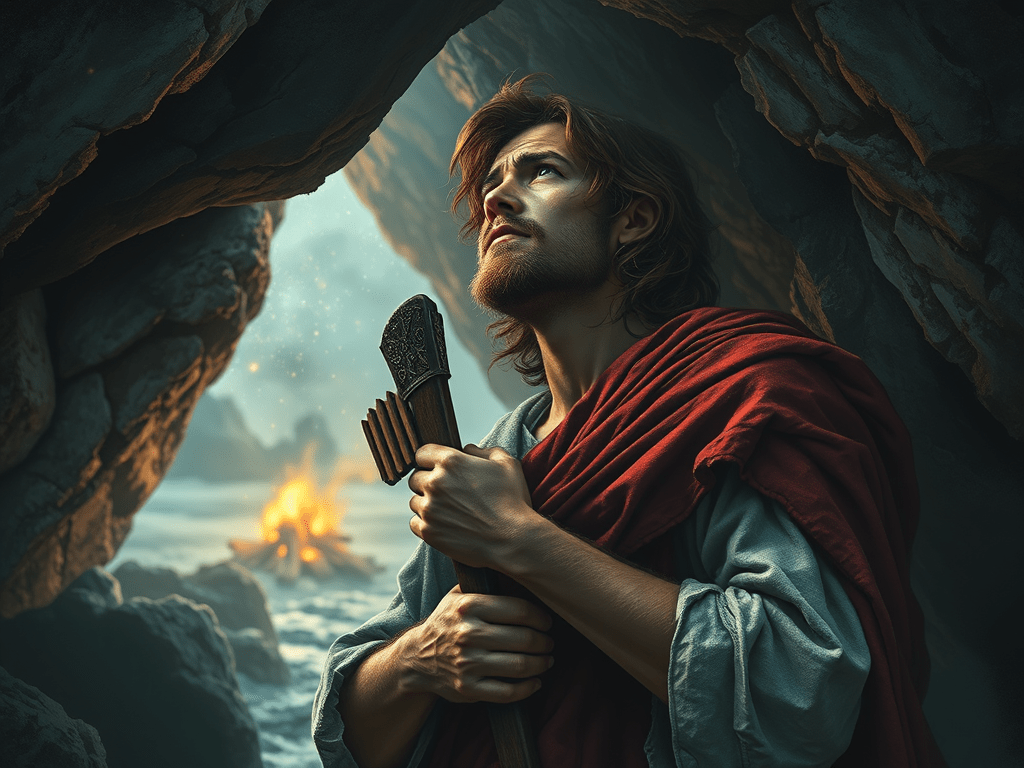
    Years stretched on, their paths sundered by war and fate. David became a fugitive king, leading outcasts through rugged cliffs, the crimson tunic fraying with each escape, the harp silent but ever-present. One frostbitten night, in a cave’s shadowed mouth, he wrapped the tunic tighter, bow in hand, and whispered to the stars, “Jonathan, your strength holds me still.” The wind howled, but Saul’s scouts prowled closer, their torches flickering like wolves’ eyes. Jonathan stayed with Saul, torn between love and duty, deflecting the king’s rages to buy David time. Yet their covenant held, a lifeline across the divide.

    Then came the news at Adullam: Saul and Jonathan had fallen at Mount Gilboa, slain by Philistine swords. The messenger, dust-caked and trembling, spoke of Jonathan’s final stand—how he’d fought to the last, his bow snapping as he shielded his father’s broken body, arrows spent, blood pooling on the ridge. David collapsed, clutching the bow, the harp slipping to the dust, and a cry tore from him, raw and shattering. “How the mighty have fallen!” he wailed. “Jonathan, my brother—your love was more precious than gold.”

    He took the harp, its strings trembling under his fingers, and poured out a lament, the notes rising over the camp like smoke. “Your bow lies still, your tunic ash, yet your vow endures,” he sang, tears streaking his face. He saw the stream again—their hands clasped, blood warm, starlight on the water—and his voice broke. The crimson tunic he burned that night, its threads curling slowly into the fire as he murmured, “Rest, my shield.” A shepherd’s farewell to a prince.

    He mourned through the ages, but he kept their oath. As king, he sought Mephibosheth, Jonathan’s lame son, and gave him a place at his table. The boy’s eyes, so like his father’s, met David’s as he said, “For your father’s sake, you’ll eat as my own.” He pressed a scarred hand to the boy’s shoulder, honoring the blood they’d shed by the stream. The bow hung in David’s chambers, the harp beside it, silent witnesses to their covenant—sealed in blood, forged in faith, and kept beyond the grave.

  • Crimson Vow (Part 1)

    Crimson Vow (Part 1)

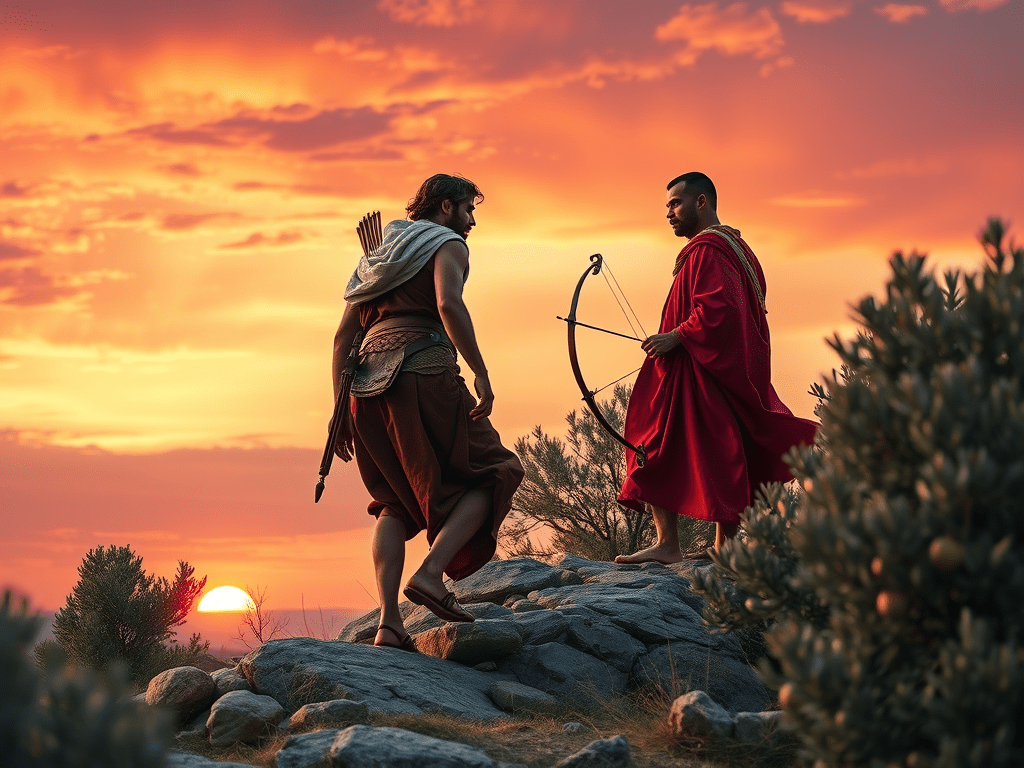
    The sun dipped below the hills of Gibeah, painting the sky in hues of crimson and gold. David, the shepherd-turned-warrior, climbed the rocky path toward the king’s encampment, his sling swaying at his side, a leather pouch slung over his shoulder. He’d been summoned again to play his harp for King Saul, whose spirit grew ever more restless. The echoes of his victory over Goliath still rang through Israel, a triumph that brought both praise and peril.

    At the hill’s crest, Jonathan, son of Saul, waited. His bow rested in his hand, his quiver slung across his back, and his dark eyes tracked David’s approach. His crimson tunic fluttered faintly in the breeze, simple yet regal, its edges catching the dying light. A faint smile curved his lips as David drew near.

    “You’re late,” Jonathan said, his tone light.

    David wiped sweat from his brow, grinning. “The sheep don’t heed royal commands. I had to pen them first.”

    Jonathan laughed softly, stepping forward to clasp David’s arm. “My father’s mood darkens hourly. Your music’s the only balm he knows.”

    David’s smile faded. “I’ll play, but I feel his gaze—like a wolf sizing up its prey.”

    Jonathan’s eyes flickered to the horizon. “He hears the songs. ‘Saul has slain his thousands, and David his ten thousands.’ It festers in him.”

    They walked toward the camp, the bond between them unspoken but palpable. They’d met weeks before, when David felled Goliath with a single stone, and Jonathan had watched, awestruck, as the shepherd claimed victory for Israel. In that moment, something kindled in Jonathan—a pull beyond rivalry. David was no ordinary man, and Jonathan, though heir to the throne, felt their souls tethered by a force divine.

    That night, in the dim glow of oil lamps, David sat before Saul, his fingers coaxing a melody from his harp. The king lounged on a cushion, his face haggard, his eyes shadowed. The music wove through the tent, a thread of peace battling the unseen torment gripping Saul’s mind. Jonathan lingered near the entrance, arms crossed, the scent of olive oil and dust thick in the air, watching his father’s tension ease, if only briefly.

    When the last note faded, Saul grunted a curt thanks and dismissed David with a wave. The shepherd bowed and slipped into the night. Jonathan followed, catching him near a grove of olive trees, their gnarled branches whispering in the breeze.

    “You’ve a gift,” Jonathan said, his voice hushed. “Not just with strings, but with souls. Even my father feels it.”

    David glanced at him, moonlight glinting in his eyes. “I seek only God’s favor, not man’s. But I’m glad to serve.”

    Jonathan nodded toward a path winding away from the camp. “Come with me.”

    They walked in silence, the camp’s clamor fading. Stars blazed overhead, a vast tapestry of light, and they stopped by a shallow stream, its waters shimmering like molten silver, the air tinged with pine and damp earth. Jonathan turned to David, his expression grave yet warm.

    “I’ve been thinking,” he began, hesitating. “About you. About Goliath. It wasn’t just skill or chance. The Lord stood with you.”

    David nodded. “He’s guided me since I was a boy, guarding my father’s flocks. Lions, bears—I’ve faced them. But that day… it was His hand.”

    Jonathan stepped closer, his voice dropping. “I’ve fought Philistines too, David. I’ve trusted the Lord to guide my bow. But you—you’re chosen. I see it. The people see it. And my father… he fears it.”

    David shifted, kicking a stone into the stream. “I’m no threat to him, Jonathan. I’m a shepherd, not a king.”

    “Not yet,” Jonathan murmured, the words heavy with portent.

    David met his gaze, searching for envy or doubt, but found only trust. Jonathan drew a small dagger from his belt, its blade catching the starlight. “I want you to know something. Whatever comes—whatever my father does—I stand with you. My heart is yours, as a brother’s.”

    David’s breath hitched. He had known loyalty, but this ran deeper, unyielding. “And mine is yours,” he said, his voice firm despite the swell of emotion.

    Jonathan held out the dagger. “Then let’s seal it—not with words alone, but with blood. A covenant before God.”

    David’s eyes widened, but he nodded. Such oaths were rare, sacred—binding beyond death. Jonathan pressed the blade to his palm, wincing as it bit into his flesh. Blood welled, dark and glistening, and he handed the dagger to David. The shepherd took it, mirroring the act, his hand trembling only slightly as the steel parted his skin.

    They clasped hands, blood mingling warm and wet between their palms. The pain was sharp, but it faded beneath the weight of their vow. “The Lord be between us,” Jonathan whispered, his grip tightening.

    “And between our houses forever,” David finished, his voice steady.

    Jonathan shed his crimson tunic, draping it over David’s shoulders, its fabric soft yet heavy with meaning. “Wear this,” he said. “Let it mark our bond.” David accepted it, the warmth a shield against the night’s chill. They stood there, hands locked, the stream murmuring beside them, their covenant sealed—blood and bond, a promise etched in flesh and spirit.

    Months passed, and Saul’s jealousy festered into madness. David’s victories swelled his fame, and the king’s heart turned black with envy. One evening, as David played his harp, Saul’s hand darted to a spear leaning nearby. Jonathan saw the glint of intent too late. The weapon flew, pinning David’s tunic to the tent wall as he dodged.

    “Father!” Jonathan cried, stepping forward, but Saul’s face twisted with rage.

    “Out!” the king bellowed, and David fled into the darkness, the crimson tunic trailing behind him.

    Jonathan found him later, hidden beneath a rocky overhang miles from Gibeah. David’s face was streaked with dirt, his eyes wide with betrayal, the tunic frayed at the hem from his flight.

    “He tried to kill me,” David said, his voice hollow.

    Jonathan knelt beside him, gripping his shoulder. “I know. His spirit’s warped—by fear, by something evil.” From his belt, he unslung David’s harp, scratched but whole, recovered from the tent. “I brought this. Keep it close.”

    David took it, fingers brushing the strings, a faint note rising into the night. “You risk too much.”

    “Nor will I let him take you,” Jonathan swore. “We need a plan.”

    They devised a signal under the stars: Jonathan would test Saul’s intent and warn David with arrows. Three shot beyond a stone would mean danger; one short of it, safety. Their scarred hands clasped again, the faint sting a reminder of their oath.

    David slipped deeper into the hills that night, the tunic his cloak, the harp slung across his back. Near a jagged slope, he lit a small decoy fire, sending it tumbling down with a push of stones, then vanished into the shadows as Saul’s scouts chased the glow.

    At the new moon festival, David hid near the stone Ezel, watching as Jonathan entered Saul’s tent. The prince sat at the king’s table, his pulse racing as he spoke of David’s absence.

    “He went to Bethlehem, to his family,” Jonathan said, feigning calm, his cloak hiding the dust of a dawn ride past Abner’s patrol to reach David earlier.

    Saul’s eyes narrowed, his grip tightening on a goblet. “You cover for him! That son of Jesse—he’ll steal my throne!”

    Jonathan’s gut churned, but he pressed on. “He’s loyal, Father. He fights for you.”

    Saul hurled the goblet, wine splashing across Jonathan’s chest. “You’d give your birthright to that shepherd?”

    The words pierced, but Jonathan stood tall. “I’d give it to God’s chosen.”

    Saul’s fury exploded, and he grabbed his spear. Jonathan dodged and ran, snatching his bow and quiver as he fled into the night. He reached the field at dawn, a boy in tow as a ruse, and nocked an arrow. David watched from his hiding place as the first arrow soared past the stone. Then the second. Then the third.

    Danger.

    Jonathan shouted to the boy, “Fetch the arrows!” As the lad ran off, he darted to David. “He wants you dead,” he whispered. “Go—into the hills, the caves. I’ll shield you as long as I can.”

    David’s eyes shimmered. “You shouldn’t have come. Abner—”

    “Guesses nothing,” Jonathan cut in. “I told him I scouted game.” He unslung his bow, its wood worn smooth from battles, and pressed it into David’s hands. “Take this too. It’s been with me in every fight. Let it remind you of me.”

    David gripped it, the curve fitting his palm. “I’ll carry it always.”

    They wept, their scarred hands pressed together, blood long dried but the bond unbroken. “The Lord be between us,” Jonathan murmured.

    “And our houses forever,” David replied.

    They parted—Jonathan to the boy, David to the wilderness, the bow over one shoulder, the harp over the other, the crimson tunic a fading banner.

    (Continued in Part 2 tomorrow)

  • Understanding the Deep Ache for Brotherhood

    Understanding the Deep Ache for Brotherhood

    Let’s talk about the ache.

    It’s not loud. It doesn’t usually show up in small groups or sermons. But it’s there—sitting behind the ribcage like something unfinished. The longing for a brother—not just a buddy, but someone who sees you. Someone who knows your wiring, your story, and doesn’t flinch. A man you could walk with in honesty and depth, and never feel like too much.

    I know that ache well. Seems like the more “connected” we become via the Internet, social media, Zoom calls, etc., the less truly connected, in the day to day sense, we can be.

    I’ve got brothers I can talk to—guys I can reach out to when it gets hard. Some of them know the deepest parts of my story. But none of them live close by. None I can really do life with day in and day out. That kind of shoulder-to-shoulder bond—the one you can lean on without explaining it every time—it’s not here right now. And I feel that absence.

    So this post? It’s not just for you. It’s for me too.

    Because this ache, this deep desire for covenant brotherhood, isn’t some fringe longing. It’s not about being needy or codependent. It’s part of God’s design. We were made for this kind of connection. Jesus had it. David and Jonathan had it. It’s the kind of friendship that’s forged, not found. It’s rooted in Christ, sharpened by time, and held together by grace.

    But what if you don’t have it?

    That’s where a lot of us live. In the in-between. Wanting it so deeply it hurts, but not knowing how to find it—or what to do with ourselves while we wait.

    And in that waiting, a lot can stir.

    Old habits. Old fantasies. I’ve found myself drawn toward imagined scenarios—emotional, sometimes even erotic. Longings that twist just enough to offer the illusion of being seen, known, held.

    But it never lasts.

    It flares up, then fades. And afterward, the ache is sharper. The loneliness deeper. The illusion of closeness can never hold the weight of what I really need.

    Still, I understand why the pull is there. Because at its core, this longing isn’t wrong. It’s holy ground that’s been stepped on by the world, by the enemy, by the wounds of our past. The desire to be known, loved, and not alone—it mirrors the very heart of God.

    So what do we do with the ache when the brother hasn’t come?

    We bring it to Jesus.

    Not the polished version. The real one. The messy ache. The unmet need. The quiet grief of another day without that kind of companionship. We lay it down—again and again—at the only altar that can hold the weight of our longings.

    Jesus isn’t afraid of it. He’s not rolling His eyes. He knows this ache. He felt it too—misunderstood, unseen, carrying love that had nowhere to land.

    And He’s not telling us to pretend it’s fine. He’s inviting us to trust that He’s not wasting the waiting.

    See, this isn’t about giving up on brotherhood. It’s about surrendering the form we think it has to take. It’s letting Jesus be enough in the meantime. Because He’s doing something in us while we wait. Something sacred. Something strong.

    And I have to believe that the ache, when surrendered, becomes the very soil where brotherhood can take root.

    So I’m still praying. Still hoping. Still staying open. Saying yes to the small invitations—firepit gatherings, book studies, texts that open doors. Some of those don’t lead anywhere obvious. But some might. Even if they don’t, they keep my heart soft. And that matters.

    And in the waiting, I hold onto this: I’m not forgotten. You’re not forgotten. We’re not broken for wanting something Jesus Himself modeled.

    I don’t have all the answers. But I know this much: chasing fantasy won’t fill it. Neither will stuffing it down. The way forward is surrender. Not because the ache will vanish—but because in Christ, it doesn’t own you anymore.

    And if you’re feeling that ache today too—man, I’m with you.

    Let’s keep showing up. Keep trusting. Keep bringing our need to the only One who truly sees.

    He’s not going anywhere.

    And I don’t think He’ll leave us in this ache forever.

  • The Altar of Surrender

    Ethan had been fighting the same war since he was nine. It started with a memory—his older cousin, shirtless and laughing, tossing a baseball with a grace Ethan could never mimic. He’d wanted to be him, to wear that strength like a second skin. But the want turned dark, curling into a heat he didn’t understand, a pull that followed him into adolescence. By sixteen, it had a name—lust, envy, a tangled mess he hid behind a church-boy smile. He’d pray it away, fists clenched, begging God to rip it out. Make me normal. Make me good. But it clung like damp rot.

    Now, at twenty-eight, Ethan stood in his apartment, the late March light slanting through the blinds. He’d just hung up from a call with his pastor, who’d invited him to a men’s retreat. “Come as you are,” Pastor Dan had said. Ethan snorted. As he was? A man whose longing for brotherhood had fused with something erotic, something he couldn’t untangle? He’d tried everything—fasting, cold showers, dating women he didn’t want. Nothing worked. The desires still ambushed him, sparked by a coworker’s handshake or a stranger’s stride.

    He sank to his knees by the couch, the carpet rough against his shins. Jesus, I don’t know how to do this. He’d heard the phrase a thousand times—lay it at the cross—but it felt like jargon, a platitude with no map. He pictured a literal cross, splintered and bloody, and himself standing before it, hands empty. What did that even mean? Dump his shame there and walk away? He’d tried. It always came back.

    The retreat was a week away. Ethan spent the days wrestling. He opened his Bible to Galatians 2:20—“I have been crucified with Christ. It is no longer I who live, but Christ who lives in me.” The words stung. Crucified. Dead. Was that it? Not just handing over the mess, but letting it die with Him? He closed his eyes, picturing it—his envy, his hunger, nailed up there, bleeding out. Take it, Jesus. Kill it. His voice shook. I don’t want it anymore.

    It wasn’t a feeling, not at first. No rush of peace, no choir of angels. Just a choice, raw and deliberate. He kept at it, night after night, kneeling until his knees ached. This longing—the way it twists me—it’s yours. I’m done owning it. He imagined driving the nails himself, each prayer a hammer strike. The fantasies still came—unbidden, vivid—but he’d stop, breathe, and say it again. Yours, not mine. It was clumsy, unglamorous, a surrender he had to remake daily.

    The retreat was a cabin in the woods, ten guys around a firepit. Ethan arrived late, nerves buzzing. Pastor Dan greeted him with a nod, and the others—gruff, bearded types mixed with quieter ones—offered handshakes. He braced for the old pull, the way his eyes might linger, but he whispered under his breath, Yours, Jesus. It didn’t erase the flicker, but it shifted the weight.

    The first night, they shared stories. Dan went first—his own pride, a marriage he’d nearly wrecked. Another guy, Paul, talked about porn, voice cracking. Ethan’s pulse raced. He could stay silent, safe. But the cross loomed in his mind, a place of death and release. He cleared his throat. “I’ve… wanted to be one of the guys my whole life. But it got messed up. Envy turned into… stuff I’m ashamed of. I’ve been giving it to Jesus, but it’s hard.”

    The fire snapped. He waited for the shift—disgust, distance. Instead, Dan leaned forward. “That’s real, man. Takes guts to say it.” Paul nodded. “Yeah. We’re all carrying something.”

    Ethan exhaled, shaky. They didn’t pry, didn’t flinch. They just sat with it, with him. The next day, they hiked, fished, laughed over burnt hot dogs. Paul clapped him on the back after he snagged a trout—awkwardly, but still a win. “Nice one, brother.” The word landed soft, true.

    That night, Ethan knelt by his bunk, the cabin quiet. Jesus, thank you. For taking it. For them. He pictured the cross again, his desires pinned there, not gone but powerless. The surrender wasn’t a one-time fix—it was a rhythm, a daily dying. But it worked. Not because he felt clean, but because he trusted the one who’d already carried it.

    Months later, the group stuck. They met for coffee, prayed over texts. Ethan still stumbled—the old pull flared at a gym locker room or a friend’s grin—but he’d name it, nail it down. Yours. And the brothers stayed, not as saviors, but as echoes of the cross—living proof he wasn’t alone. Christ was the root; they were the branches. Ethan wasn’t healed, not fully. But he was held.

  • Something Solid (chapter)

    Something Solid (chapter)

    The creek behind Ted’s property ran quiet that afternoon, low from a dry spell but steady all the same. Tyler crouched at the bank, skipping rocks like he used to as a kid, boots half-dusty, half-muddied. The air smelled of pine and old leaves, warm with a hint of coming fall.

    Clyde sat nearby on a flat boulder, arms resting on his knees, watching the ripples Tyler’s throws left behind.

    Neither had said much for a while.

    Ted had invited them both out—“just a fire and some quiet,” he’d said—but he’d ducked inside to check on supper and left the two of them alone not long after. Maybe on purpose.

    Tyler stood, brushing his hands off on his jeans. “Don’t know why, but this place always slows my brain down.”

    Clyde gave a small grunt of agreement. “Somethin’ about water and woods. Strips the noise off.”

    Tyler looked over at him. “You ever think maybe God designed it that way? Like… made these places to help us remember what matters?”

    Clyde shifted, his gaze on the water. “Reckon He did. World’s loud. We make it louder.” A pause. “Truth don’t shout much.”

    Tyler chuckled, quiet. “Nah. It doesn’t.”

    He walked over and sat down next to Clyde on the rock. Their shoulders didn’t touch, but they didn’t need to. The closeness wasn’t forced—it just was.

    “I’ve been thinkin’,” Tyler said after a minute, “about what you said last week. About prayin’ honest.”

    Clyde didn’t look over, but his brow lifted slightly.

    Tyler kept going. “I started tryin’. Not just talkin’ to God, but tellin’ Him stuff I’d never even admitted to myself.” He let out a breath. “Thought He might be mad. But it’s weird… it’s like He already knew. Like He was waitin’ on me to say it just so I could hear it too.”

    Clyde nodded slow. “He’s good like that.”

    Tyler glanced down at the water. “That book you gave me… it didn’t fix me.” He paused. “But it started somethin’.”

    Clyde nodded, voice quiet. “That’s all I hoped for.”

    They sat quiet again, a hawk crying faint somewhere overhead.

    “I don’t really know what this is,” Tyler said, glancing at Clyde. “Us. This… whatever we’re buildin’. But I know it ain’t shallow.”

    Clyde’s jaw worked a bit, like he was chewing on the words. Then he said, “Don’t gotta name it to know it’s real.”

    Tyler nodded. “I don’t feel like I gotta prove anything around you. That’s new.”

    Clyde’s voice was low, steady. “I don’t feel like I gotta hide.”

    The words landed like a stone sinking slow into deep water.

    Tyler looked away, blinked a few times. “I used to think I needed somebody to complete me. Like there was this hole that only another guy could fill. And I chased that. Thought it was love. But now…” He trailed off, shook his head. “Reckon I just needed a brother who’d stay.”

    Clyde glanced at him then—just a flicker—and the corner of his mouth tugged up slightly.

    “Sounds about right.”

    They sat there, side by side, while the sun shifted through the trees and the creek rolled on.

    Ted’s screen door creaked open behind them. “Food’s up,” he called.

    Clyde stood, offered Tyler a hand. Tyler took it without hesitation, letting Clyde pull him up. Their grip lingered a beat—firm, steady.

    “Come on,” Clyde said. “Let’s eat.”They walked toward the cabin—not side by side, but close enough.
    More than nothing.
    Solid enough to hold.

    (Chapter from Solid Enough To Hold in the Tyler and Clyde series. Contact me if you’d like to read the full story.)

  • Amos and Jonah (Part 5)

    Amos and Jonah (Part 5)

    The seasons spun on, each one layering their story deeper into the land. The oak by the porch grew gnarled, its branches heavy with years, much like the men who sat beneath it. They’d carved out a life that defied the whispers of the world—a brotherhood so fierce it stood as a testament, a living sermon etched in calloused hands and shared silences.

    The physical pull never left, not entirely. It’d flare in quiet moments—when Jonah’s arm slung around Amos’s shoulders as they watched a storm roll in, or when Amos’s fingers grazed Jonah’s wrist passing him a mug of coffee. But they’d mastered it, turned it into a current that ran beneath their covenant, powering it rather than pulling it apart.

    One summer, a traveling preacher came through, a wiry man with a voice like thunder. He stayed a night at the farm, breaking bread with them in the flickering light of the kitchen. He watched them close, his keen eyes catching the way Amos filled Jonah’s plate without asking, the way Jonah’s hand rested easy on Amos’s arm as they laughed over some old story. After supper, the preacher sat back, pipe in hand, and said, “Y’all got somethin’ special here. Like David and Jonathan, souls knit together. Ain’t seen many live it out so true.”

    Amos and Jonah exchanged a look, a flicker of pride and something softer passing between them. “Just tryin’ to honor Him,” Amos said, and Jonah nodded.

    “Ain’t always easy, but it’s good,” Jonah added.

    The preacher left the next day, but his words stuck, a quiet blessing on what they’d built. And build they did—year after year, until the farm wasn’t just a patch of dirt but a legacy of faith and fidelity. The chapel became a gathering place for the scattered folk of the hills, drawn by the warmth of two men who lived what they preached. They’d sit on those oak benches, listening as Jonah read Scripture or Amos prayed in that low, steady voice, and they’d leave feeling the weight of something holy.

    Fall came again, decades piling up like the leaves drifting against the barn. Amos was slower now, his back stooped from years of bending to the plow, and Jonah’s hands shook when he whittled, but they still worked the land, still knelt in the chapel, still laughed like the young men they’d once been. One evening, as the sun dipped low and the sky burned crimson, they walked the fence line, checking posts like they’d done a thousand times. Amos stopped, leaning heavy on a post, breath fogging in the chill.

    Jonah paused beside him, concern creasing his brow. “You alright?” he asked, stepping close, his hand finding Amos’s shoulder.

    Amos nodded, catching his breath. “Just takin’ it in. This place. You. All of it.”

    Amos turned, his hazel eyes locking with Jonah’s, weathered and deep with years of shared struggle and triumph. The wind kicked up, rustling the crimson leaves around their boots, and for a moment, they just stood there, the weight of their bond heavier than the post Amos leaned on. Jonah’s hand stayed firm on Amos’s shoulder, a tether as real as the Kentucky clay beneath them.

    “Reckon we’ve walked this road right,” Amos said, his voice a low rumble, softened by the years. “Ain’t been easy, fightin’ what we felt, but we made it somethin’ better. Somethin’ He can look down on and call good.”

    Jonah nodded, his gray eyes steady, a faint smile tugging at his lips. “Aye. Brothers, true and deep. That’s what He gave us strength for. Ain’t no shame in lovin’ you like this—pure, like David and Jonathan. We kept it holy.”

    Amos straightened, clapping Jonah on the back, the gesture rough but warm, a seal on their unspoken vow. “Let’s head in. Coffee’s callin’, and I ain’t freezin’ out here for pride.”

    They turned toward the farmhouse, shoulders brushing as they walked, the chapel’s silhouette a quiet sentinel against the fading light. Inside, they shed their coats, the fire already crackling from earlier. Jonah grabbed the pot, pouring two mugs, while Amos sank into his chair, the creak of the wood as familiar as a hymn. They sat across from each other, steam curling up between them, and raised their mugs in a silent toast—not to romance, not to what could’ve been, but to the brotherhood they’d forged, a covenant stronger than steel, rooted in their faith.


    Years later, when the townsfolk found them—Amos gone in his sleep, Jonah a day after, unwilling to linger alone—the chapel still stood, their initials carved in the bench. The land bore their mark, a testament to two men who’d wrestled the hum into something glorious, a friendship that glorified God’s design. They buried them side by side under the sycamore, the tree’s roots curling deep, just like the bond they’d lived out to the end.

  • Amos and Jonah (Part 3)

    Amos and Jonah (Part 3)

    Days turned into weeks, and the rhythm of the farm carried them forward. They plowed the back forty together, the mules’ harnesses jangling as they trudged through the clay. Amos would clap Jonah on the back when they finished a row, his hand lingering a beat longer than necessary, and Jonah would grin, shoving him playfully in return. At night, they’d sit on the porch, the crickets serenading the stars, and talk about everything—Scripture, the herd, the way the river swelled after a rain.

    Sometimes they’d wrestle out in the yard, a rough tumble over a stray comment or just to burn off the restless energy that sparked between them. Amos would pin Jonah to the grass, both of them laughing, breathless, their faces inches apart until one of them would pull away, red-faced and muttering about needing water. The attraction simmered, undeniable, but they channeled it into something fierce and good—a bond that didn’t bend under the weight of temptation.

    One spring evening, after a long day mending fences, they sat by the creek that cut through the property. The water ran clear over smooth stones, and the willows dipped low, brushing the surface. Jonah stripped off his shirt, splashing water on his face, the droplets catching the golden light. Amos watched, his chest tightening, then looked away, picking up a flat stone to skip across the creek.

    “You’re a sight, Jonah,” he said, half-teasing, half-serious. “Oughta be careful, or I’ll forget myself.”

    Jonah laughed, shaking the water from his hair like a dog. “Ain’t my fault you’re weak, old man.” But his eyes softened, and he sat beside Amos on the bank, their shoulders brushing. “We’re doin’ right, ain’t we?” he asked quieter. “Keepin’ this in line?”

    Amos skipped another stone, watching it hop four times before sinking. “Reckon so. Ain’t easy, but it’s worth it. The Lord’s got us.”

    Jonah nodded, resting his forearms on his knees. “I’d rather have you as my brother, true and steady, than lose you to somethin’ fleeting. That’s what He wants, I figure. Men who stand together, lift each other up.”

    That summer, they built a small chapel on the edge of their land—nothing fancy, just a lean-to with a cross nailed above the door and a couple of benches hewn from oak they’d felled themselves. It became their sanctuary, a place where they could kneel together and lay their struggles bare before God. The chapel smelled of sawdust and resin, and the sunlight filtered through the gaps in the walls, painting stripes of gold across the dirt floor. They’d sit there after a day’s work, sweat-soaked and weary, and pray for the strength to keep their covenant, to honor the bond they’d forged not just with each other, but with the One who’d brought them together.


    The physical pull didn’t vanish—how could it? It was stitched into the fabric of who they were, two men carved from the same rugged earth, their lives entwined like the roots of the old sycamore that shaded the farmhouse. But they learned to dance with it, to let it fuel their brotherhood rather than fracture it. When Amos felled a tree, Jonah was there to haul the logs, their hands brushing as they hefted the weight together, a spark flickering but quickly smothered by a shared grunt of effort. When Jonah stumbled under the strain of a sick calf, Amos was there, his arm slung around Jonah’s waist to steady him, the warmth of his grip a quiet comfort they didn’t linger on too long. They’d laugh it off, clap each other on the back, and move on, their resolve a shield against the undertow of desire.

    Harvest season rolled in, the fields heavy with corn and the air thick with the drone of cicadas. They worked from dawn to dusk, scythes swinging in tandem, their rhythm so synced it was like one man mirrored in two bodies. One afternoon, the heat was unbearable, a wet blanket pressing down on the land. They stripped to their waists and waded into the creek to cool off, splashing water at each other like boys. Jonah tackled Amos into the shallows, and they wrestled, slick with mud and laughter, until Amos pinned Jonah beneath him, the current tugging at their legs.

    Their eyes locked, breaths heaving, and for a heartbeat, the world shrank to just them—the pulse of Jonah’s wrist under Amos’s hand, the bead of water sliding down Jonah’s temple. Amos’s grip tightened, then released. He rolled off, splashing back into the water with a groan.

    “Lord, give me strength,” Amos muttered, half to himself, half to the sky.

    Jonah sat up, grinning despite the flush in his cheeks. “He’s givin’ it, brother. We’re still standin’, ain’t we?”

    And they were. That was the miracle of it. The attraction was a fire, but they stoked it into something else—something that warmed rather than burned, something that lit the path they walked together. They’d sit by the fire at night, Amos whittling while Jonah read from the Psalms, his voice weaving through the crackle of the logs.

    “As iron sharpens iron, so one man sharpens another,” Jonah read one evening, glancing up with a knowing look.

    Amos nodded, the corner of his mouth twitching into a rare smile. “Reckon that’s us,” he said, shaving a curl of wood from the block in his hands. “Sharp enough to cut through anything the devil throws our way.”

    Winter came, blanketing the farm in snow, the fields glittering under a pale sun. They’d tromp through the drifts to check the cattle, their breaths puffing white in the air. One morning, Jonah slipped on a patch of ice, and Amos caught him, pulling him close to steady him. For a moment, they stood there, chest to chest, the cold biting their skin but the heat of each other cutting through it. Jonah’s hand rested on Amos’s arm, and Amos didn’t pull away—not right off. They looked at each other, the silence thick with all they wouldn’t say, and then Jonah stepped back, clapping Amos on the shoulder.

    “Thanks, big man,” he said, voice rough but light. “Ain’t goin’ down that easy.”

    Amos chuckled, shaking his head. “Better not. Who’d keep me in line?”

    Spring returned, and with it, a calf born under the first full moon. They named her Hope, a scrappy little thing with a coat like midnight. They knelt in the straw of the barn, marveling at her, their shoulders pressed together as they watched her wobble to her feet. Jonah’s hand found Amos’s, a brief squeeze, and Amos returned it—two men bound by something bigger than themselves, something eternal.

    (Continued in Part 4)

  • Amos and Jonah (Part 2)

    Amos and Jonah (Part 2)

    Amos’s words hung heavy in the air, raw and unguarded. “Reckon I’d die for you, Jonah.” The confession slipped out like a stone dropping into a deep well, rippling through the silence of the farmhouse. Outside, the wind rustled the bare branches of the oak tree by the porch, a soft moan that mirrored the ache in both their chests.

    Jonah rose from his chair, the Bible still resting on the table, its leather cover worn smooth from years of touch. He crossed the room slow, his boots scuffing the pine floor, and stopped a pace behind Amos. “Don’t say that less you mean it,” Jonah said, his voice low but steady, like the hum of a hymn. “’Cause I feel the same, and it scares me somethin’ fierce.”

    Amos turned, his hazel eyes catching the firelight, glinting with a mix of resolve and torment. “I mean it. Ain’t no lie in me when it comes to you. But feelin’ it don’t make it right, does it? We’re men of the Word. We know what’s laid out for us.”

    Jonah nodded, his throat tight. He stepped closer, close enough that Amos could smell the sweat and earth clinging to him from the day’s labor, a scent as familiar as the fields they worked. “It’s a fight, ain’t it?” Jonah said, his voice trembling just a hair. “Lovin’ you like this and knowin’ we gotta turn it into somethin’ else. Somethin’ God can smile on.”

    Amos clenched his fists at his sides, the muscles in his forearms flexing under the rolled-up sleeves of his flannel shirt. “Ain’t never felt a pull this strong,” he admitted. “Not even when I was young and full of fool notions about the world. You’re in my bones, Jonah. But I ain’t here to defy Him. I’m here to serve Him.”

    Jonah reached out, hesitant, then rested a hand on Amos’s shoulder, firm and warm through the worn fabric. “Same,” he said. “We’re brothers in Christ first. That’s the covenant that matters. Whatever this is, we shape it to fit His will.”

    They stood there, locked in that touch, the fire popping behind them like a chorus urging them onward. The weight of their faith pressed down, but so did the strength of it, lifting them above the churn of their hearts. Amos finally stepped back, breaking the contact, and ran a hand over his stubbled jaw.

    “Let’s pray on it,” he said gruffly. “Ain’t no better way to sort this out.”

    They knelt together on the braided rug by the hearth, knees sinking into the faded colors woven by Amos’s mother years back. Jonah led, his voice steadying as he spoke. “Lord, You see us. You know every corner of our hearts, every stumble and every hope. We’re Yours, first and always. Take this bond we got, this love, and make it holy. Shape it to Your design, not ours. Give us strength to walk upright, to glorify You in all we do.”

    Amos murmured an “amen,” his head bowed, the firelight dancing across the planes of his face. When they rose, there was a quiet resolve between them, a pact forged in the heat of that moment. They wouldn’t run from what they felt, but they wouldn’t let it rule them either. It’d be a brotherhood, deep and true, tempered by faith.

  • Amos and Jonah (Part 1)

    Amos and Jonah (Part 1)

    The sun was dipping low over the rolling fields of eastern Kentucky, painting the sky with streaks of orange and violet. The air carried the earthy scent of freshly turned soil and the faint sweetness of clover. Two men stood at the edge of a weathered wooden fence, their boots caked with the red clay of the land they’d worked since dawn. Amos, broad-shouldered and sun-burned, leaned against a post, his calloused hands resting on the splintered wood. Beside him stood Jonah, leaner, with sharp cheekbones and eyes like the still waters of a pond at dusk. They were quiet for a moment, watching the last of the cattle amble toward the barn, their breaths visible in the cooling air.

    Amos broke the silence, his voice low and gravelly. “Good day’s work. Reckon the Lord’s pleased with hands that don’t idle.”

    Jonah nodded, pulling off his battered hat and running a hand through his sweat-damp hair. “Aye. Keeps the mind steady too. Idle hands, idle thoughts—ain’t no good comes from that.”

    They’d been working this land together for nigh on five years now, ever since Jonah had shown up at Amos’s doorstep, a drifter with a Bible tucked under his arm and a hunger for purpose. Amos had been alone then, his folks long gone, the farm too big for one man. Something about Jonah—his quiet strength, his unshakable faith—had made Amos offer him a place to stay. And stay he did. They’d built a life here, side by side, tilling the earth, raising livestock, and praying under the same roof each night.

    But there was something else too, something unspoken that lingered in the spaces between their words and glances. It had started small—a brush of hands when passing a tool, a lingering look across the supper table, the way Jonah’s laugh sent a warmth through Amos’s chest he couldn’t quite name. And for Jonah, it was Amos’s steady presence, the way he’d rest a hand on Jonah’s shoulder after a long day, firm and grounding, that stirred something deep within him. They both felt it, this pull, this ache. And they both knew it wasn’t simple.

    That night, after supper, they sat by the hearth in the small farmhouse. The fire crackled, casting shadows on the rough-hewn walls. Jonah had his Bible open on his lap, reading aloud from Proverbs, his voice steady and sure. Amos listened, whittling a piece of cedar with his pocketknife, the scent of the wood mixing with the smoke. When Jonah finished, he closed the book and set it aside, his eyes drifting to Amos.

    “You ever think about it?” Jonah asked, his tone careful, like he was stepping onto thin ice.

    Amos’s knife paused mid-stroke. He didn’t look up. “Think about what?”

    Jonah shifted in his chair, the floorboards creaking beneath him. “You know what I mean. Us. This… thing we don’t talk about.”

    The room went still, save for the pop of a log in the fire. Amos set the cedar and knife down on the table beside him, his hands resting on his knees. He met Jonah’s gaze, and there it was—the weight of it, the truth they’d both been circling like hawks over a field.

    “Yeah,” Amos said finally, his voice rough. “I think about it. More’n I should, maybe.”

    Jonah leaned forward, elbows on his knees, his fingers lacing together. “Me too. Ain’t easy, is it? Feelin’ somethin’ strong as this and knowin’ it don’t fit the way we’re meant to walk.”

    Amos nodded slow, his jaw tight. “Scripture’s clear. God’s design—it’s man and wife, family, fruitful land. Ain’t no room in that for… whatever this is.”

    “But it’s real,” Jonah said, his voice barely above a whisper. “I feel it when you’re near me, Amos. Like my soul’s tethered to yours. Ain’t lust, not all of it. It’s deeper. Like you’re kin, but more.”

    Amos stood abruptly, pacing to the window. He stared out at the dark fields, his broad frame silhouetted against the glass. “I know it,” he said, his back to Jonah. “I feel it too. Reckon I’d die for you, Jonah.”

    (Continued in Part 2)

  • Flesh and Bone: The Bond that Holds

    Flesh and Bone: The Bond that Holds

    The wind howled across the cliffs of Dunmoor, dragging salt and spray inland, where a village called Hearthglen clung to the land like a memory. Long before the world grew sharp and distant, the men of Hearthglen lived close—close to the earth, close to each other. They worked the fields and fished the sea, and when the day was done, they sat shoulder to shoulder by the fire, letting touch speak what words didn’t need to.

    Back then, no one questioned it. A hand on the back said, “I’m with you.” A grip on the arm meant, “We’re still standing.” Touch was strength shared, not stolen. The old elder Eamon called it God’s design: “He made us flesh and bone, lads—not just to toil, but to hold.”

    Torin and Calum weren’t brothers by blood, but they might as well have been. One loud, one quiet. One broad and brawny, the other lean and sharp-eyed. They moved through life like two halves of a single soul—until the world changed.

    Traders came with polished steel and slippery words. They sold more than goods; they sold a new idea of manhood: self-made, self-reliant, untouched. And slowly, the village followed. Arms that once held now hung at men’s sides. Brothers became rivals. Words replaced presence. The fire grew cold.

    Then the storm came.

    It tore through Hearthglen, ripping roofs, shattering boats, and leaving silence in its wake. Torin and Calum stood yards apart, working through the wreckage, silent, stiff, the space between them colder than the wind. And it was Eamon, bent and half-frozen, who limped into the heart of it all and shouted what everyone knew but had forgotten: “God gave us hands to hold—not just to hoard.”

    And when a boy named Finn—thin, trembling, alone—stepped into the square asking for help, no one moved… until Eamon did. He wrapped that boy in his frail arms and broke something open.

    Torin stepped toward Calum.

    “Brother,” he said—rough, unsure—and placed a hand on his shoulder.

    Calum flinched… then reached up and gripped Torin’s arm.

    And that was the spark.

    One by one, men followed. An embrace here, a clasp of arms there. Walls crumbled. Eyes softened. Voices rose. It wasn’t polished—it was raw, clumsy, honest. It was holy.

    They rebuilt the village, yes. But more than that, they rebuilt the bond. Shoulder to shoulder. Hand to back. Forehead to forehead in prayer. Touch, reclaimed. Pure. God-honoring.

    The traders came again, puzzled at what they found: not lonely men chasing coin, but a tribe forged in shared strength. They left, muttering. Hearthglen didn’t blink.

    Years passed. Eamon died, buried beneath the cliffs. They carved his words into stone:

    “Flesh and bone—meant to hold fast.”

    And they did.

    Men lingered after the work was done—not to compete, but to stay close. They taught the boys how to fish, how to plant, how to press a hand to a brother’s back when the weight got heavy. They didn’t call it covenant. They didn’t need to. It was carved in the way they leaned into each other. It was how God made them.

    Not just to stand tall.

    But to stand tall together.

  • Brotherhood as Mirror: The Unseen Strength

    Brotherhood as Mirror: The Unseen Strength

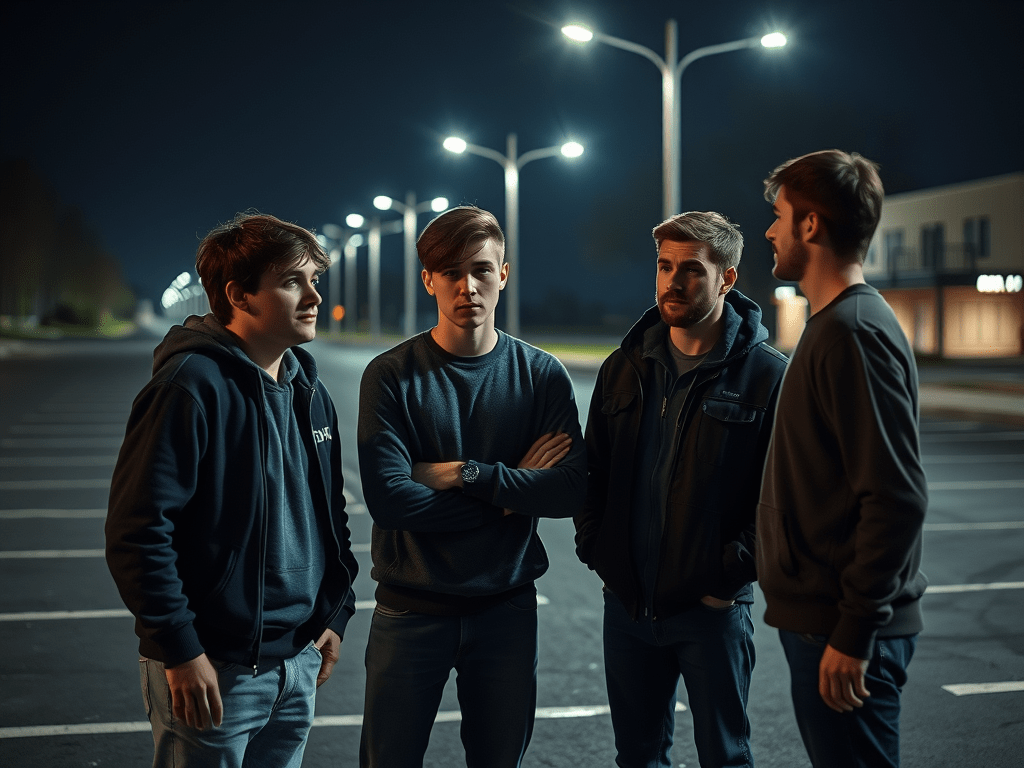
    The parking lot was mostly empty now, just a handful of cars under the streetlights. The meeting had wrapped up a while ago, but Ethan, Nate, Ben, and Will lingered by Ben’s truck, hands in pockets, shoulders hunched against the cool night air.

    Ethan kicked a loose pebble, watching it skitter across the pavement. “I just don’t think I have it in me,” he muttered. “Not like you guys.”

    Ben leaned back against the truck, arms crossed. “Like us how?”

    Ethan shrugged. “I don’t know. The way you all just… carry yourselves. Confident. Solid. I still feel like I’m waiting for someone to tell me I’m actually a man, you know?”

    Nate exhaled, shaking his head. “Man, you really don’t see it, do you?”

    Ethan frowned. “See what?”

    Will clapped a hand on his shoulder. “You remember two weeks ago in small group, when Alex opened up about his dad walking out?”

    Ethan nodded. “Yeah. What about it?”

    Ben tilted his head. “Who do you think he was looking at when he told that story?”

    Ethan blinked. “I don’t know… all of us?”

    Nate shook his head. “No, man. He was looking at you. You didn’t say much, but you sat there, locked in, not looking away, not filling the silence just to make it easier. You made space for him to be real, and that’s why he kept talking.”

    Ethan opened his mouth, but no words came out.

    Ben smirked. “And what about last month when James came in pissed off, ready to tear someone’s head off over work drama? You didn’t try to fix it, didn’t tell him to calm down—you just let him be mad for a minute. Then you asked one question—‘What do you think God’s saying in this?’ And boom, the whole room shifted.”

    Ethan rubbed the back of his neck. “I was just—”

    Will cut in, voice steady. “You were just being you. And that’s the point.”

    Ben tapped his knuckles against the truck bed. “You think strength has to be loud. That leadership means standing up front, making speeches, calling the shots. But brother, look at Jesus. Look at the way He saw people. The way He spoke to them in a way that made them feel known.” Ben met Ethan’s gaze. “You got that in you, man. And you don’t even see it.”

    Ethan swallowed, shifting where he stood.

    It wasn’t the first time someone had said something like this. But tonight, outside this meeting, standing with these men—men he respected, men who saw him in a way he couldn’t yet see himself—it landed different.

    Will squeezed the back of Ethan’s neck, giving it a firm shake. “You’re already walking in it, brother. Just gotta step fully into what God’s put in you.”

    Ethan let out a slow breath, nodding once.

    Ben opened the truck door, but none of them moved to leave just yet. They stood there a little longer, under the quiet hum of the streetlights, the night stretching wide around them.

  • Iron Sharpens Iron: The Role of Men in Faith

    Iron Sharpens Iron: The Role of Men in Faith

    We were never meant to walk this road alone. God designed men to sharpen one another, to reflect truth back when we can’t see it for ourselves. Brotherhood isn’t just about companionship—it’s about clarity. The men we walk with act as mirrors, revealing our strengths, exposing our weaknesses, and calling us deeper into our identity in Christ.

    What happens when a brother sees something in you before you do?

    Most of us have been there. A brother calls something out—something good, something strong—and we hesitate to believe him. Maybe we’re too used to doubting ourselves. Maybe we’ve spent years listening to the wrong voices, the ones that told us we weren’t enough. But when a true brother sees something in us—something real—we have a choice. We can dismiss it, shrink back into old lies, or we can lean in and trust that maybe, just maybe, he sees what God sees.

    Encouragement isn’t just about making each other feel good. It’s about calling forth the truth. A man who walks alone might never realize what he carries, but a man surrounded by brothers can’t ignore it for long.

    The role of correction, encouragement, and sharpening

    Brotherhood also brings another kind of mirror—the one that shows us what needs to change. Proverbs 27:17 says, “As iron sharpens iron, so one man sharpens another.” The sharpening process isn’t always comfortable. It’s friction. It’s heat. It’s a brother telling you, “Hey, man, you’re better than this,” when you’re slipping into old habits. It’s a firm word when you’re making excuses, a push forward when you’d rather stay stuck.

    This is why isolation is dangerous. Alone, we can convince ourselves of anything. We can justify sin, ignore growth, settle for less. But when a brother stands in front of us, holding up the mirror, we’re forced to reckon with what’s really there. And that’s a gift.

    Brotherhood is God’s way of keeping us awake to the truth.

    Walk with men who remind you who you are. Who won’t let you shrink. Who reflect back the image of Christ in you, even when you struggle to see it yourself.

    Because in the end, that’s what true brotherhood does—it brings us closer to Him.

  • The Call

    The Call

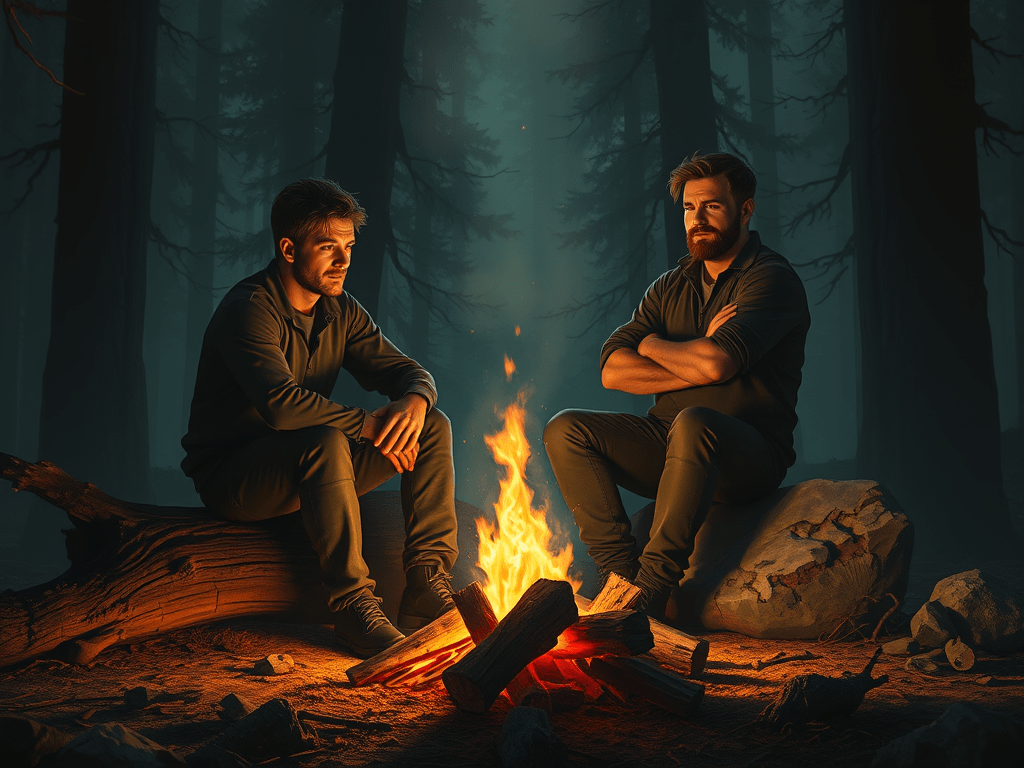
    The fire had burned low, casting long shadows across the clearing. Will sat on a rough-cut log, boot heel digging into the dirt, elbows on his knees. Across from him, Mason leaned back against a boulder, arms crossed, watching the embers pulse red in the dark.

    Neither of them spoke for a while. The night had stretched long—one of those conversations that had started light, turned deep, then sat in the weight of itself.

    Will exhaled, rubbing a hand over his jaw. “I used to think this kind of thing just happened.”

    Mason raised an eyebrow. “What kind of thing?”

    “This.” Will motioned between them. “Brotherhood. Having someone who actually sees you. I figured if God wanted me to have it, He’d drop it in my lap.”

    Mason smirked. “How’d that work out for you?”

    Will let out a dry chuckle. “Took me long enough to realize that’s not how it works.”

    Mason poked at the fire with a stick, watching a spark rise into the black sky. “Yeah, man. We’ve been lied to. Told we’re supposed to go at it alone, handle our own mess, keep everything tight.” He shook his head. “It’s not how we’re built. But the enemy’s done a damn good job convincing us otherwise.”

    Will nodded, staring into the flames. He could feel it—that ache of all the years he’d spent waiting instead of stepping in. The friendships that had stayed surface-level. The seasons of isolation he’d let drag on too long. The way he’d mistaken longing for calling—as if the ache itself was enough, instead of the fuel to actually do something about it.

    “This is more than just friendship,” he said finally. “It’s not just about having somebody to talk to or kill time with.” He looked up. “It’s a call, isn’t it?”

    Mason met his eyes, serious now. “Yeah, man. It is.”

    Will shook his head, thoughtful. “It’s funny, though. We don’t think of it that way. We think we’re just ‘wired for connection’ or whatever, like it’s some personality trait. But if we’re wired for it, doesn’t that mean God put that wiring there for a reason?”

    Mason nodded. “Exactly. We talk about needing food, water, air. Those aren’t just needs—they’re designed necessities. Same with brotherhood. It’s not just something we crave—it’s something that fuels us. When we don’t have it, we starve.”

    Will felt that. He’d been starving for years and hadn’t even realized it.

    “And if something is designed, it has purpose,” Mason continued. “Brotherhood isn’t just about filling a void in us. It’s about stepping into something bigger. Fighting for each other. Holding the line when one of us falls.”

    Will exhaled. “So it’s not just a longing. It’s a duty.”

    Mason’s voice was firm. “Yeah. A God-given one.”

    They sat in the quiet weight of that for a while.

    Will leaned back, stretching his legs out. “So now what?”

    Mason smirked. “Now? We walk it. Day by day. Step by step. We stop waiting for brotherhood to be easy and start building it for real.”

    Will nodded slowly, feeling something settle deep.

    Yeah.

    That sounded right.