
Category: Teaching/Mentoring

  • Understanding the Deep Ache for Brotherhood

    Understanding the Deep Ache for Brotherhood

    Let’s talk about the ache.

    It’s not loud. It doesn’t usually show up in small groups or sermons. But it’s there—sitting behind the ribcage like something unfinished. The longing for a brother—not just a buddy, but someone who sees you. Someone who knows your wiring, your story, and doesn’t flinch. A man you could walk with in honesty and depth, and never feel like too much.

    I know that ache well. Seems like the more “connected” we become via the Internet, social media, Zoom calls, etc., the less truly connected, in the day to day sense, we can be.

    I’ve got brothers I can talk to—guys I can reach out to when it gets hard. Some of them know the deepest parts of my story. But none of them live close by. None I can really do life with day in and day out. That kind of shoulder-to-shoulder bond—the one you can lean on without explaining it every time—it’s not here right now. And I feel that absence.

    So this post? It’s not just for you. It’s for me too.

    Because this ache, this deep desire for covenant brotherhood, isn’t some fringe longing. It’s not about being needy or codependent. It’s part of God’s design. We were made for this kind of connection. Jesus had it. David and Jonathan had it. It’s the kind of friendship that’s forged, not found. It’s rooted in Christ, sharpened by time, and held together by grace.

    But what if you don’t have it?

    That’s where a lot of us live. In the in-between. Wanting it so deeply it hurts, but not knowing how to find it—or what to do with ourselves while we wait.

    And in that waiting, a lot can stir.

    Old habits. Old fantasies. I’ve found myself drawn toward imagined scenarios—emotional, sometimes even erotic. Longings that twist just enough to offer the illusion of being seen, known, held.

    But it never lasts.

    It flares up, then fades. And afterward, the ache is sharper. The loneliness deeper. The illusion of closeness can never hold the weight of what I really need.

    Still, I understand why the pull is there. Because at its core, this longing isn’t wrong. It’s holy ground that’s been stepped on by the world, by the enemy, by the wounds of our past. The desire to be known, loved, and not alone—it mirrors the very heart of God.

    So what do we do with the ache when the brother hasn’t come?

    We bring it to Jesus.

    Not the polished version. The real one. The messy ache. The unmet need. The quiet grief of another day without that kind of companionship. We lay it down—again and again—at the only altar that can hold the weight of our longings.

    Jesus isn’t afraid of it. He’s not rolling His eyes. He knows this ache. He felt it too—misunderstood, unseen, carrying love that had nowhere to land.

    And He’s not telling us to pretend it’s fine. He’s inviting us to trust that He’s not wasting the waiting.

    See, this isn’t about giving up on brotherhood. It’s about surrendering the form we think it has to take. It’s letting Jesus be enough in the meantime. Because He’s doing something in us while we wait. Something sacred. Something strong.

    And I have to believe that the ache, when surrendered, becomes the very soil where brotherhood can take root.

    So I’m still praying. Still hoping. Still staying open. Saying yes to the small invitations—firepit gatherings, book studies, texts that open doors. Some of those don’t lead anywhere obvious. But some might. Even if they don’t, they keep my heart soft. And that matters.

    And in the waiting, I hold onto this: I’m not forgotten. You’re not forgotten. We’re not broken for wanting something Jesus Himself modeled.

    I don’t have all the answers. But I know this much: chasing fantasy won’t fill it. Neither will stuffing it down. The way forward is surrender. Not because the ache will vanish—but because in Christ, it doesn’t own you anymore.

    And if you’re feeling that ache today too—man, I’m with you.

    Let’s keep showing up. Keep trusting. Keep bringing our need to the only One who truly sees.

    He’s not going anywhere.

    And I don’t think He’ll leave us in this ache forever.
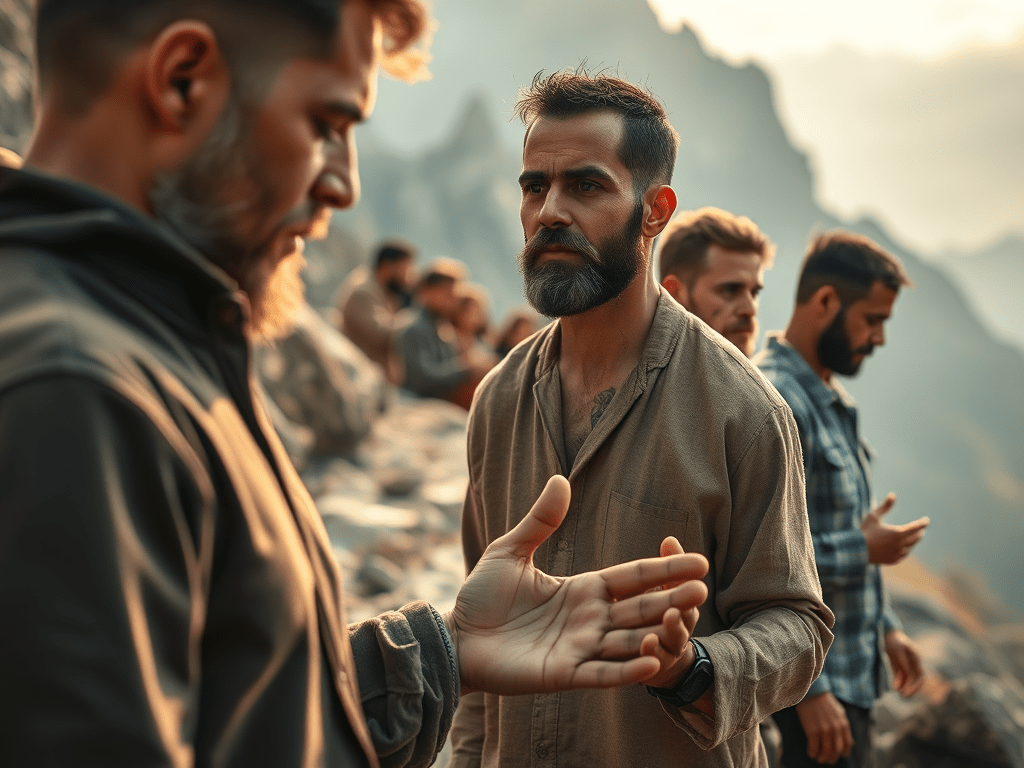
  • Reframing the Wild Heart of a Man

    Reframing the Wild Heart of a Man

    John Eldredge, in Wild at Heart, famously wrote that the core desires of a man’s heart are a battle to fight, an adventure to live, and a beauty to rescue. For a lot of men, that rings true. But for others—especially those who grew up feeling like outsiders to the rough-and-tumble world of masculine ideals—it can feel like a language that doesn’t quite fit.

    If you didn’t grow up throwing punches or chasing danger, does that mean you’re not fully a man? If your deepest longing isn’t to rescue a damsel in distress, are you missing something? Of course not. The heart of what Eldredge is saying is real—but it’s bigger than the way it’s often framed.

    Because at the core, every man is wired for something deeper.

    A Purpose to Stand For

    Not every man is built for battle in the traditional sense. But every man is called to stand—to protect, to uphold, to fight for what is right. Some men do this with their hands, others with their words, others by simply refusing to back down when life gets hard.

    Your battle might not be against flesh and blood, but against fear, addiction, or the lies that have tried to steal your identity. Maybe it’s the battle to stay faithful when the world tells you to compromise. Maybe it’s the fight to love well when past wounds tell you to close off.

    The fight is real, and it’s already at your doorstep.

    A Journey to Walk

    Some men crave risk and adrenaline. Others crave depth and meaning. But every man is on a journey, whether he realizes it or not.

    God calls us forward. He doesn’t let us stay stagnant. The life of faith is an unfolding road, and sometimes the biggest adventure isn’t in climbing mountains—it’s in stepping into who He made us to be, even when it’s terrifying.

    For some, the adventure is in action. For others, it’s in obedience. For all of us, it takes courage to keep walking when we don’t know what’s ahead.

    A Soul to Love

    This one can feel complicated, especially for men who don’t relate to the image of a knight rescuing a princess. But what if it’s not just about that?

    Every man is called to love. To sacrifice. To give of himself in a way that brings life. That might be for a wife and children, but it might also be for his brothers, his church, his people.

    Love is woven into us—not just romantic love, but the deep, fierce love that says I will stand by you. I will fight for you. I will protect what God has entrusted to me.

    This is the kind of love Christ modeled—the love that lays itself down, not to possess, but to serve. And that is a call no man is exempt from.

    The Question Isn’t “Do I Fit?”—The Question Is “What Has God Placed in Me?”

    The framework Eldredge laid out isn’t wrong—it’s just incomplete.

    The deepest calling of a man’s heart isn’t just about battle, adventure, or romance. It’s about purpose, journey, and love—the unique ways God has written strength into every man’s soul.

    Some men live that out by charging ahead. Others live it out by standing steady. Some fight with their fists, others with their prayers, others by never giving up on the ones they love.

    Whatever it looks like, it’s in you. It’s always been in you.

    The world doesn’t get to define your masculinity. God already has.

    And when you step into that—fully, freely, without comparison or fear—you’ll find you’re already living the life you were made for.

  • Iron Sharpens Iron: The Role of Men in Faith

    Iron Sharpens Iron: The Role of Men in Faith

    We were never meant to walk this road alone. God designed men to sharpen one another, to reflect truth back when we can’t see it for ourselves. Brotherhood isn’t just about companionship—it’s about clarity. The men we walk with act as mirrors, revealing our strengths, exposing our weaknesses, and calling us deeper into our identity in Christ.

    What happens when a brother sees something in you before you do?

    Most of us have been there. A brother calls something out—something good, something strong—and we hesitate to believe him. Maybe we’re too used to doubting ourselves. Maybe we’ve spent years listening to the wrong voices, the ones that told us we weren’t enough. But when a true brother sees something in us—something real—we have a choice. We can dismiss it, shrink back into old lies, or we can lean in and trust that maybe, just maybe, he sees what God sees.

    Encouragement isn’t just about making each other feel good. It’s about calling forth the truth. A man who walks alone might never realize what he carries, but a man surrounded by brothers can’t ignore it for long.

    The role of correction, encouragement, and sharpening

    Brotherhood also brings another kind of mirror—the one that shows us what needs to change. Proverbs 27:17 says, “As iron sharpens iron, so one man sharpens another.” The sharpening process isn’t always comfortable. It’s friction. It’s heat. It’s a brother telling you, “Hey, man, you’re better than this,” when you’re slipping into old habits. It’s a firm word when you’re making excuses, a push forward when you’d rather stay stuck.

    This is why isolation is dangerous. Alone, we can convince ourselves of anything. We can justify sin, ignore growth, settle for less. But when a brother stands in front of us, holding up the mirror, we’re forced to reckon with what’s really there. And that’s a gift.

    Brotherhood is God’s way of keeping us awake to the truth.

    Walk with men who remind you who you are. Who won’t let you shrink. Who reflect back the image of Christ in you, even when you struggle to see it yourself.

    Because in the end, that’s what true brotherhood does—it brings us closer to Him.

  • The Sacred Call to Brotherhood Among Men

    The Sacred Call to Brotherhood Among Men

    We talk a lot about the need for brotherhood. And it’s true—we weren’t meant to walk alone. God wired us for connection, for iron sharpening iron, for a kind of love between men that strengthens, refines, and restores. But what if brotherhood isn’t just something we need?

    What if it’s something we’re called to?

    In a world that tells men to be independent, self-sufficient, and emotionally detached, brotherhood often gets reduced to a preference—a nice addition if you can find it, but not essential. Even in Christian circles, friendship is encouraged, but rarely do we hear it spoken of as a sacred duty.

    But throughout Scripture, we see a different picture.

    We see Jonathan, a warrior prince, binding his soul to David—not just out of affection, but because he saw God’s hand on his life (1 Sam. 18:1-4). We see Moses needing Aaron and Hur to hold up his arms when he grew weak (Ex. 17:12). We see Jesus Himself, the Son of God, walking not alone but with brothers—men He called friends (John 15:15).

    Brotherhood isn’t just an emotional longing—it’s part of God’s design for how men are meant to live and fight.

    And when we step into it, it’s not just for ourselves.

    Because here’s the truth: The world is starving for strong, righteous, Christ-centered men to rise up—not just as lone warriors, but as brothers. Men who will stand for each other, fight for each other, and commit to something bigger than themselves.

    The enemy knows the power of brotherhood. That’s why he isolates. That’s why he twists male connection into something impure or unnecessary. That’s why he wants men passive, detached, and drifting through life without anchors. Because he knows what happens when men walk together in strength.

    When men choose covenant over convenience.

    When they stop waiting for brotherhood to find them and start stepping into the calling to build it.

    It’s not just about us. It never was. It’s about restoring what’s been lost. It’s about saying yes to something that will outlive us.

    And that? That’s worth everything.

  • Different Types of Brotherhood Among Men

    The Brotherhood of Men: Different Bonds, One Design

    Brotherhood runs deep in the heart of man. It’s wired into us—this pull toward other men, this need to walk alongside, to fight for something together. But not all brotherhoods are the same. Some are given, some are chosen, and some are forged in the fire of faith. Each has a purpose, but only one is eternal.

    1. The Brotherhood of Shared Humanity

    Every man born into this world is part of a shared brotherhood. We were all created by the same God, bearing His image (Genesis 1:27). This bond ties us together with a sense of shared experience—the struggles, victories, and burdens that come with being men in a broken world.

    We see it in the way men naturally band together—in the workplace, in sports, in the military, in times of crisis. Something instinctual in us wants to stand side by side with other men, even if we don’t know them personally. This is a common grace brotherhood, a reflection of something deeper God designed.

    But this kind of brotherhood, on its own, can only go so far. Without Christ, it lacks the anchor that holds when storms come.

    2. The Brotherhood of Blood

    Some brotherhoods are written into our very DNA. Biological brothers share a history, a name, a bloodline. They are tied together in a way that no circumstance can fully erase.

    But even blood isn’t always enough to hold men together. We’ve all seen it—brothers who drift apart, who become strangers despite their shared upbringing. Family is a gift, but even family needs something stronger than blood to stay whole.

    3. The Brotherhood of Experience

    There’s another kind of bond men form—not from birth, but from shared trials and victories.

    • Soldiers who fight side by side form a bond that few others can understand.
    • Teammates who push each other past their limits forge a trust that runs deep.
    • Men who struggle together—through addiction, hardship, loss—find a connection that words can’t always explain.

    These brotherhoods are powerful, but they are often temporary. Once the shared experience fades, so does the connection.

    4. The Brotherhood of Christ

    Then there’s the bond that cannot be broken—the brotherhood found in Christ.

    This is deeper than shared humanity, stronger than blood, more lasting than experience. When men stand together not just as friends, but as brothers in Christ, they are bound by something eternal—the Spirit of God Himself (Romans 8:14-15).

    This is the only brotherhood that transcends time, culture, and circumstance. A man can lose everything—his family, his job, his homeland—but if he has a brother in Christ, he is never alone.

    This bond is not based on performance, usefulness, or common interests—it is built on Christ. That means it is a brotherhood of grace, where men sharpen each other, challenge each other, and remind each other of who they really are (Proverbs 27:17, Hebrews 10:24-25).

    5. The Brotherhood of Covenant

    Even within the brotherhood of Christ, some bonds run even deeper.

    Covenant brotherhood is a chosen, lifelong commitment between men who walk together with intention, loyalty, and shared purpose.

    • It is not just friendship—it is brotherhood by choice.
    • It is not just accountability—it is walking in the trenches together.
    • It is not just support—it is bearing each other’s burdens as if they were your own (Galatians 6:2, 1 Samuel 18:1-4).

    Covenant brotherhood is the answer to the loneliness epidemic, the antidote to isolation. It is the kind of bond Jonathan and David shared—not casual, not temporary, but a committed, soul-deep loyalty that reflects Christ’s love.

    Brotherhood Has a Purpose

    Every level of brotherhood has its place. But without Christ, even the strongest bonds fade.

    • The brotherhood of humanity gives us a shared connection, but it cannot save us.
    • The brotherhood of blood ties us to family, but it is no guarantee of unity.
    • The brotherhood of experience forges deep connections, but most fade with time.
    • The brotherhood of Christ is eternal, bound by something greater than ourselves.
    • The brotherhood of covenant is a rare and powerful commitment that reflects the depth of Christ’s love in a tangible way.

    Brother, you were not made to walk alone. Find your brothers. Stand with them. Fight for them. Walk with them in Christ.

    Because brotherhood was never meant to be temporary. It was meant to be forever.

  • Brother, I See You

    Brother,

    I need you to hear this. I see you.

    Not just the surface—not just the things you do or how the world labels you. I see the man you are. And I honor you.

    I see your body—strong, capable, shaped by the hands of God Himself. Maybe you carry muscle, maybe you don’t. Maybe you bear scars from battles, inside or out. Maybe your frame isn’t what the world calls impressive, but it carries the weight of your life, and that matters. You are made in His image, every part of you, and you are not a mistake. (Genesis 1:27, Psalm 139:14)

    I see your mind—sharp, searching, always wrestling, always reaching. Maybe you think fast, or maybe you take your time. Maybe your thoughts run deep, or maybe you keep things simple. Either way, God has given you a mind meant for wisdom, for truth, for discernment. You are built to think, to lead, to make sense of this world through His Word. (Proverbs 2:6, James 1:5)

    I see your heart—stronger than you know. Maybe it’s been bruised, maybe it carries weight most men wouldn’t understand. But it still beats with purpose. Your heart was made to love, to stand, to endure. To fight for what’s right, to protect what’s sacred, to hold onto the ones God has placed in your life. It beats because He has a plan for you. (Psalm 73:26, Jeremiah 29:11)

    I see your spirit—anchored in Christ, even when you doubt. You are not a lost cause. You are not too far gone. You are not defined by your past, your temptations, your struggles. You are a son of the Most High, a man called into something greater than yourself. (Romans 8:14-15, 2 Corinthians 5:17)

    I see your strength—not just the kind that lifts weight, but the kind that lifts burdens. The kind that carries others when they can’t stand on their own. The kind that chooses truth over comfort. The kind that refuses to quit when the enemy whispers, “You are not enough.” Brother, you are enough, because Christ in you is enough. (2 Corinthians 12:9-10, Philippians 4:13)

    I see your place among men. You are not an outsider. You are not unworthy. You belong. God made you to walk alongside your brothers—to stand shoulder to shoulder, to fight and to build, to love and to lift each other up. You were never meant to go at this alone. (Ecclesiastes 4:9-10, Proverbs 27:17)

    I see your calling—whether you are married, single, or bound in covenant brotherhood, your life has purpose. You are not waiting for something else to make you whole. You are already whole in Christ. Your worth does not come from a title, a relationship, or the approval of the world. It comes from the One who calls you His own. (Isaiah 62:2, Colossians 2:10)

    Brother, I see you. And I need you to hear this—you are a man. Not because of what you do, but because God made you one. Not because you always feel it, but because He designed you that way. Not because of the world’s standards, but because you were formed by the hands of the Almighty.

    Stand in that truth. Walk in it. Live in it. And know this—you do not walk alone.

    I am here. Your brothers are here. And Christ is with you always.

    You are seen. You are known. You are honored. You are loved.

    Now go walk as the man God made you to be.

  • Who We Are, Men of God

    1. I am fearfully and wonderfully made, created by God in His image as a man (Psalm 139:14; Genesis 1:27).
    1. I am a beloved son of God, adopted into His family through Jesus Christ (Galatians 3:26; Ephesians 1:5).
    1. I am chosen by God, called to live as a man of strength, integrity, and purpose (1 Peter 2:9).
    1. I am fully seen, known, and loved by the One who formed me in my mother’s womb (Jeremiah 1:5; Psalm 139:15).
    1. I am equipped by God to fulfill the good works He has prepared for me as a man of faith (Ephesians 2:10).
    1. I am redeemed and restored through Christ, free to walk in my true identity as a man of God (2 Corinthians 5:17).
    1. I am called to reflect God’s image in my masculinity, bearing His strength and compassion (Genesis 1:26-27; Micah 6:8).
    1. I am a temple of the Holy Spirit, chosen and empowered to live as a godly man (1 Corinthians 6:19-20).
    1. I am part of the body of Christ, where I belong and am valued as a brother in the family of faith (Romans 12:4-5).
    1. I am strengthened by the Lord to be courageous and stand firm in my identity as a man (1 Corinthians 16:13; Joshua 1:9).
  • Brother, This is Who You Are

    1. You are a man because God made you one, and He does not make mistakes. (Genesis 1:27, Psalm 139:14)

    2. You are strong—not just in body, but in heart, in mind, in spirit. (1 Corinthians 16:13, Joshua 1:9)

    3. Your manhood is not defined by your skills, interests, or personality—it is defined by God’s design. (1 Samuel 16:7, Isaiah 64:8)

    4. You were made to lead with love, to protect with strength, and to serve with courage. (Ephesians 5:25, Mark 10:45)

    5. You are not alone—you were created for brotherhood, to walk with other men, sharpening and strengthening each other. (Ecclesiastes 4:9-10, Proverbs 27:17)

    6. You are a warrior in God’s kingdom, equipped to stand firm against the enemy. (Ephesians 6:10-11, 2 Timothy 2:3-4)

    7. Your past does not define your manhood—God does, and He is making you new. (2 Corinthians 5:17, Romans 8:1-2)

    8. You do not need the world’s approval to be a man—you already have your Father’s blessing. (Matthew 3:17, Galatians 1:10)

    9. Your body was made by God and is good, a temple for His Spirit, not for shame. (1 Corinthians 6:19-20, Genesis 1:31)

    10. You are called to be bold, to stand firm, to walk in truth, and to live as the man God made you to be. (Micah 6:8, 1 Corinthians 16:13-14)

  • Emotional Dependency vs. Healthy Covenant

    Brotherhood is meant to be deep, real, and lasting—but if we’re not careful, what starts as something good can slip into something unhealthy.

    There’s a fine line between leaning on a brother and needing him to hold you up. Between walking side by side and clinging in a way that weighs you both down.

    The world doesn’t understand this tension. It assumes all deep male love must either be romantic or toxic—but God designed something better, something stronger.

    So how do we know when a brotherhood is covenant—and when it’s crossed into emotional dependency?

    1. Covenant Strengthens—Dependency Drains

    In a healthy brotherhood, both men sharpen each other (Proverbs 27:17). They push each other toward Christ, toward truth, toward growth.

    But in emotional dependency, the relationship becomes one-sided—one man always needing the other to make him feel okay.

    Covenant says, I’ve got your back, but your strength comes from God, not me.
    Dependency says, I can’t stand unless you hold me up.

    Brotherhood should fuel your strength, not replace it.

    2. Covenant Builds on Christ—Dependency Builds on a Person

    A brotherhood built on Christ is unshakable—because its foundation is outside of either man.

    But emotional dependency happens when a man starts making his brother his anchor instead of God. He relies on his presence, his attention, his approval to feel secure.

    Covenant says, You’re my brother, but Jesus is my rock.
    Dependency says, I don’t know who I am without you.

    A healthy brotherhood always points each other back to Christ, not just to each other.

    3. Covenant Respects Space—Dependency Fears Distance

    Brothers in covenant don’t have to be attached at the hip. Their bond isn’t threatened by distance, by life changes, by seasons where they don’t talk as much.

    But emotional dependency creates fear of separation—the belief that if we’re not constantly connected, I’ll lose you.

    Covenant says, I’m with you for life, no matter what.
    Dependency says, I need constant reassurance that you’re still here.

    A strong bond doesn’t demand constant contact—because it trusts the foundation is solid.

    4. Covenant Lets Go When Needed—Dependency Clings Out of Fear

    In true brotherhood, there’s freedom. If God calls one brother into marriage, ministry, a new season of life, the other doesn’t panic or feel abandoned.

    But emotional dependency can lead to resentment if one man starts pulling away—even for the right reasons. It can make a brother feel owned instead of loved.

    Covenant says, No matter where God leads you, our bond is still real.
    Dependency says, If you change, I don’t know who I am anymore.

    Real covenant releases, blesses, and trusts—it never clings out of fear.

    5. Covenant Deepens with Time—Dependency Eventually Breaks

    When a brotherhood is healthy, it grows stronger with time. It weathers storms, it adjusts to life’s changes, and it remains unshaken because it was built on something lasting.

    But emotional dependency eventually collapses under its own weight. It creates pressure, unmet expectations, and resentment when one man can’t be everything the other wants him to be.

    Covenant says, We’ll still be here for each other 20 years from now.
    Dependency says, If this doesn’t stay exactly the same, I don’t know what to do.

    Brotherhood isn’t about holding on too tight—it’s about holding on in the right way.

    The Answer: Bringing It to Christ

    If you’ve ever felt emotional dependency creeping into a friendship, don’t let shame take over. It doesn’t mean your brotherhood isn’t real—it just means it needs re-centering.

    Ask yourself:

    • Am I leaning on my brother more than I’m leaning on Christ?
    • Do I trust this bond, or do I feel like I have to control it?
    • Am I loving him in a way that strengthens both of us, or in a way that puts pressure on him?

    The goal isn’t to detach from brotherhood—it’s to make sure it’s holy, strong, and built to last.

    Because real covenant? It’s not fragile. It doesn’t suffocate. It doesn’t fade. It stands the test of time—not because of need, but because of calling.

  • More, Not Less

    The world says if two men love each other deeply, it must be romantic. That if you feel drawn to a brother, if his presence anchors you, if his friendship stirs something deep—you have to put a label on it that fits the world’s mold.

    But what if that’s a lie?

    What if what you’re feeling isn’t romantic longing, but something even deeper? Something older than time, written into your soul before the world told you what to call it?

    Because brotherhood—true brotherhood—isn’t second place. It’s not a consolation prize.

    It’s God’s design.

    And what He designed? It’s better.

    Not a Limitation—A Gift

    God isn’t holding out on us. He’s not saying, You don’t get to have deep love because you can’t have it like the world does.No—He’s saying, I have something richer for you, something that doesn’t fade, something that won’t leave you emptier than when you started.

    Romance can be good. Marriage is a gift. But brotherhood?

    It’s covenant. It’s lifelong. It’s not built on shifting emotions, but on something solid.

    • A brother isn’t here for what you can give him. He’s here because he’s called to be.
    • A brother doesn’t pull away when attraction shifts, when emotions fade, when life takes a turn. He stays.
    • A brother isn’t a passing season. He’s a constant.

    And that’s what makes brotherhood stronger.

    More Than Skin Deep

    When the world makes love only about physical connection, it shrinks it. It makes it less, not more.

    Because real love between men? It’s found in the way we fight for each other. The way we sharpen each other. The way we carry each other’s burdens—not for a season, but for a lifetime.

    Platonic brotherhood isn’t lacking anything. It’s fuller than the world could ever imagine.

    It’s David and Jonathan, swords drawn for each other.
    It’s Moses and Aaron, holding each other up when the battle raged on.
    It’s Jesus calling His disciples not just servants, but friends (John 15:15).

    That’s what we’re made for.

    Something That Lasts

    Romance can come and go. The rush of feelings, the fire of attraction—it fades like all things do. But a bond forged in covenant? That’s something the years can’t touch.

    God isn’t taking something from you—He’s giving you something better.

    A love that isn’t fragile. A bond that doesn’t waver. A brother who walks with you—not because of emotion, but because of calling.

    And when you lean into that—when you embrace the fullness of what God designed—

    You don’t lose anything.

    You gain everything.

  • What Is Covenant Brotherhood?

    Covenant brotherhood isn’t a new idea. It’s not something we’re inventing or reimagining. It’s something ancient—something God-designed—that’s been largely forgotten.

    For most of history, men understood that they weren’t meant to walk alone. They knew that deep, committed brotherhood was part of what made them strong, part of what formed them into the men they were called to be.

    But somewhere along the way, that got lost. And in its place? A culture that isolates men, weakens bonds, and turns what was once sacred into something either ridiculed, ignored, or distorted.

    It’s time to recover what was lost.

    1. The Definition: What Is Covenant Brotherhood?

    Covenant brotherhood is a lifelong, Christ-centered commitment between men—a bond of loyalty, trust, and love that goes beyond casual friendship. It’s not just about being close—it’s about being bound by something unshakable.

    It’s built on:

    • Commitment – A bond that isn’t dependent on circumstances.
    • Accountability – Brothers sharpen each other and call each other higher.
    • Self-Sacrifice – Covenant isn’t just about receiving; it’s about laying your life down for your brother (John 15:13).
    • Christ at the Center – Without Him, it’s just friendship. With Him, it’s something holy.

    2. The Biblical Foundation of Covenant Brotherhood

    Covenant has been a key theme in God’s design for relationships since the beginning. And in Scripture, we see powerful examples of covenant brotherhood—bonds that went beyond ordinary friendship into something sacred.

    Jonathan and David (1 Samuel 18:1-4)

    • “The soul of Jonathan was knit to the soul of David, and Jonathan loved him as his own soul.”
    • Jonathan didn’t just befriend David—he entered into covenant with him. He stripped himself of his royal robe and armor, symbolizing a bond of deep trust, loyalty, and sacrifice.

    Jesus and His Disciples (John 15:15)

    • “No longer do I call you servants, for the servant does not know what his master is doing; but I have called you friends.”
    • Jesus wasn’t talking about casual friendship. He was establishing a brotherhood, built on commitment, mission, and self-sacrificial love.

    Paul and Timothy (Philippians 2:22)

    • “But you know Timothy’s proven worth, how as a son with a father he has served with me in the gospel.”
    • Paul and Timothy weren’t just teacher and student—they were bonded in deep, spiritual brotherhood, walking side by side in the mission of Christ.

    From the Old Testament to the New, God-ordained brotherhood has always been part of His design—and men throughout history understood this.

    3. The Historical Presence of Covenant Brotherhood

    For centuries, deep male bonds weren’t just accepted—they were celebrated and expected.

    Medieval Blood Brotherhood

    • In many cultures, men formalized their bond through blood covenants, swearing lifelong loyalty to one another.
    • These weren’t secret societies or military pacts—they were chosen families, men who committed to standing by each other in all things.

    Christian Monastic Orders

    • Early monastic communities weren’t just about solitude—they were about brotherhood. Men lived, worked, and prayed together in deep, lifelong commitment.
    • They understood that walking alone wasn’t the way—that holiness was sharpened in community, not isolation.

    Rites of Passage and Male Initiation

    • For most of history, men didn’t enter adulthood alone—they were brought into it by other men through rites of passage.
    • These initiations weren’t just physical—they were relational, bonding men together in shared purpose and responsibility.

    4. The Loss of Covenant Brotherhood in Modern Culture

    So what happened?

    Why do men today struggle to form deep, lasting bonds?

    Here’s what’s changed:

    • Radical Individualism – Our culture glorifies the lone wolf, pushing men toward isolation instead of connection.
    • Hyper-Sexualization – Close male bonds are now viewed with suspicion, as if all deep love between men must be erotic.
    • Loss of Rites of Passage – Without real initiation into manhood, many men drift through life without strong male bonds.
    • Church Weakness on Brotherhood – Many churches emphasize marriage and family (which are good!) but offer no real vision for deep male brotherhood.

    The result? Men are more isolated than ever. They lack the deep, committed friendships that previous generations took for granted.

    5. Restoring What Was Lost: The Road Back to Covenant

    The good news? Covenant brotherhood isn’t gone—it’s just buried. And it’s time to dig it back up.

    How do we reclaim it?

    • Recognize the Need – Stop pretending men don’t need each other. We were designed for deep male bonds.
    • Break the Lies – Brotherhood isn’t weak. It isn’t something to grow out of. It isn’t sexual. It’s biblical.
    • Commit to Your Brothers – Brotherhood doesn’t happen by accident. It’s built through intentionality, consistency, and shared mission.
    • Keep Christ at the Center – Without Jesus, it’s just friendship. But with Him? It’s covenant. It’s family. It’s something unshakable.
  • When Brotherhood is Tested

    Brotherhood is easy when everything’s good.

    When there’s no conflict, no misunderstandings, no disappointments—sticking together feels natural.

    But what about when it’s not easy?

    What happens when your brother lets you down? When frustration builds? When something shifts, and the bond feels strained?

    This is where most friendships crack. Where the world says, Move on. Find someone else. Protect yourself.

    But covenant isn’t like the world.

    Brotherhood is meant to be for life, but that doesn’t mean it’s always smooth. Every deep bond will be tested—by conflict, by disappointment, even by betrayal.

    So what do you do when it happens?

    1. Don’t Let Discomfort Make the Decision for You

    A lot of men walk away from brotherhood not because of a real break, but because things got uncomfortable.

    • A hard conversation was needed, but neither side had it.

    • A misunderstanding went unaddressed, and resentment settled in.

    • One man expected too much, the other gave too little, and instead of adjusting, they drifted.

    Covenant doesn’t mean you never hurt each other. It means you fight through when you do.

    2. Face Conflict with Truth and Grace

    If a brother has wounded you, or if you’ve wounded him, the next move isn’t silence. It’s truth.

    • Speak honestly. Say what needs to be said.

    • But do it with grace—without assumptions, without accusations.

    • Give the same patience and mercy that you’d want to receive.

    Brotherhood requires truth. But truth without love destroys.

    3. Some Wounds Can Be Healed. Some Require Space.

    Not every conflict means the end of a bond.

    • Some wounds just need time, humility, and conversation. They can heal stronger than before.

    • Some require stepping back—not to abandon, but to let God do the work in both hearts.

    And yeah—some betrayals are deep enough that distance is needed. But even then, covenant doesn’t mean you stop praying, forgiving, or leaving the door open for restoration.

    4. When It’s Worth Fighting For, Fight For It.

    There’s a reason so many men feel isolated—it’s easier to walk away than to fight for a bond. But real brotherhood is worth it.

    So if there’s distance, reach out.

    If there’s tension, clear the air.

    If a brother is slipping, go after him.

    Because the ones who fight for each other? Those are the ones who will still be standing together years down the road.

    Brotherhood Was Meant to Last

    Jesus never said love would be easy. But He did say it would be worth it.

    Covenant isn’t just about the good times—it’s about the moments when it’s tested, when everything in you says let it go, but God says hold on.

    So when the test comes—and it will come—don’t walk away too quickly.

    Because the bonds that make it through?

    Those are the ones that last a lifetime.

  • Firelight Rite

    The logs cracked and shifted, sending sparks into the night air. Nathan sat across from the fire, arms resting on his knees, eyes locked on the flames. The heat flickered against his face, but the tightness in his chest had nothing to do with the cold.

    Caleb sat beside him, rolling a stone in his palm, quiet. He’d been quiet most of the night, letting Nathan wrestle with whatever he wasn’t saying.

    Finally, Caleb spoke. “You ever notice how fire changes wood?”

    Nathan frowned, looking up. “What?”

    “The heat pulls something out of it. You can hear it—the sap hissing, the cracks forming. It burns, but it becomes something different.” Caleb turned the stone between his fingers. “A lot of guys think they just wake up one day as men. Like time will do the work for them. But that’s not how it happens.”

    Nathan looked back at the flames, swallowing. “Then how does it happen?”

    Caleb didn’t answer right away. He stood, grabbed a thick branch from the pile beside them, and tossed it into the fire. The bark sizzled, blackening, flame curling up its sides. “It happens when you go through something. When other men see you, speak into you, and won’t let you sit in doubt.”

    He turned to Nathan. “You don’t become a man by accident, brother. You step into it.” He held Nathan’s gaze. “And you’re ready.”

    Nathan exhaled. His hands clenched, then released.

    No one had ever said that to him before.

    Caleb reached into his pack and pulled out a knife. He flipped it open, then grabbed a thick piece of wood from the pile. “Mark it,” he said, handing the blade to Nathan.

    Nathan hesitated. “Mark what?”

    “This moment,” Caleb said. “Right here, right now. You’re stepping in. Make it real.”

    Nathan turned the knife in his palm, feeling its weight. He looked down at the wood, rough and unshaped, then glanced at Caleb. He wasn’t joking. Wasn’t explaining. Just waiting.

    Nathan pressed the blade against the surface and started to carve. He didn’t overthink it. Didn’t try to make it perfect. Just let the knife bite into the grain, cutting something real into what had been blank.

    When he was done, he sat back, staring at what he had made. It wasn’t much—just a symbol, a word, something only he and God would understand. But it was there. And it was his.

    Caleb leaned forward, nodding. “That’s it.” His voice was steady, sure. “You are a man, Nathan. No more waiting. No more questioning. Walk in it.”

    Nathan swallowed hard.

    The fire cracked again, and something in his chest cracked with it.

    He didn’t say anything. Didn’t have to.

    He just nodded. And for the first time, he felt it.

  • Brotherhood as the Missing Rite of Passage

    Some men were initiated into manhood. Most of us weren’t.

    We never had that moment—the one that said, You are a man now. Step into it. We just kept moving forward, hoping that at some point, it would click.

    But it never really did.

    The world tells us that manhood just happens when we turn 18, or when we hit certain milestones—first job, first car, marriage, fatherhood. But deep down, we know that’s not how it works.

    We don’t need another achievement to feel like men. We need other men to call us forward. And more than that—we need Christ to define us first.

    Brotherhood Restores What Was Lost

    The ancient rites of passage weren’t just about a challenge—they were about witnesses. Older men stood around the younger and said, We see you. You have passed the test. You are one of us now.

    That’s what covenant brotherhood does.

    • It doesn’t leave a man to figure it out alone. It calls him up—through challenge, truth, and trust.

    • It doesn’t measure him by worldly standards. It confirms what God already placed in him.

    • It doesn’t let him sit in doubt. It names him as a man and holds him accountable to live as one.

    But even brotherhood is incomplete without the One who created it.

    Christ is the True Initiator

    Before any man can call us forward, before we can walk in covenant with our brothers, we need to hear it from God Himself.

    “You are my son.”

    “You belong to Me.”

    “Your manhood is not fragile—it is rooted in Me.”

    Christ is the One who restores what was lost. But He doesn’t do it in isolation—He places us in brotherhood, because manhood was never meant to be lived alone.

    It’s Not Too Late

    Brotherhood is the road back to initiation. It’s not about recreating old rituals—it’s about stepping into a circle of men who won’t let you drift, won’t let you doubt, and won’t let you stay passive.

    It’s about walking with men who challenge you, not to prove yourself, but because they already see the man God made you to be.

    And once you have that? You do the same for another. Because manhood isn’t just about being called up. It’s about calling others up too.

  • When Do You Become a Man?

    There was a time when a boy knew when he became a man.

    He didn’t have to wonder. There was a moment—whether through trial, initiation, or the voice of older men—when it was spoken over him. You are a man now. Step into it.

    Now? Most men never hear those words. They just drift into adulthood, hoping that one day they’ll feel different, but they never do.

    We’ve lost something vital.

    Manhood Was Never Meant to Be a Guessing Game

    In most cultures throughout history, men didn’t just stumble into manhood—they were called into it. Sometimes it was through a test of endurance, sometimes a sacred ritual, sometimes a hard-earned responsibility. But whatever it was, it left no doubt:

    The boy was gone. The man had stepped forward.

    But today? There’s no clear line. No defining moment. Boys grow older, but they don’t become men—they just age into them.

    And the result? A generation of men who feel like they’re still waiting for permission to become what they were made to be.

    Without Initiation, Men Drift

    • Some chase achievement, hoping that success will finally make them feel like men.

    • Some chase women, thinking masculinity is proven through conquest.

    • Some stay passive, unsure, never stepping up because no one ever told them they were ready.

    Deep down, every man wants to know he is one. But no one tells him. No one confirms it. So he keeps waiting.

    It’s Not Too Late to Step In

    Brother, if you never had that moment—if no one ever called you up—you are not stuck. You don’t have to keep drifting, waiting for someone to hand you manhood like a diploma.

    Here’s the truth:

    • God has already named you a man. He created you as one. You don’t need to prove it—you need to step into it.

    • Manhood isn’t given in isolation. Other men confirm it. That’s why covenant brotherhood matters. You need men who will say, Brother, you belong. We see you. Walk in it.

    • You may not have had a rite of passage—but you can mark the moment now. Maybe it’s a challenge, a commitment, a moment before God where you declare, No more waiting. No more drifting. I will walk in who I am.

    Manhood Is Meant to Be Stepped Into

    You were never meant to spend your life wondering if you are a man. If no one ever told you—hear it now:

    You are a man. God made you one. Step into it.

    And if you’ve already walked this road? Then look behind you. There’s a younger brother who is still waiting to hear what no one ever told him. Call him up. Show him the way.

    Because manhood isn’t just about becoming. It’s about calling others forward.

  • Giving the Wound to Christ

    Brother, if you’ve seen the wound, named the lie, and know the truth in your head—but still feel the weight of it—this is for you.

    It’s one thing to recognize the wound. It’s another to give it to Christ and let Him redeem it. But what does that actually look like?

    Here’s where it starts:

    1. Stop Trying to Fix It Yourself

    We’ve spent years trying to prove our masculinity—trying to overcome the wound by being “man enough.” But healing doesn’t come through striving. It comes through surrender.

    That means admitting:

    “Lord, I can’t fix this. I’ve believed lies about myself for years, and I need You to replace them with truth.”

    That alone is hard. Because it means trusting His definition of us more than our own feelings, memories, or past experiences.

    2. Bring the Wound Into the Light

    Wounds fester in silence. The enemy wants you to keep it locked inside, to believe it’s just your burden to bear. But when you name it before God—when you bring it to a trusted brother, even—something shifts.

    When Jesus healed, He often asked, “What do you want Me to do for you?” Not because He didn’t know, but because naming it was part of the healing.

    So we bring it into the light:

    “Lord, I have believed I am less of a man. I have felt like I don’t belong. I give this to You—show me the truth.”

    And then, we listen. We let Him speak into it.

    3. Let God Redefine You Through Brotherhood

    Christ redeems our wounds, but He often does it through the hands and words of our brothers.

    When a brother sees you, challenges you, calls you his equal—not out of pity, but because he sees the man God made you to be—that’s healing in motion.

    You don’t become a man by proving yourself. You are a man because God made you one. The more you walk in real covenant, the more that truth sinks in.

    4. Walk in the Truth Before You Fully Feel It

    Here’s the hard part—choosing to believe what God says about you, even before your emotions catch up.

    That means when the old wound whispers, You don’t belong, you answer, That’s a lie. I am a son.

    When you feel like you’re on the outside looking in, you step in anyway. When brotherhood feels like something other men get, you stand in it as your birthright.

    Truth isn’t a feeling. It’s reality. And when we choose to walk in it, the wounds that once defined us start to fade.

    Brother, you don’t have to carry this alone. Christ is already in the work of redeeming it. You just have to give it to Him—again and again, until His truth is more real than the lies ever were.

    And He will finish what He started.

  • The Lie That Steals Sonship

    Brother, let’s talk about the wound most men don’t even realize they have. The one that starts early—so early, you can’t remember a time before it.

    Maybe it wasn’t a single moment, but a slow drift. Maybe it was a father who was there but distant, a brother who overshadowed you, a world that told you—subtly, persistently—you weren’t quite like the other boys.

    And then, the lie crept in:

    You don’t belong.

    You’re different.

    You’re not really a man.

    It wasn’t just about interests or personality. It was deeper. A gnawing sense that you missed something vital, that masculinity was something other men had—something you could admire, even long for, but never fully claim as your own.

    And for some of us, that’s where same-sex struggles first took root. Not as a choice, not as rebellion, but as a search for something we felt we lacked. The strength, the confidence, the belonging we thought we weren’t given. And because the world only knows how to frame male longing in sexual terms, that ache got twisted before we even knew what was happening.

    The enemy planted a lie in our boyhood, then spent years reinforcing it:

    You’ll never be one of them. You’re not enough. You’re something else.

    But brother, hear this: the enemy is a liar.

    God did not make a mistake when He made you a man. You are not an outsider to your own design. You are not less of a man because you don’t fit some narrow mold of strength or skill or stature.

    Masculinity is not about muscles or sports or how deep your voice is. It’s not something you earn. It’s something you are.

    You were born a son. Not half a son. Not a different kind of son. A son.

    The wound is real, but so is the healing. And it starts with rejecting the lie and stepping into the truth that was alwaysyours.

    You belong.

    You are enough.

    You are a man.

    Because God says so.

  • Covenant as Spiritual Warfare

    The enemy hates brotherhood.

    He always has.

    Because when men stand alone, they’re easy targets. But when they stand together—really together, in truth and covenant—the enemy has no foothold.

    This fight isn’t just personal. It’s not just about temptation, addiction, or loneliness. It’s about war. And the battlefield is littered with men who never knew they were even in a fight.

    The Enemy’s Strategy: Isolate, Twist, and Distort

    From the beginning, the enemy’s tactics haven’t changed.

    1. He isolates—makes a man feel like he’s the only one who struggles, the only one who feels this way, the only one who doesn’t belong. Isolation is his first and strongest weapon, because a man cut off from real brotherhood is already half-defeated.

    2. He twists—takes something good and bends it. The longing for brotherhood becomes sexualized. The hunger for affirmation becomes codependency. The need for strength turns into pride, or worse, passivity.

    3. He distorts—redefines manhood into something either unattainable or meaningless. Either you’re not enough of a man, or being a man doesn’t even matter. Either way, the result is the same: confusion, doubt, weakness.

    And the worst part? He convinces men that this is just how it is. That there’s no way back. That no one else sees the battle.

    But that’s a lie.

    Brotherhood is a Weapon

    Covenant brotherhood isn’t just nice to have—it’s a weapon forged for war. It defends, it strengthens, it breaks chains.

    • When a brother is isolated, covenant pulls him back. “You’re not alone. I see you. I stand with you.”

    • When a brother believes lies, covenant speaks truth. “That’s not who you are. This is who God says you are.”

    • When a brother is weak, covenant holds him up. “Lean on me. I’ll fight with you until you can fight for yourself.”

    This is why the enemy fights so hard to destroy male friendships, to make brotherhood uncomfortable, to make men second-guess their closeness with each other. Because when men walk in true covenant, chains break. Strongholds fall. And hell loses ground.

    The War is Won Together

    Brother, you were never meant to fight alone. The battles you’ve faced—whether against addiction, fear, loneliness, shame—were never meant to be yours to carry by yourself.

    And the men around you? They’re in the fight too. Some of them just don’t know it yet.

    So if you have covenant brothers, hold them close. If you don’t, find them. Because this isn’t just about friendship—it’s about survival.

    And in the end, when the dust settles, it won’t be the lone warriors still standing.

    It’ll be the men who stood together.

  • Truth Reflected

    The water was cool against the afternoon heat, rippling against their shoulders as they treaded side by side. Sunlight flickered off the surface, dappling their skin in shifting gold.

    Nathan ran a hand through his wet hair, glancing at Caleb. The guy looked like he belonged in the water—broad shoulders, solid frame, the kind of build that made everything look effortless. Nathan, leaner, wiry, felt like a reed next to a stone.

    They had swum out far enough that the shore was just a blur of trees and rocks. No one else was around. Just them, the lake, the sky stretching endless above.

    “I don’t know if I’ll ever shake it,” Nathan said finally, kicking slow beneath the water.

    “Shake what?” Caleb asked.

    Nathan exhaled. “The feeling that I missed something. That I was wired wrong from the start.” He looked down, watching the water ripple around him. “I see guys like you and I think—that’s what a man is supposed to be.”

    Caleb laughed softly. “Like what?”

    Nathan gestured vaguely. “You know. Strong. Built for it. Like it just fits on you.”

    Caleb floated on his back, staring at the sky. “You think muscle makes a man?”

    “No.” Nathan hesitated. “Not exactly. It’s not just that. It’s… I don’t know. It’s like you move through the world like you belong to it. Like you’ve never had to second-guess who you are.”

    Caleb let the silence settle between them before rolling back upright. “You ever notice how trees grow?”

    Nathan frowned. “What?”

    “Some grow thick, some grow tall. Some are knotted, some straight. You don’t see a pine tree looking at an oak, wondering if it should be broader. Or an oak looking at a pine, wishing it was taller.” He met Nathan’s gaze. “But they’re both trees. They both stand.”

    Nathan was quiet.

    Caleb ran a hand through the water. “You weren’t wired wrong. You weren’t meant to be me, or anyone else. You were meant to be you. A man, as God made you. Period.”

    Nathan swallowed, something in his chest tightening—not in pain, exactly, but in recognition.

    “You think you missed something,” Caleb said, “but maybe you just haven’t recognized what’s been in you all along.”

    The water lapped between them. Nathan didn’t answer right away. But he felt the weight of Caleb’s words sink deep, settling in places that had never quite known peace.

  • The Woodshop

    Nathan wasn’t sure why he agreed to come. He wasn’t a woodshop guy. Never had been. But Caleb had invited him, and he didn’t have a good reason to say no.

    The shop smelled like sawdust and oil, the kind of scent that lingered in clothes long after you left. Nathan hovered near the door, hands in his pockets, watching Caleb move around like he belonged there.

    “You just gonna stand there, or you gonna help?” Caleb shot him a look over his shoulder.

    Nathan smirked but didn’t move. “Not really my thing.”

    Caleb raised a brow, picking up a rough-cut slab of oak. “Sanding wood’s too big a stretch for you?”

    “I don’t know.” Nathan shifted, glancing at the workbench. “Just never did much of it.”

    Caleb grabbed a rough plank, running his fingers over the grain. “Nothing to it. You just sand down the rough edges ‘til you get something smooth. Wanna give it a shot?”

    Nathan hesitated—then stepped up. Took it—pressed it to the wood. First strokes were clumsy—grit catching awkward under his hand. He wasn’t sure he was doing it right—kept his eyes down.

    “My dad had a shop like this,” he said, voice slipping out quiet, almost lost in the scrape. “Used to sit on a stool in the corner—watch him work.”

    Caleb nodded—steady, listening. “He let you lend a hand?”

    Nathan let out a short laugh—sharp, no warmth. “Nah.”

    Caleb glanced up—caught the edge in it. “How come?”

    Nathan shrugged—kept sanding. “Didn’t trust me with his tools, I guess.” A beat—wood dust curling under his fingers. “Or maybe I wasn’t the son he figured on.”

    Caleb set down his sander, dusting off his hands. “What kind of son was that?”

    Nathan exhaled—eyes locked on the plank. “The kind who’d rather be in the kitchen with Mom than out here with him.” He laughed again—soft, thin—didn’t reach his eyes. “My brother got the ‘man stuff.’ Me? I got… I don’t know. Told I was different.”

    Caleb watched him—quiet for a stretch—then nodded at the wood in Nathan’s hands. “You know what makes oak tough?”

    Nathan looked up—caught Caleb’s steady gaze. “What?”

    “The grain.” Caleb ran his fingers along the plank’s surface. “It’s not straight and clean. It twists, knots up in places, even looks weak sometimes. But that’s what gives it strength. It holds.” He tapped the wood. “This is solid. Even with the knots.”

    Nathan stared at the grain beneath his fingertips, something catching in his chest that he wasn’t ready to name.

    “You’re not weak, brother,” Caleb said, quieter now. “Just because you weren’t a copy of your dad or your brother doesn’t mean you weren’t meant to stand strong. Maybe your grain’s just different.”

    Nathan swallowed, looking down. The wood dusted away beneath his hands, the surface smoothing. But some knots stayed, no matter how much he worked at them.

    Maybe that was alright.

  • When the Old Wiring Flickers

    Brother, let’s talk about it.

    You’re walking this road—committed to Christ, to covenant, to keeping love pure. You’ve left behind the old ways, the old habits, the old traps. But then it happens.

    A moment. A flicker. A hum deep in your chest, or lower.

    Not lust, not a craving to sin—just… something. That old wiring sparking, the way your mind was trained to read closeness, the echoes of a world that twisted brotherhood into something else.

    Maybe it’s a laugh that lands just right. Maybe it’s the way trust feels too good because you’ve only ever known it with strings attached. Maybe it’s just the simple weight of being seen, known, cared for by another man—and your soul, even your flesh, shaped by old missteps, isn’t quite sure how to hold it steady.

    And the enemy? He’s quick to whisper:
    See? You haven’t changed. This is who you are. You’re just fighting the inevitable.

    Lies. All of it.

    The hum isn’t sin. The flicker isn’t failure. It’s just a sign that you’re still learning, still unlearning, still handing the deepest parts of your heart over to God.

    What matters is what you do next.

    How Covenant Brothers Handle It

    You name it. You don’t pretend it’s not there, don’t shove it down in shame. You look it in the eye and say, “That’s just old wiring, not truth.”

    You pray through it. Right there, in the moment. Simple, direct—“Lord, I feel this. I give it to You. Make it holy.”

    You trust your brother. Don’t panic, don’t pull back, don’t let the enemy make you feel like you need to run. If he’s a true covenant brother, he gets it. And if he feels it too? You both hold the line together. No fear, no weirdness—just honesty, accountability, and Christ at the center.

    You let God rewire you. Every time you choose faith over fear, truth over temptation, God is retraining your heart. Teaching you what real brotherhood looks like—strong, committed, untwisted by sin.

    Brotherhood Is Stronger Than the Hum

    Brother, the world tells you the hum means you’re bound to fall. That deep male love always has to turn into something else. That you can’t trust yourself, or your brothers, or even God to hold you steady.

    But that’s a lie.

    You are not a slave to your past. You are not at the mercy of every flicker, every spark. You are free. And covenant brotherhood? It’s not fragile. It’s not some tightrope you have to walk carefully, scared of slipping. It’s strong, forged in Christ, able to hold even the weight of old wounds and old wiring.

    So next time that hum rises up? Take a breath. Name it. Pray through it. Trust your brother. And keep moving forward.

    You are not alone in this. And you are not falling.

    -You’re just learning what it means to love deep—without fear.

  • When God Rewires the Heart

    I used to think this would never change.

    The hum, the way closeness stirred something low—like an instinct I couldn’t unlearn. I’d sit in the tension, knowing what I wanted was good, but feeling it tangled up with something that wasn’t.

    Brotherhood was supposed to be simple. So why didn’t it feel that way?

    At first, I did what most men do—I either fed it or feared it. Either way, it had power over me. Either way, I felt like I was losing.

    But God doesn’t just call us away from something—He calls us toward something better. And over time, I started to see it.

    The rewiring wasn’t about flipping a switch. It was slow. Quiet. Subtle at first, almost unnoticeable.

    It looked like realizing I could feel the hum and not have to do anything about it. That I didn’t have to follow through, even in my own mind.

    It looked like trust growing—trust in my brothers, trust in myself, trust in God most of all. Trust that He was holding me steady, that I wasn’t walking a tightrope, one wrong step from falling. That He wasn’t just calling me to resist, but to heal.

    It looked like the old hunger changing, softening—not disappearing overnight, but shifting, little by little, until one day I noticed:

    I don’t feel this the same way anymore.

    The hum still comes sometimes, but it’s different now. It doesn’t shake me. It doesn’t whisper lies. It’s just a feeling, passing like a wave, while something stronger stands firm underneath.

    Brotherhood isn’t fragile. Love between men isn’t dangerous. It’s holy when it’s in Christ.

    And maybe the rewiring is just God teaching me to finally believe that.

  • Brotherhood Isn’t Made—It’s Found

    It’s easy to think brotherhood is something we have to build from scratch. Like it’s some rare, fragile thing that has to be carefully constructed, held together by effort and good intentions.

    But that’s not the truth.

    Brotherhood isn’t something we create—it’s something we recognize. Something we step into. It’s already there, woven into the design of manhood by the One who made us.

    Think about it—before you ever longed for a brother to walk with, God had already set the pattern. David and Jonathan didn’t invent their bond. Jesus didn’t assemble His disciples like a team-building exercise. Paul and Timothy didn’t force their connection.

    God wrote brotherhood into the foundation of how men are meant to live. The only reason it feels rare today is because we’ve ignored it, let it atrophy, or bought the lie that men are meant to go at it alone.

    But look at how men naturally operate. We bond through shared struggle, through battle, through standing shoulder to shoulder with someone who gets it. That’s not just culture—that’s creation. Brotherhood was always meant to be a cornerstone of our lives, not a side note.

    So what’s the move?

    If brotherhood is already there, waiting, then our job isn’t to “make it happen.” Our job is to open our eyes. To recognize when God is putting a brother in our path. To step into the covenant He’s already laid before us. To stop treating deep, Christ-centered friendships like a bonus and start living like they’re essential.

    Brother, you don’t have to force this. You just have to show up. The Author has already written it—now it’s time to walk it out.

  • Iron Sharpens Iron

    Why do men need each other?

    I think it comes down to three things: how we strengthen, how we understand, and how we walk together.

    1. Strength Through Struggle

    Men forge each other through resistance. Women nurture, and that’s a gift, but men? We test, challenge, push. We’re built to sharpen one another, not by coddling but by contending. You see it in the way brothers wrestle as kids, in the way soldiers bond in battle, in the way accountability between men works best when it’s direct—no sugarcoating, no sidestepping.

    A good brother in Christ won’t just encourage you—he’ll call you out, push you past your limits, and refuse to let you settle. He’ll see your potential and demand more, because he knows that strength isn’t just given, it’s forged.

    2. The Unspoken Understanding

    Men don’t have to explain everything to each other. We get it. The weight of responsibility, the pressure to lead, the fight against sin and self-doubt—it’s built into us, and another man knows that struggle without needing a thousand words.

    That’s why men bond through doing—through work, through hardship, through side-by-side silence. We don’t always need to process verbally; sometimes we just need another man who understands the fight and stands next to us in it.

    3. Walking the Narrow Road Together

    A good wife can be a partner, but she can’t be a brother. A woman can love, support, and respect a man, but she can’t be him—can’t reflect back to him the exact nature of his struggle. That’s why brotherhood is necessary, even for men who are happily married. Because some battles require men beside you, not just a woman behind you.

    Jesus surrounded Himself with brothers. David found strength in Jonathan. Paul didn’t walk alone. If these men of God needed brotherhood, what makes us think we don’t?

    Brotherhood isn’t just a good idea—it’s part of God’s design. And in a world that wants men to go at it alone, covenant is the answer.

  • Alone in a Crowded World

    Brother, let’s be real. You feel it. The weight. The quiet. That hollow space inside you that nothing seems to fill.

    Maybe you don’t call it loneliness. Maybe you just say you’re tired, busy, not in the mood to talk. But deep down, you know. You scroll, you distract, you keep moving—but when the noise dies down, it’s just you. And it’s not enough.

    God didn’t design you to walk this life alone.

    He made you for connection. Not just casual friendships, not just Sunday morning acquaintances, but real, deep, unshakable brotherhood. The kind where a man sees you, really sees you, and doesn’t flinch. Where you can be honest—about your struggles, your doubts, your sins—and instead of turning away, your brother stands firm.

    That’s what Christian brotherhood does. It brings God’s love to life.

    We know God is with us. We know He never leaves us. But sometimes, in the thick of it, we need that truth to be flesh and blood. We need a brother who says, “You’re not carrying this alone. I’m with you. God is with you.” A brother who reminds us of grace when we forget, who speaks truth when the enemy’s lies are loud, who lifts us up when we stumble.

    Jesus didn’t walk alone. He surrounded Himself with men He called brothers. He built a bond so strong that when Peter fell, Jesus restored him. So why do we act like we’re supposed to do this on our own?

    The world offers cheap substitutes for belonging. More apps, more distractions, more ways to stay “connected” without ever actually being known. But covenant brotherhood? It’s God’s answer to that ache inside you.

    So what do you do?

    You lean in. You ask God for the kind of brothers who will fight for you in prayer, who will call you to holiness, who will walk with you no matter what. And you be that brother for someone else. Because, brother, you are not meant to be alone.

    And in Christ, you never are.

  • When a Curse Becomes a Gift

    Brother, I know what it feels like to see your same-sex attraction as a burden. A struggle. A thing you have to wrestle down and keep in check. Maybe you’ve spent nights asking God why. Why this? Why me? If He loves me, why would He let me feel something I can’t act on?

    I get it. But what if I told you that the very thing you’ve spent years seeing as a curse might actually be a gift?

    Not a gift in the way the world wants to spin it—not a license to chase what feels natural. But a gift in the way God so often works, taking what the enemy meant for evil and using it for His glory.

    Think about it: in a culture where men have been conditioned to keep each other at arm’s length, to fear closeness, to settle for surface-level friendships, what if God has placed in you a unique capacity to love your brothers deeply? To show them what covenant brotherhood actually looks like?

    The world has largely forgotten the kind of love that David and Jonathan had, the kind that Jesus Himself had with His disciples. We have replaced it with isolation, shallow camaraderie, or counterfeit intimacy. But perhaps, in His wisdom, God has allowed some of us to feel this longing more acutely—not to torment us, but to call us to something greater.

    Same-sex attraction, when surrendered to Christ, can be the very thing that teaches us how to love as He does. To cherish our brothers without needing to possess them. To walk alongside them without seeking anything in return. To form bonds that aren’t tainted by lust but strengthened by sacrifice.

    The temptation, of course, is real. But so is the opportunity. The world tells us we have only two choices: repression or indulgence. But Jesus offers us something else entirely—transformation. Not a stripping away of our ability to love, but a refining of it. A reordering. A way to channel it into something holy.

    So, brother, don’t despise what God can redeem. If you feel the weight of this longing, let it drive you toward the kind of love the world desperately needs. A love that builds up, that commits, that gives rather than takes.

    The enemy wants you to believe you are cursed. Christ wants to show you that you are called.

    And that, my friend, is a gift.

  • Covenant Brotherhood: Real Bonds, Old Roots, and Why We Need It

    Let’s sit down and talk about something real—most of us aren’t great at friendship. Sure, we’ve got buddies, teammates, maybe accountability partners who nod through a Zoom call once a month. But deep, lifelong brotherhood—the kind that sticks through thick and thin? We see it in war movies, feel the pull, then shrug it off as too big for real life. Yet Scripture’s full of it—not just casual pals, but covenant brotherhood—soul deep, faith-bound—and we’re missing out.

    What Does Covenant Brotherhood Mean?

    Picture two men—grit under their nails, hearts wide open—not just friends, but brothers by choice—tied tight by faith. It’s not casual—covenant carries weight—means you’re in, no back door. This isn’t new—it’s ancient stuff. Scripture’s thick with it—David and Jonathan, soul-to-soul—1 Samuel 18:1-4—Jonathan hands over his armor, like passing your truck keys and house deed—“We’re in this for life.” Jesus with His crew—John 15:15—not servants, friends—He gave everything for them. Paul and Timothy—father and son in spirit—faith locking them close.

    History backs it too—medieval knights swearing oaths—loyalty trumping blood—battlefield brothers, sweat and steel forging bonds no words could break. Even literature—Sam hauling Frodo up that mountain—“I can’t carry it, but I can carry you!”—that’s covenant brotherhood—real love, not fluff.

    How Did We Lose It?

    Somewhere along the way, we let it slip. Modern life pushes light friendships—keep it easy, don’t get close—low stakes, no mess. The Church, meaning well, often lifts marriage high and eyes deep male bonds sideways—like they’re odd or suspect. Leaves a lot of men lonely—squeezing into molds that don’t fit—or sitting quiet, wondering why faith feels thin. Used to sting—now it’s clear—covenant’s no second fiddle—it’s God’s road too.

    Why Does It Matter?

    Because we’re not built to go solo—God wired us for this. Proverbs 27:17—“Iron sharpens iron”—you can’t grind yourself—takes a brother. Galatians 6:2—“Bear one another’s burdens”—can’t lift what you won’t share—Jesus sent His crew out paired—Paul had Timothy, Barnabas—no lone wolf lasts when faith’s real. Buddies are fine—beer and laughs—but covenant brothers fight for you—pray when you’re wrecked—call your bluff—stand when it’s dark—soul needs that fire.

    Where Do We Go?

    This isn’t about forming some oath club—nothing stiff or formal—just recovering something real—biblical—raw. What if we stopped seeing brotherhood as optional? Lean in—build bonds—love like Jesus said—deep, no half-measures. History carved it—Scripture seals it—knights bled, David swore—God’s in it—less common doesn’t mean less holy—prayer binding, hands steady—that’s the road.

    Covenant brotherhood—soul ties—life forged—not dry—alive—grab it—walk it—maybe that’s what we’ve been missing all along.